
Things to do in Wangdue Phodrang
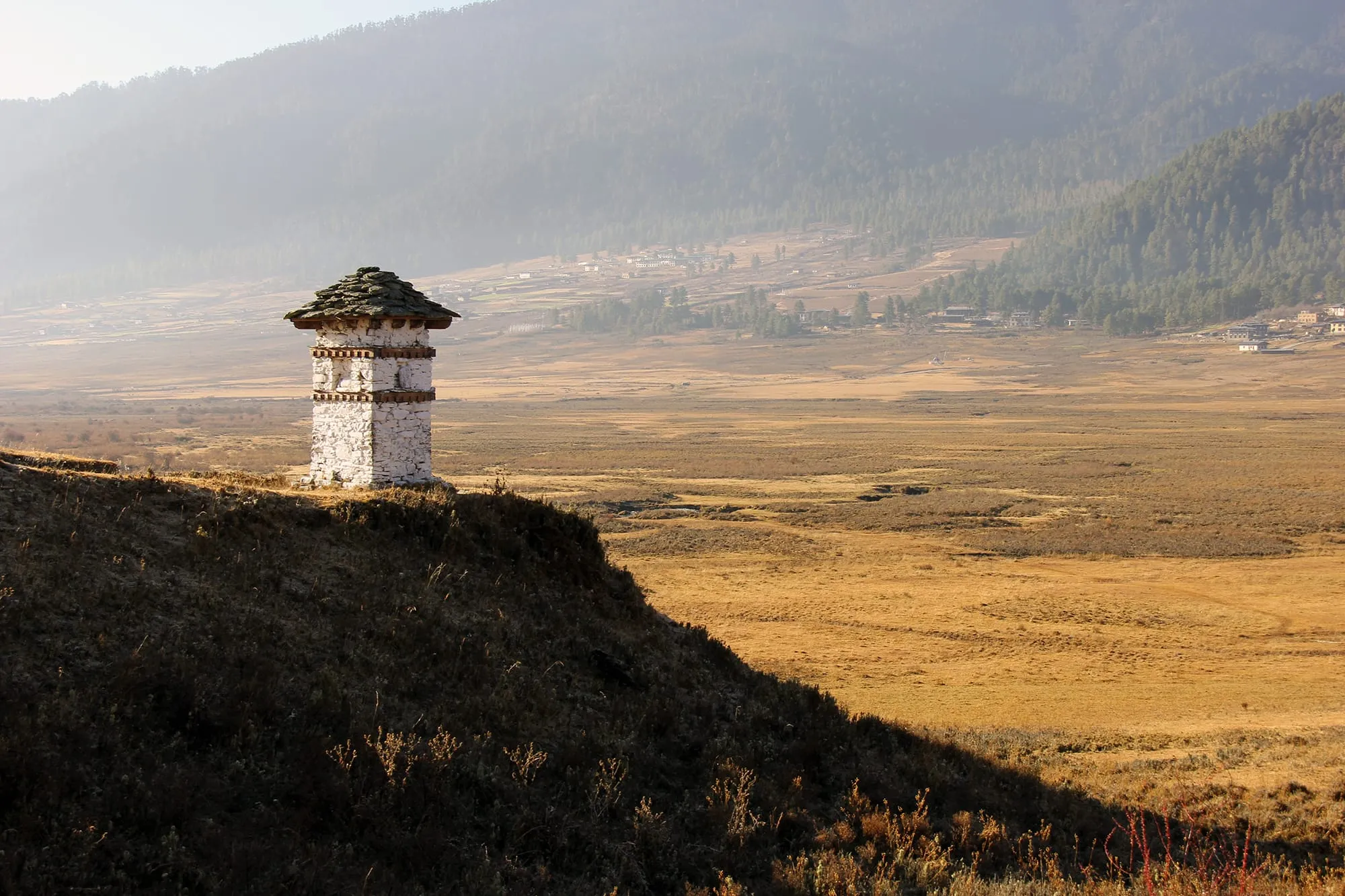
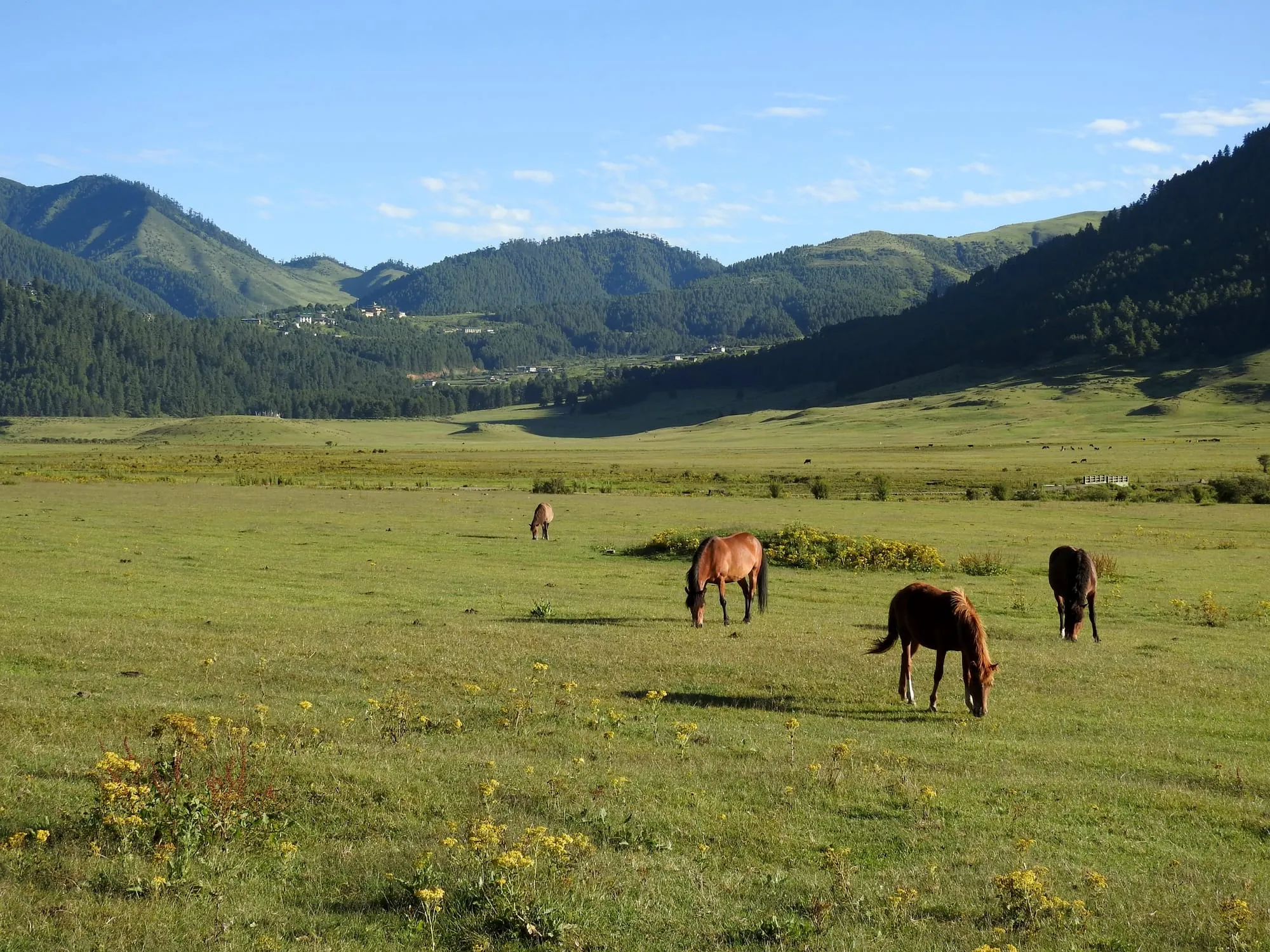
Wangdue Phodrang is the last western district on the highway before central Bhutan, and it holds one of the country's great set-pieces: Phobjikha, the wide glacial valley where the black-necked cranes come down from Tibet for the winter. Give it two nights. One is enough for the valley; two lets you walk it.
Things to do in Wangdue Phodrang, compared
| Attraction | Time needed | Legwork | Best season |
|---|---|---|---|
| Phobjikha Valley | A full day | The valley floor is flat and open; 3,000 m is the constraint | Late Oct–mid Feb for the cranes |
| Gangtey Goenpa | 1–1.5 hrs | On a spur above the valley; steps into the complex | Year-round |
| Gangtey Nature Trail | About 1.5 hrs | 4 km downhill from the goenpa, one-way — the car meets you | Mar–May, Sep–Nov |
| Black-Necked Crane Information Centre | 45 mins–1 hr | Indoors, road access to the door | Late Oct–mid Feb; open year-round for the aviary |
| Biking in Phobjikha | Half a day | 20–40 km of flat, traffic-free farm road | Mar–May, Sep–Nov; winter for the cranes |
| Wangdue Phodrang Dzong | 1–1.5 hrs | Hilltop ridge site; steps between its three sections | Mar–May, Sep–Nov |
Entrance fees are included in every tour we run, so there's no ticket window to queue at and no cash to carry at any of them.
Phobjikha, and the cranes
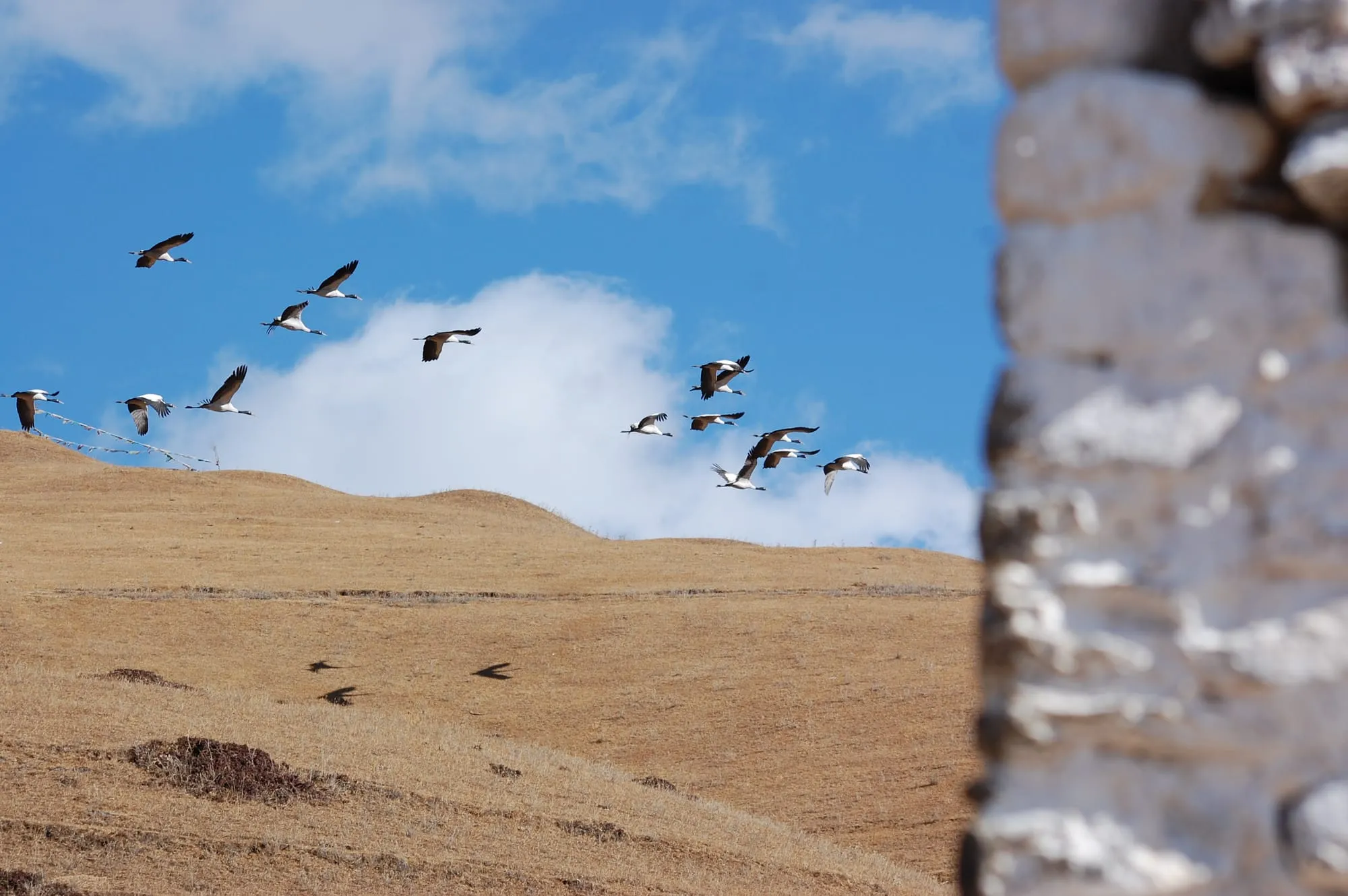
The valley is a U-shaped glacial bowl at 3,000 m, and the main wintering ground of Bhutan's black-necked cranes. The birds arrive in the last week of October and leave in mid-February; mid-November to mid-January is when they are reliably there in numbers.
640 of them wintered here in 2024–25, including 75 juveniles, out of a record 709 across the country — roughly double the figure most travel pages still quote. The Royal Society for Protection of Nature, founded under royal patronage in 1987, has counted them here since 1986, through a national low of 255 in 1991–92.
The information centre on the valley floor is the place to start a crane day: telescopes trained on the roost from indoors, a documentary, and staff who know where the flock is that morning. Two flightless cranes live there year-round, which makes it worth a stop in July as well as January.
The valley has plenty else in it — barking deer, sambar, wild boar, serow, Himalayan black bear, leopard and red fox — which you are unlikely to see and should know are there.
Phobjikha is not a national park. It borders Jigme Singye Wangchuck National Park; the marsh itself is a Ramsar wetland of international importance (970 hectares, designated 2014) inside a 163 km² conservation area RSPN has run with the valley's farming households since 2003. The protection here is an agreement, not a fence — which is why it works.
Gangtey, and the walk
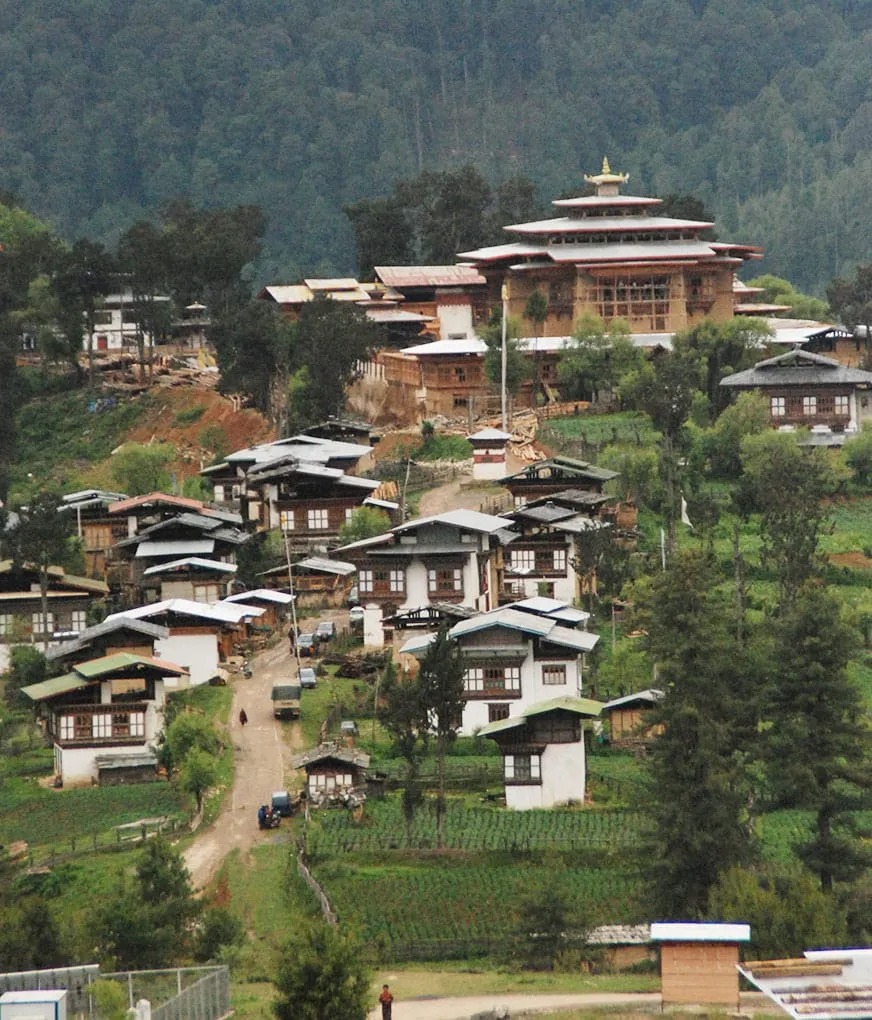
Gangtey Goenpa was founded in 1613 by Gyalse Pema Thinley, grandson of the tertön Pema Lingpa, on the spur at the head of the valley — twenty-five years before the dzong down the road. It is the main seat of the Pema Lingpa tradition, kept by about a hundred gomchen (lay practitioners rather than celibate monks), and it is the visual anchor of Phobjikha: you will see it from everywhere on the valley floor.
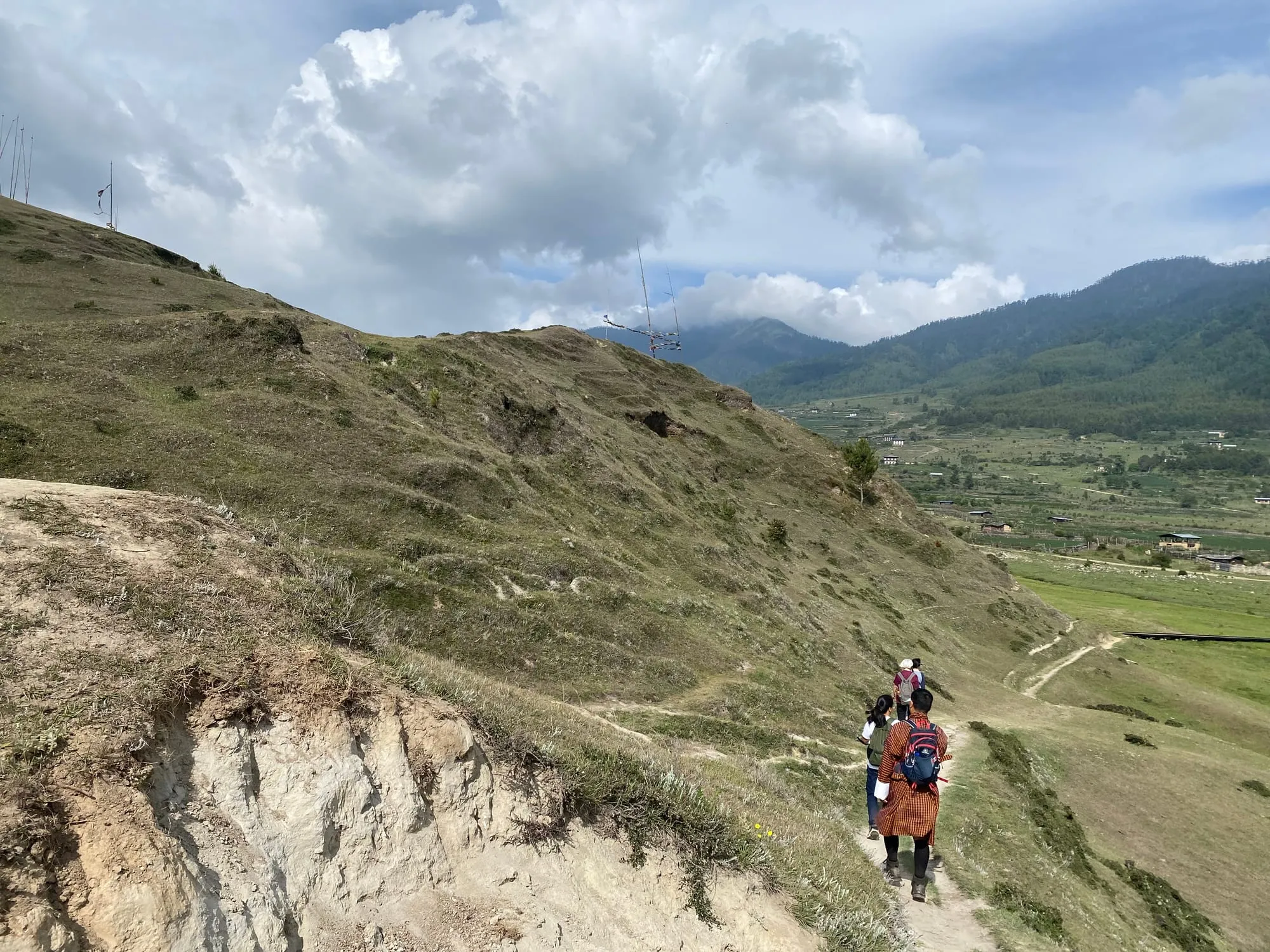
The Gangtey Nature Trail starts at the mani wall just north of the goenpa and takes about an hour and a half over roughly 4 km. It runs downhill and one-way — through blue pine and dwarf bamboo to Khewang Lhakhang on the valley floor, with the car meeting you at the end. It is the single best thing to do here on foot, and it is genuinely easy; the altitude is the only difficulty.
If you would rather ride, biking the valley is flat, quiet and about the only level ground on a western itinerary.
Three festivals, and where each is held
The Black-Necked Crane Festival is held on 11 November — in the Gangtey Goenpa courtyard: school children in crane costume, folk dance and masked dance, run by RSPN and the valley's own environment committee to mark the birds' arrival. It is one of the few Bhutanese festivals on a fixed solar date, falling on the Fourth King's birthday.
Gangtey Tshechu follows the lunar calendar — the 5th to 10th days of the eighth month, published as 13–15 October for 2027.
The Wangdue Tshechu (8–10 October 2027) is a separate event, held in the courtyard of Wangdue Phodrang Dzong. Ask us before planning around any of these; lunar dates move, and venues have too.
The dzong, and what happened to it
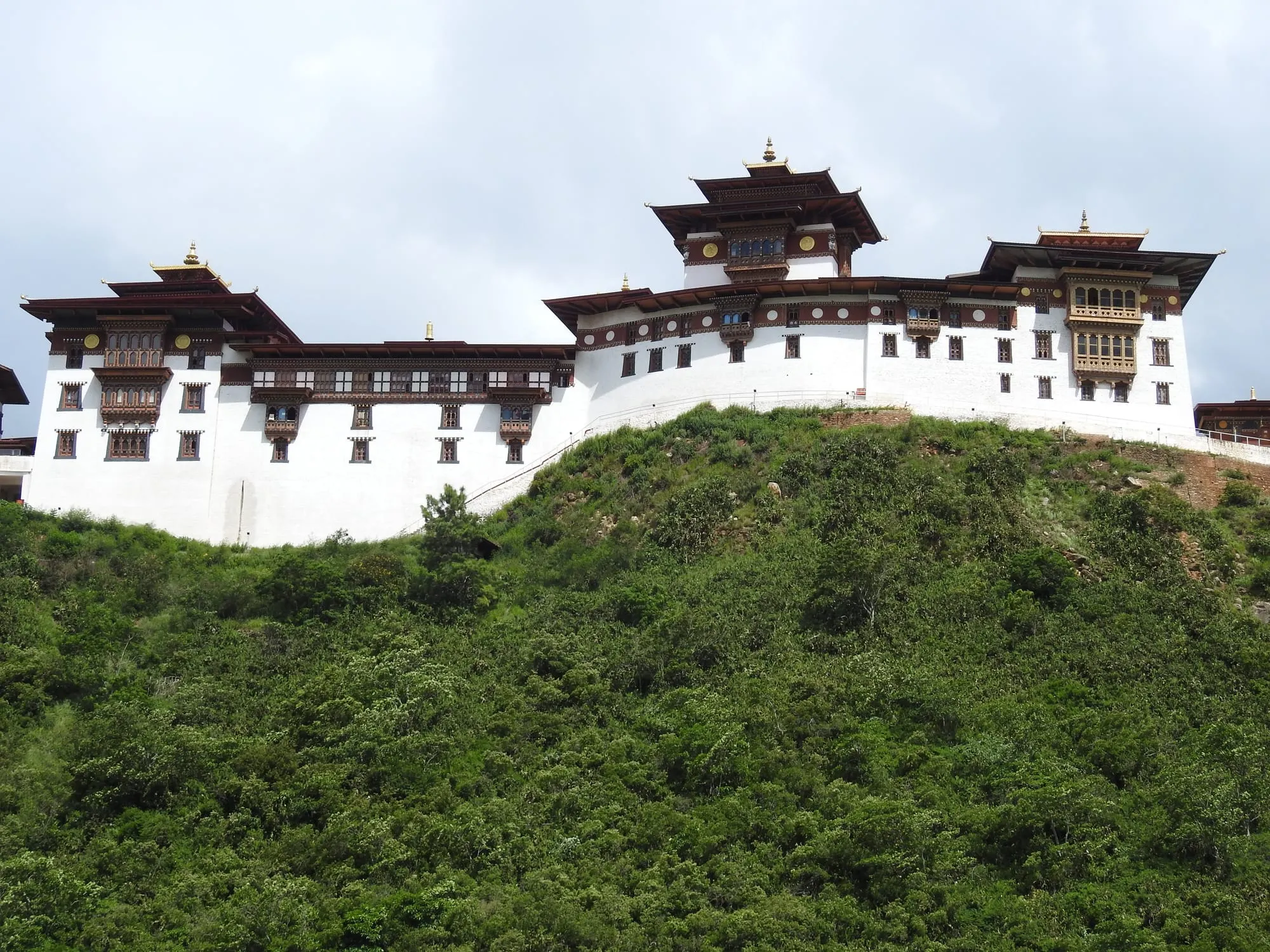
Wangdue Phodrang Dzong was founded by Zhabdrung Ngawang Namgyal in 1638 on a ridge said to resemble a sleeping elephant, at the point where the roads to western, central and southern Bhutan separate.
Fire destroyed it on 24 June 2012. It was rebuilt to traditional form and reconsecrated on 11 November 2022 — the Fourth King's birthday — with a seismic system, fire suppression and an escape tunnel behind the old shape. Like Drugyel Dzong in Paro, a good deal of what is written about it online still describes a building that is no longer there.
Getting here, and the climb
From Punakha: about 85 km and two and a half to three hours to Phobjikha, over Lawa La at around 3,300 m, with the dzong 45 minutes to an hour in. From Thimphu: 130 km and four to five hours, which makes it a travel day.
The number that matters isn't the distance. You leave Punakha at 1,250 m, pass the dzong at 1,273 m, and arrive at 3,000 m — a 1,750 m climb in a morning, into a valley families leave for the coldest weeks of the year. Nothing here is strenuous; the altitude is what to plan for, and the argument for two nights.
The rest of the district
Wangdue Phodrang is the largest dzongkhag in Bhutan by area — 4,308 km² across fifteen gewogs, containing parts of three national parks and running from 1,273 m at the dzong to the Black Mountains above 5,000 m. The district town is Bajo (Bajothang) on the valley floor, built to replace the cramped highway strip below the dzong.
It is known for bamboo work and slate carving, and for the lozey — the ornamental spoken verse of Shaa, and the tale of Pema Tshewang Tashi, the knight whose lozey Bhutanese still recite.
Attractions in Wangdue Phodrang
Tailor-made travel
Begin your journey to the Last Shangri-La
Every Little Bhutan itinerary is private and tailor-made. Tell us what draws you to Bhutan — festivals, treks, monasteries, food — and we will design the journey around it.