
Where to go
Things to do in Bhutan
Bhutan unfolds dzongkhag by dzongkhag — each district its own valley, dialect and rhythm. Choose a region to see the temples, fortresses and trails our team takes travellers to.
Bhutan at a glance
Choose a region, then follow the road
Most first journeys begin in the western valleys. Longer itineraries continue through central Bhutan and into the quieter east.
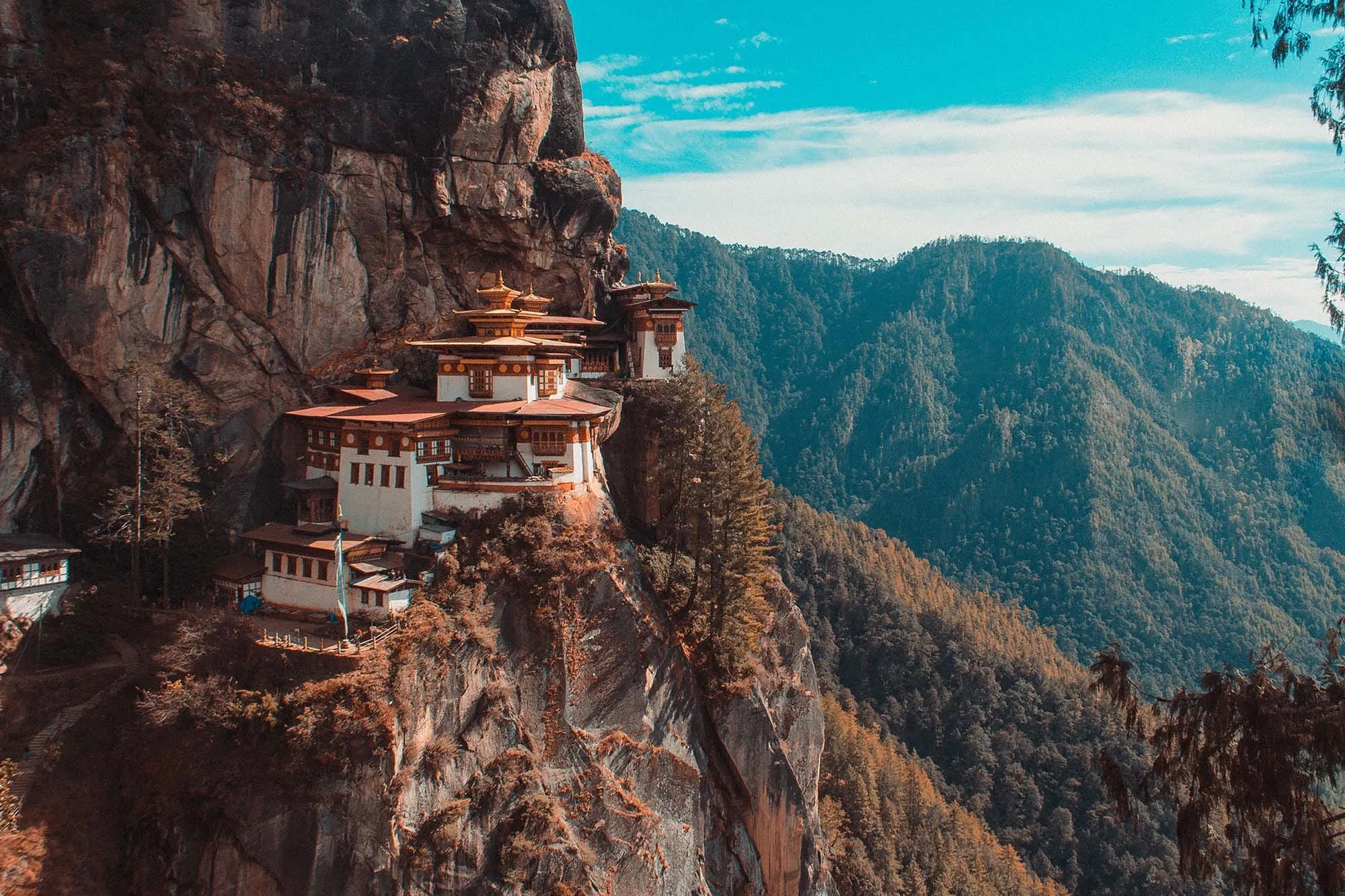
Paro What to see in the valley you land in: Tiger's Nest, the dzong, the museum and one of Bhutan's two oldest temples, with how long each one takes.
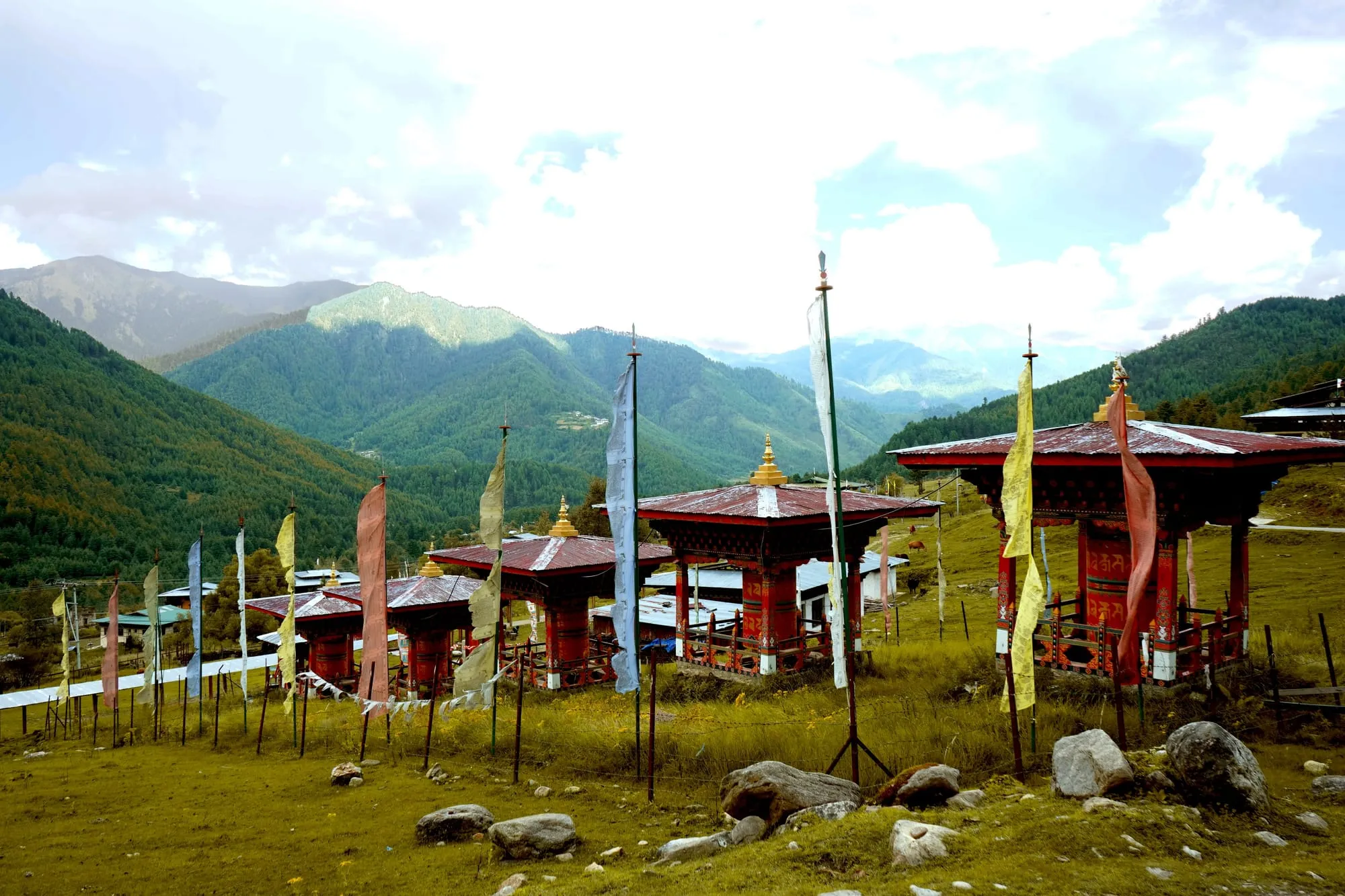
Haa The narrow valley west of Paro, closed to visitors until 2002 — Chele La, the white and black temples, a hermitage climb, and the festivals worth timing for.
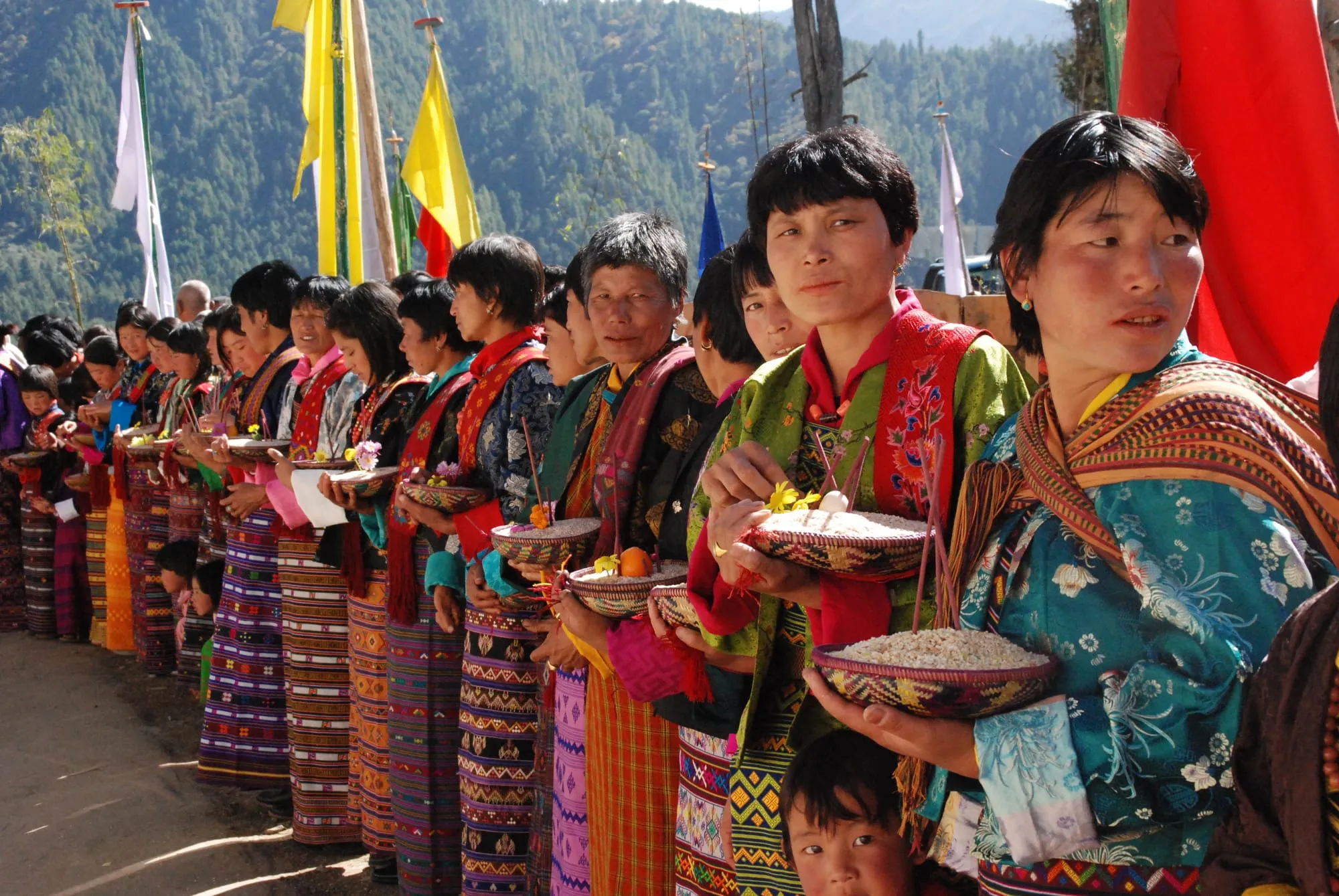
Thimphu What to see in Bhutan's capital and how long each takes — the dzong, the Buddha, the takin, the markets and the museums, with the opening days that decide the day.
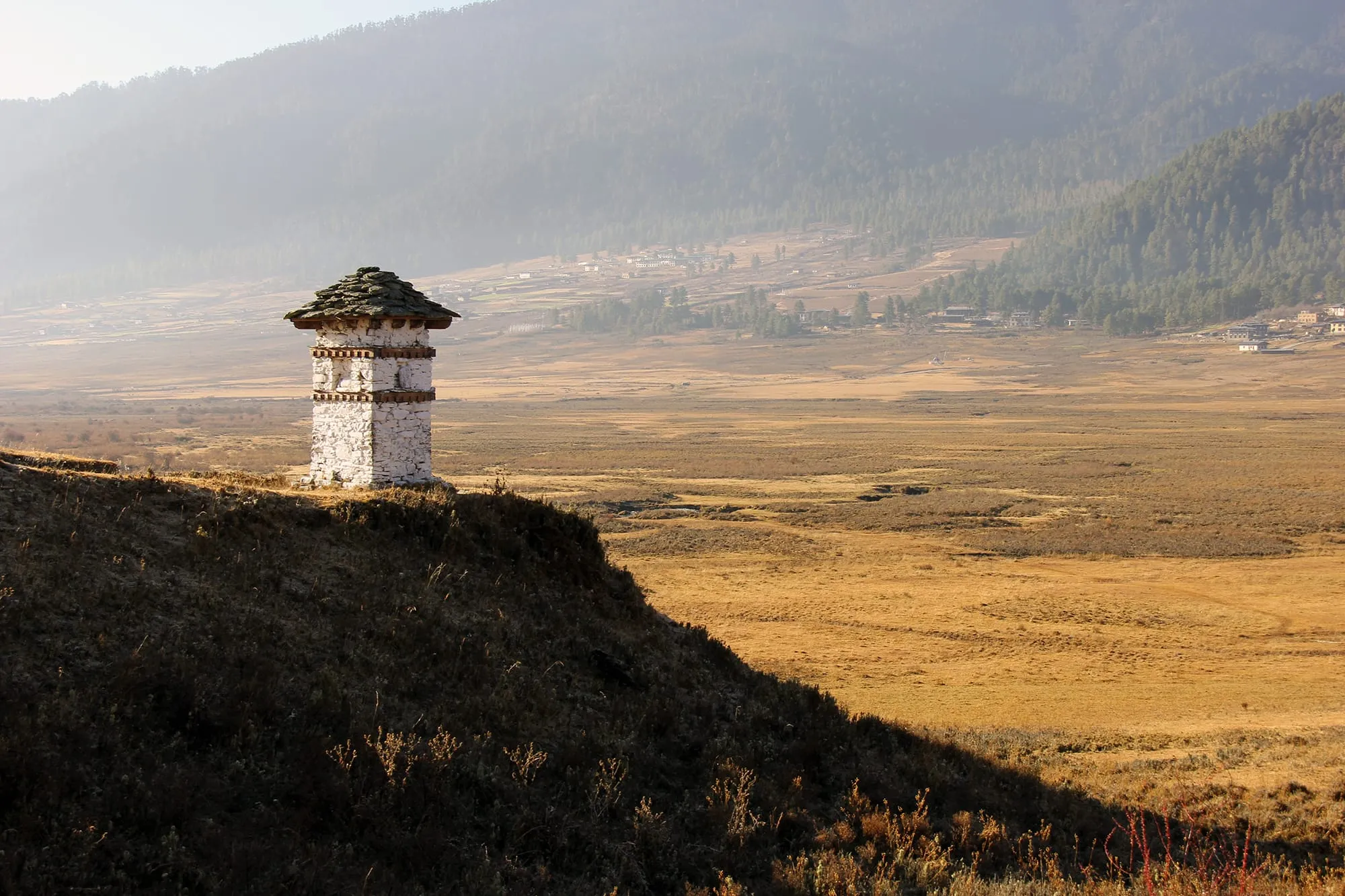
Wangdue Phodrang The glacial valley where Bhutan's black-necked cranes winter — Gangtey Goenpa, the nature trail, the crane centre, and the dzong rebuilt after the 2012 fire.
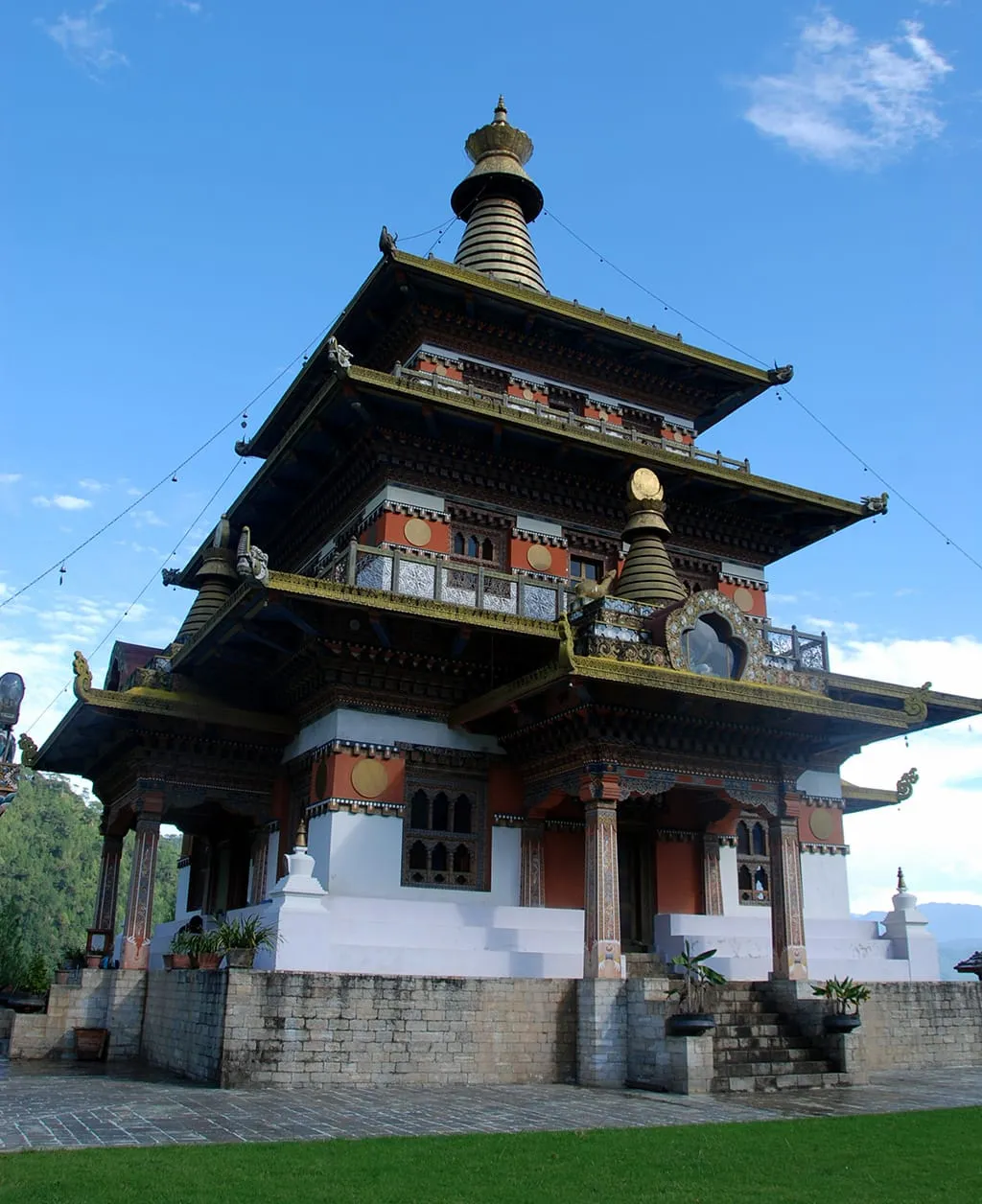
Punakha What to see in Punakha and how long each thing takes — the dzong, the fertility temple, the suspension bridge, the Khamsum hike and rafting the Mo Chhu.
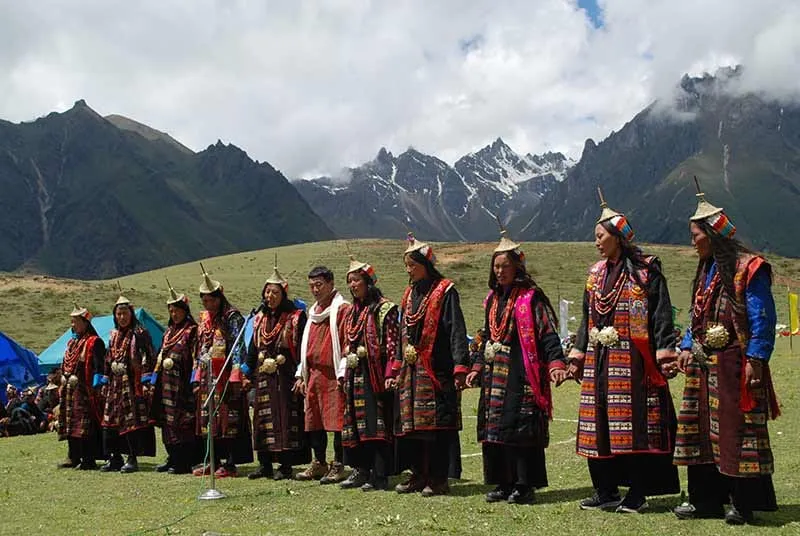
Gasa Bhutan's remote northwest — segregated hot-spring pools on the Mo Chhu, a fortress from 1646, and October's highland festival at Laya, which you walk in to.
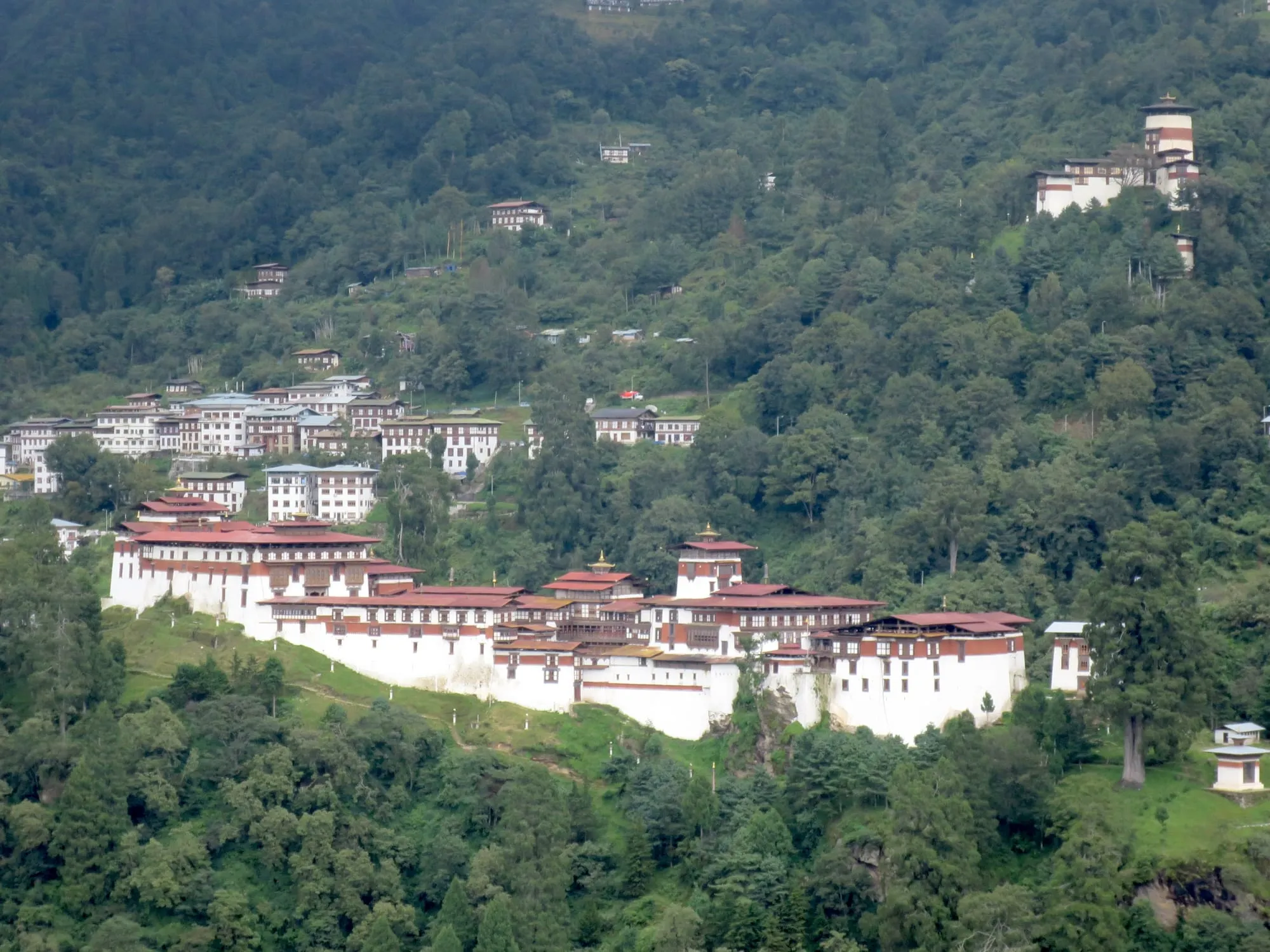
Trongsa The fortress every King ruled from before the throne, the Royal Heritage Museum in its watchtower, a Nepalese stupa and the second King's winter palace.
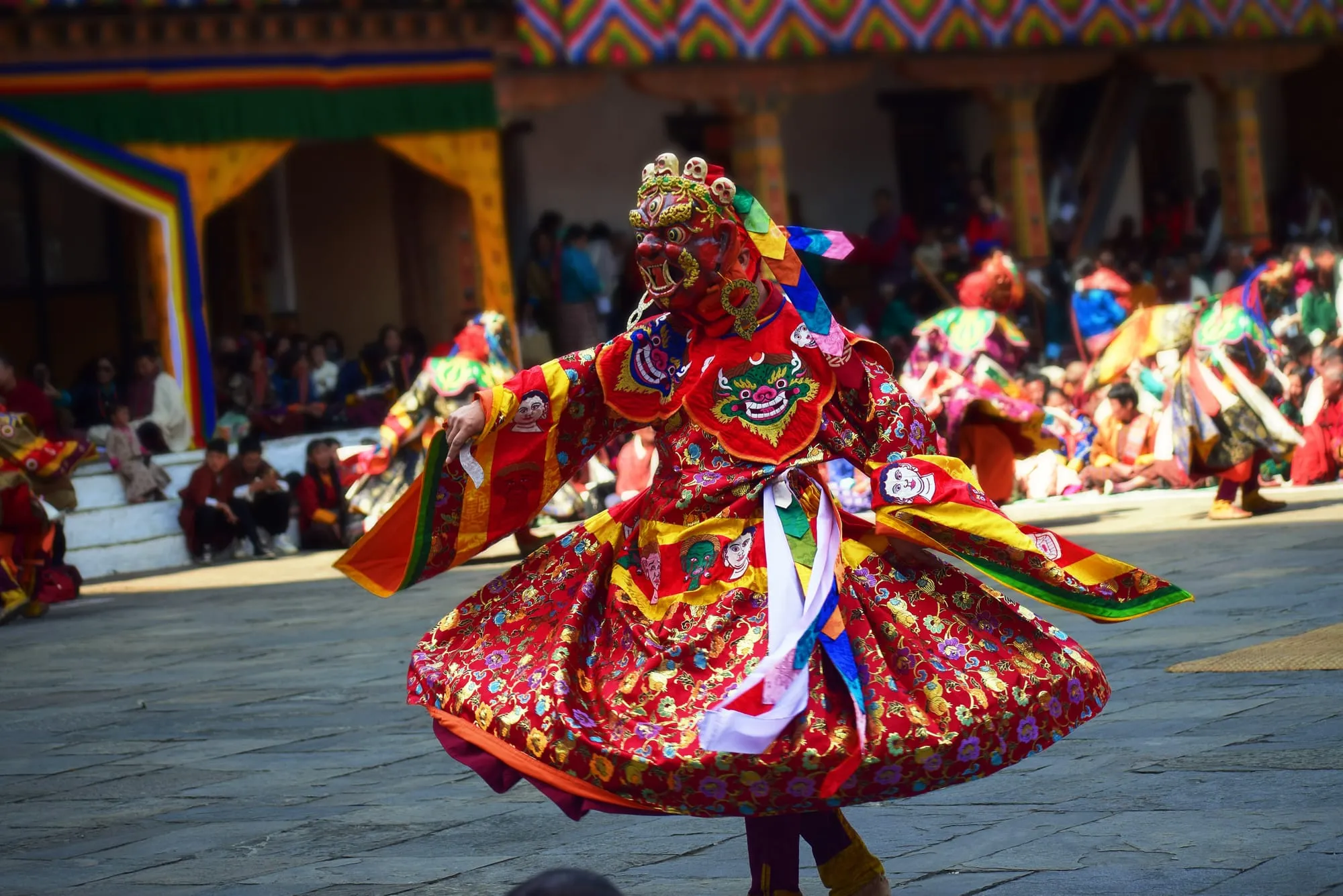
Bumthang Four valleys, fifteen sights and Bhutan's religious heartland — where Guru Rinpoche healed a king and Pema Lingpa surfaced with a lamp still burning.
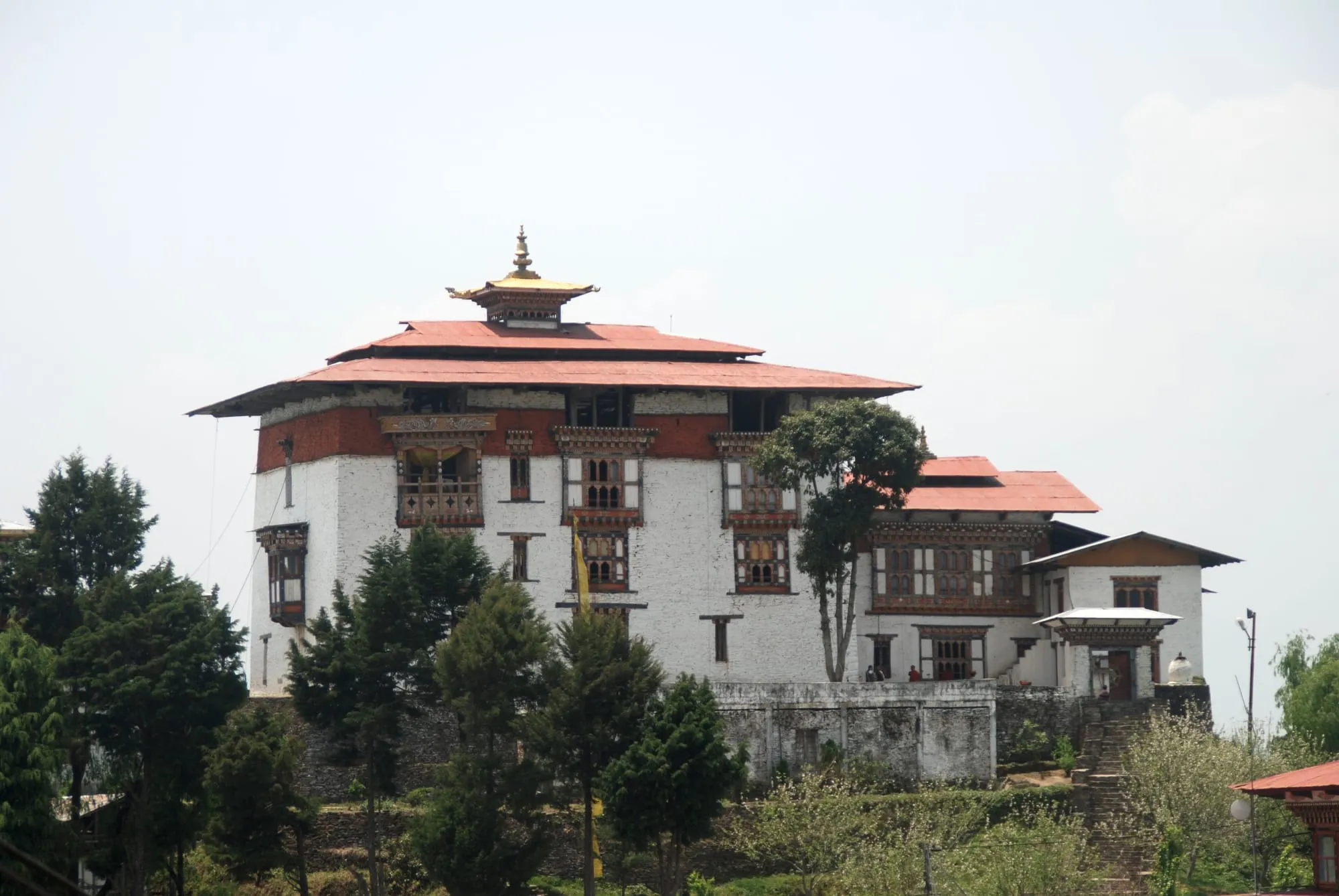
Zhemgang Bhutan's south-central forest district — Royal Manas National Park from Panbang, a sacred lake that closes each autumn, and a waterfall near Panbang.
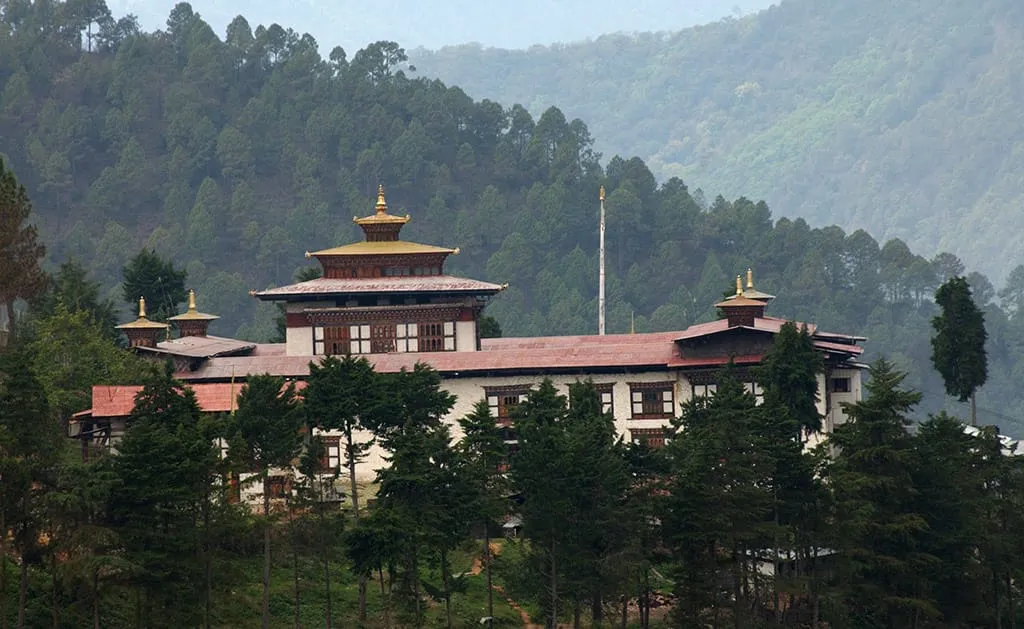
Mongar Eastern Bhutan's hinge district — the highway's highest pass, the ruined fortress it was once named for, a dzong built without nails, and a pilgrimage cave.
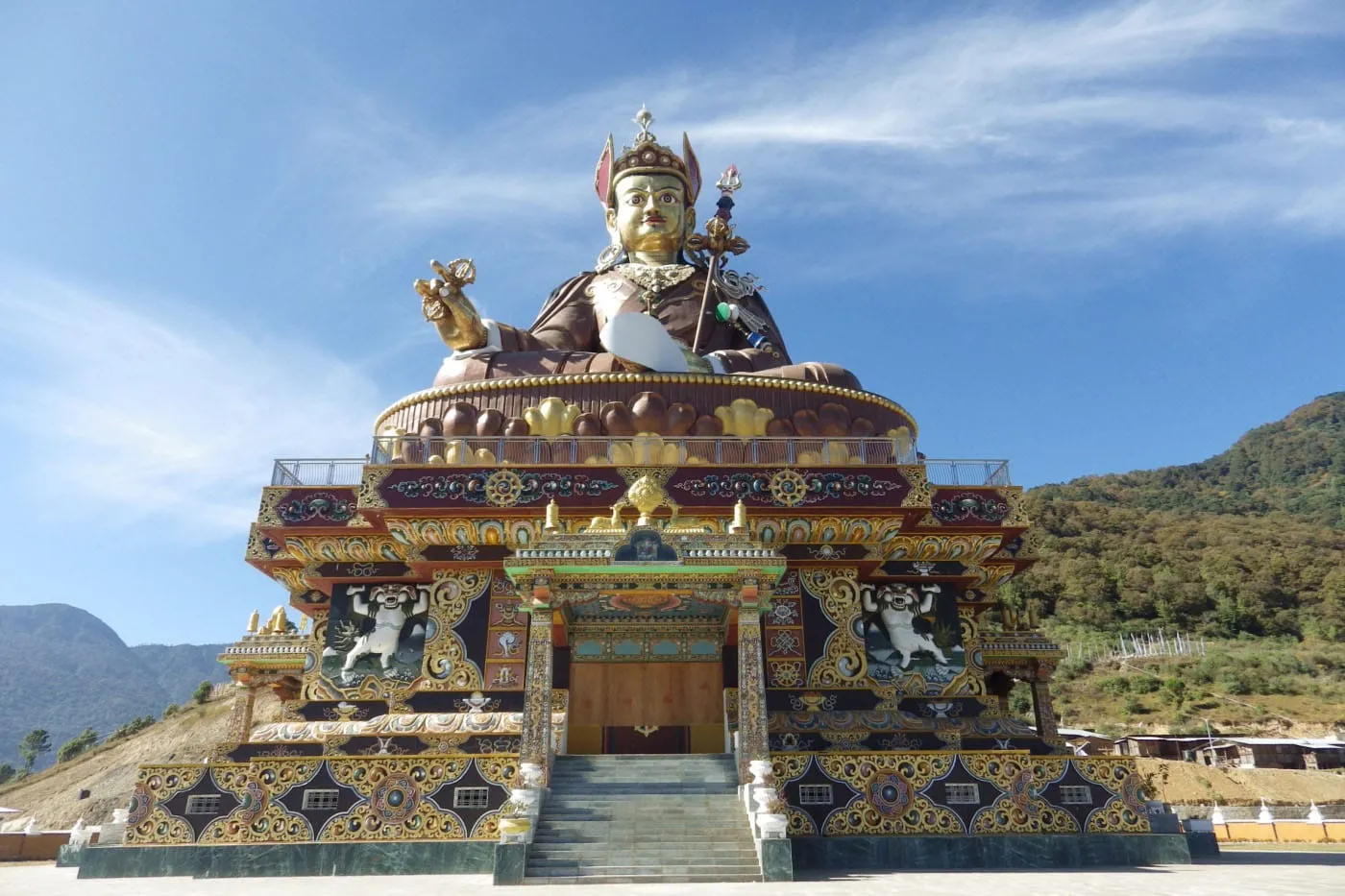
Lhuentse The Royal Family's ancestral district in the far northeast — Khoma's kishuthara silk, Bhutan's largest Guru Rinpoche statue, and the dzong on its ridge.
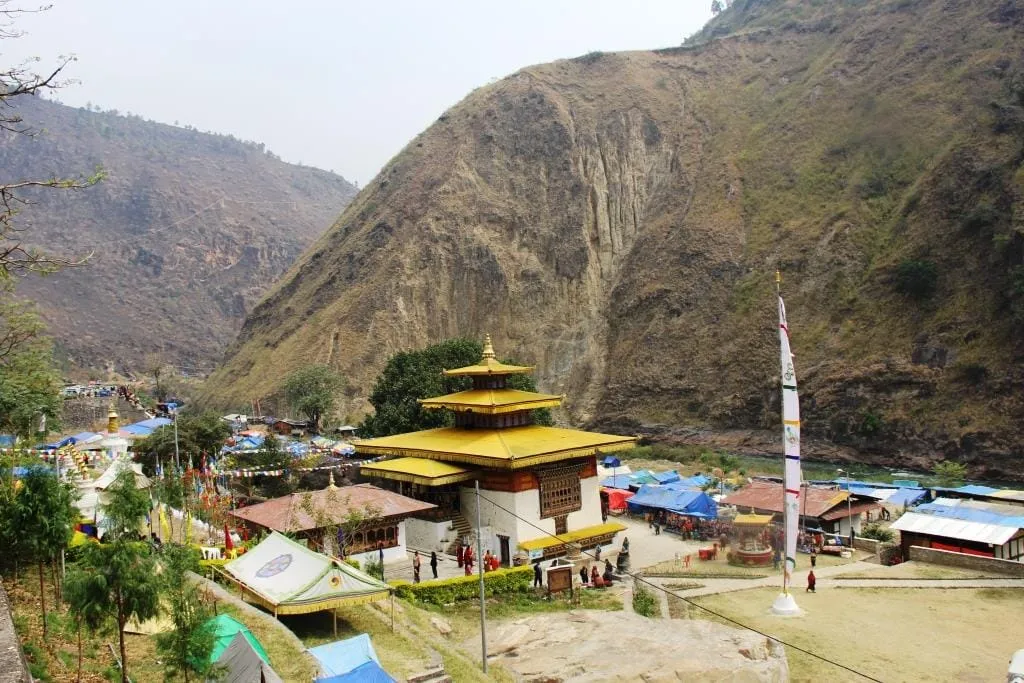
Trashigang The hub of eastern Bhutan — the rock where Guru Rinpoche subdued a demon, the highland Brokpa villages of Merak and Sakteng, and the country's first college.
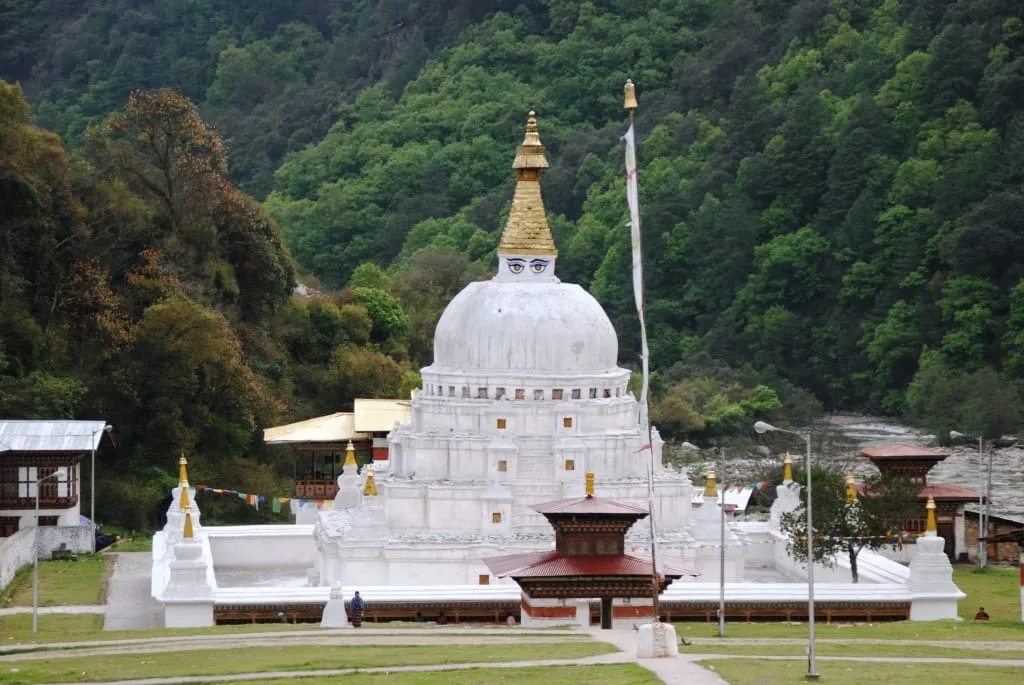
Trashi Yangtse The far northeast — a copy of Kathmandu's Boudhanath walked by pilgrims from Tawang, Bhutan's wood-turning district, two dzongs and the eastern crane valley.
Samtse Bhutan's far southwest, on the Sikkim and West Bengal border — Samtse town, what is honestly there, the nature reserve that reaches in from Haa, and how to get the district into a private itinerary.
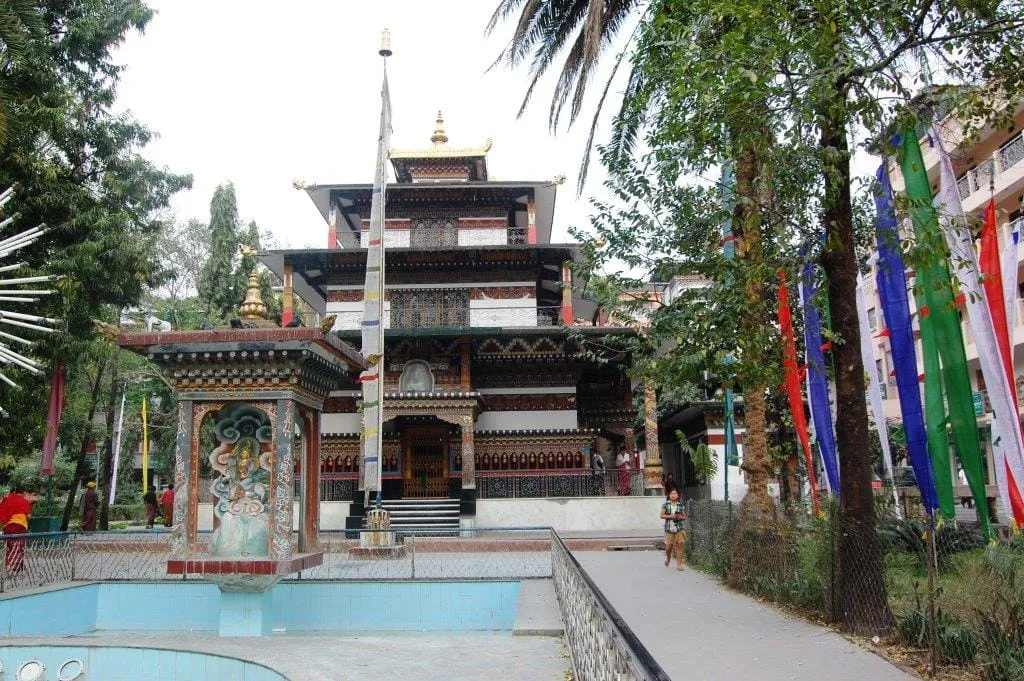
Chhukha The border district you arrive through overland — the gate, the temple in the town, the monastery above it, and a nine-storey tower on the road north.
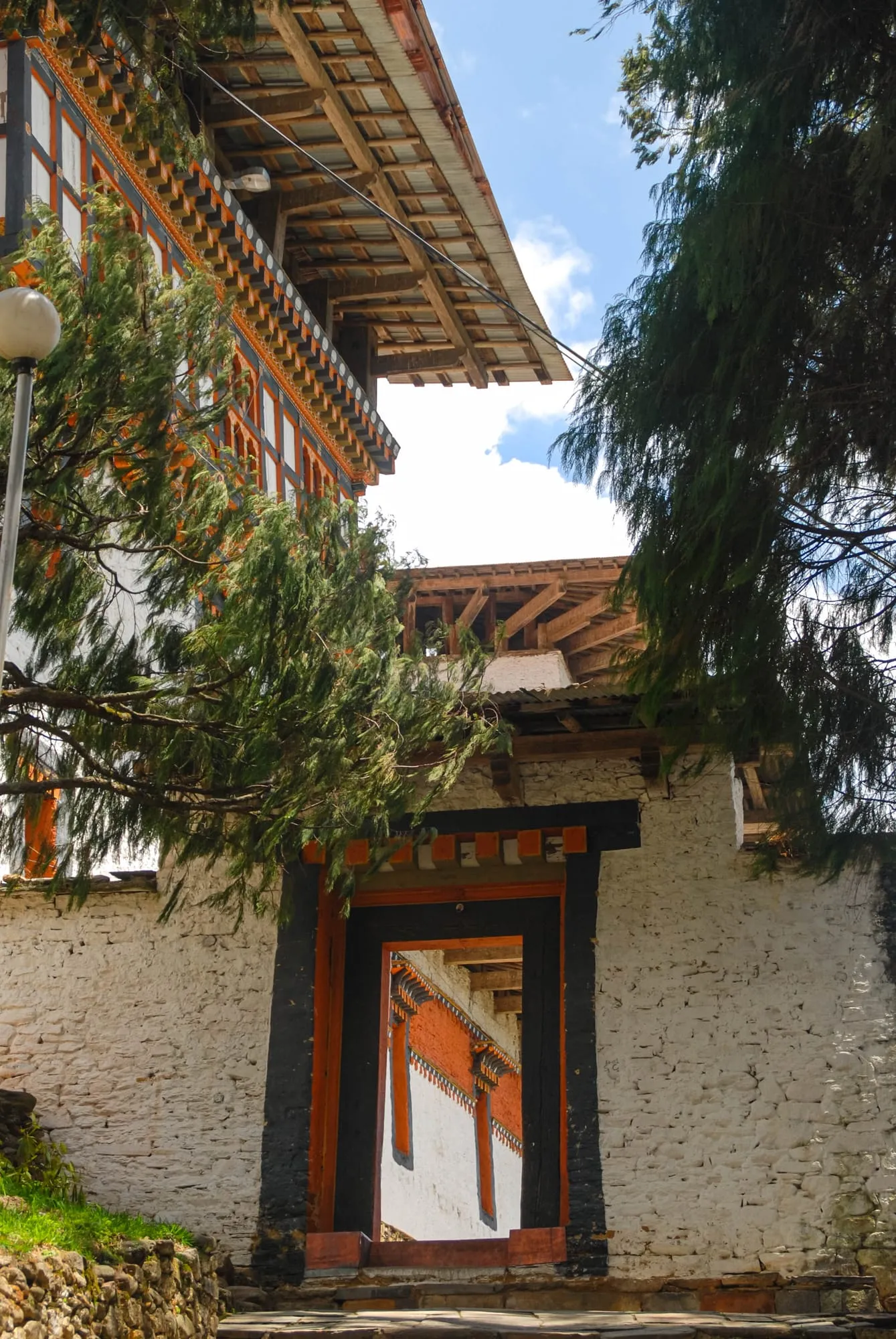
Dagana A southwestern district almost nobody visits — the Daga Penlop's village and its homestays, a dzong from 1651, and a late-season tshechu at the end of it.
Tsirang Bhutan's smallest dzongkhag, on the road between Gelephu and the valleys — Damphu town, what a stop here is actually worth, and why Tsirang is not India's Chirang.
Sarpang Bhutan's border district on the Assam plains — Gelephu town and its hot spring, what Gelephu Mindfulness City is, and why Sarpang town is a different place.
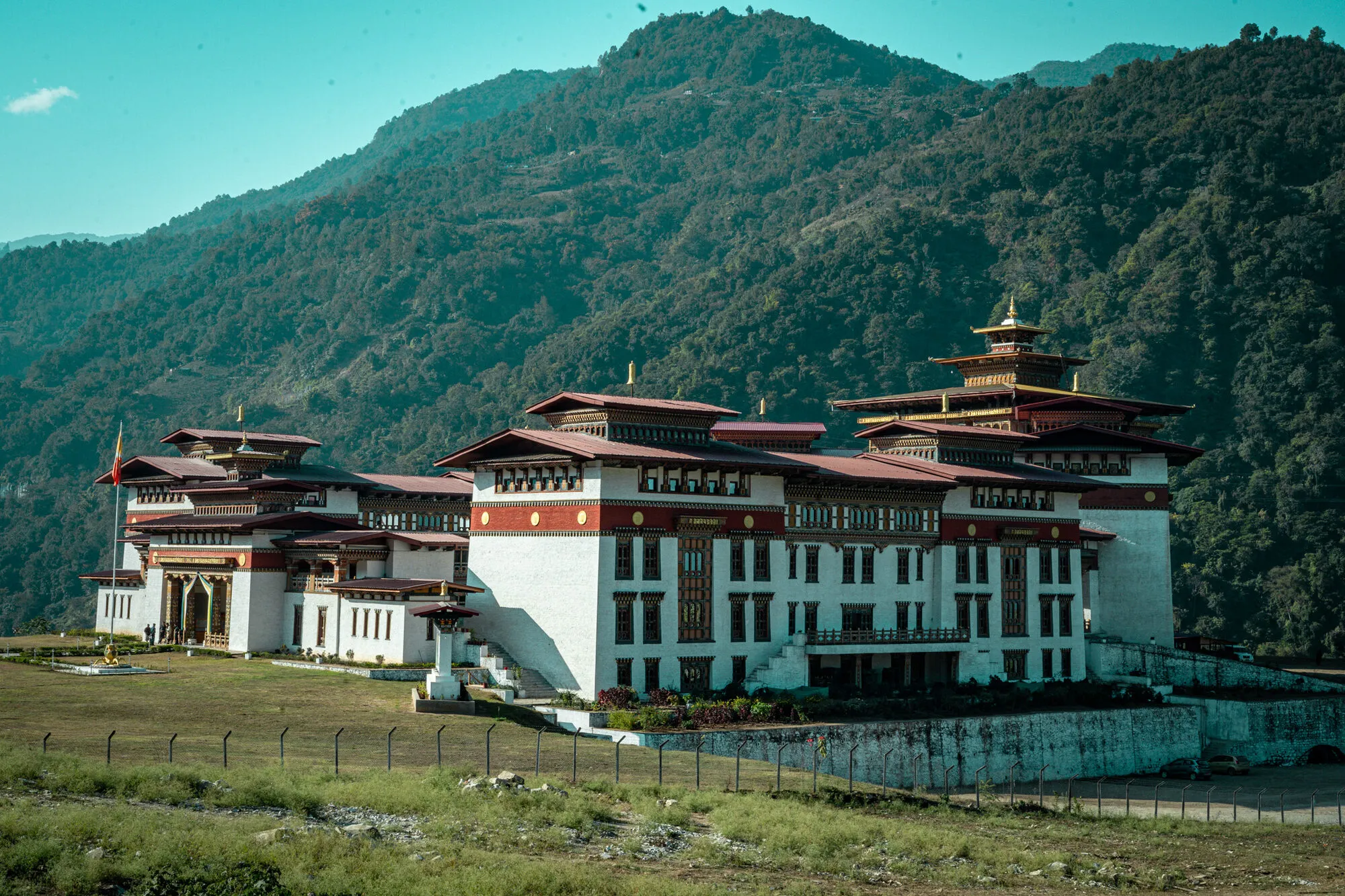
Pemagatshel The southeastern district between Trashigang and Samdrup Jongkhar, with Yongla Goenpa, a copy of Boudhanath at Tsebar, horn makers, cotton weavers and a 2023 dzong.
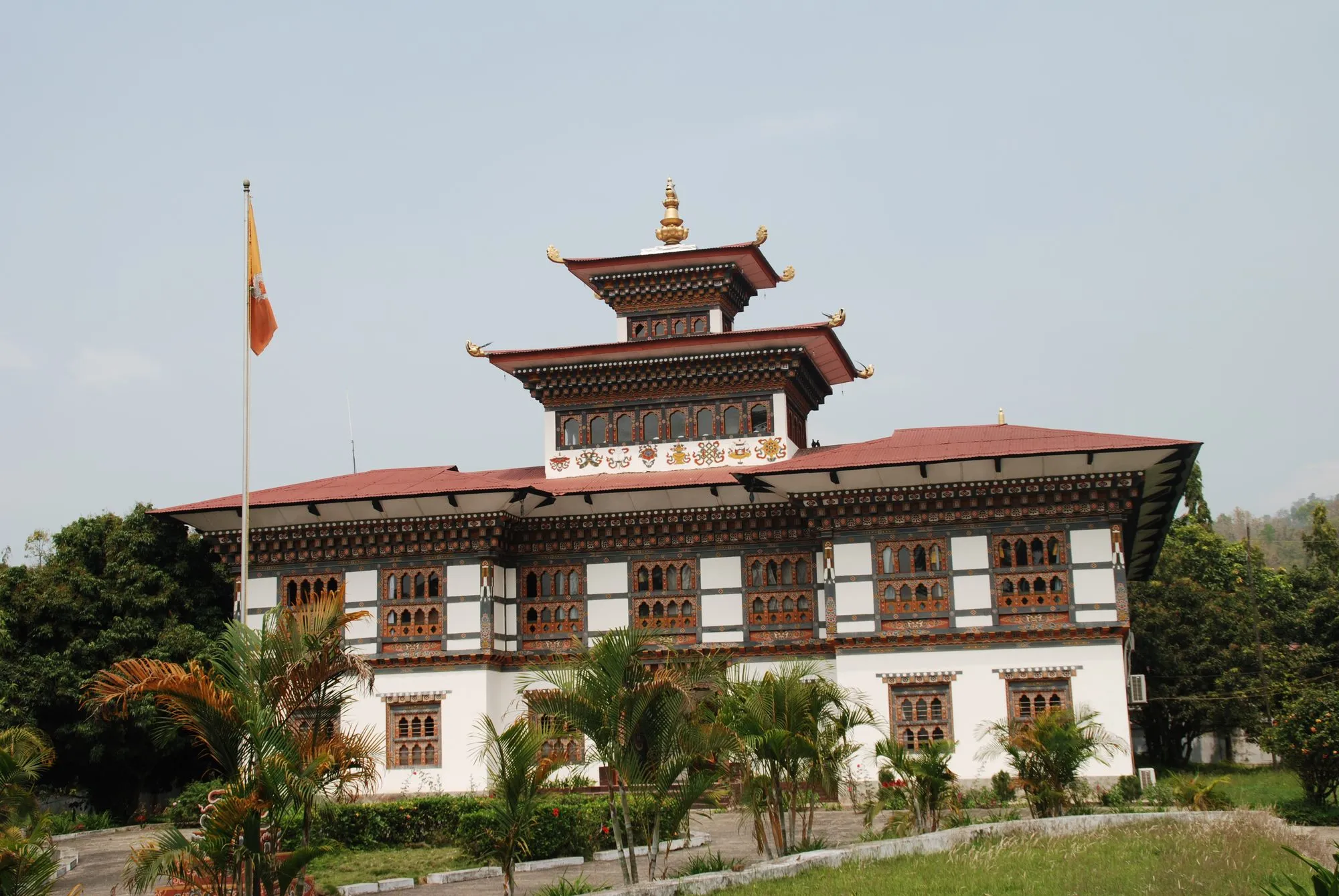
Samdrup Jongkhar The far southeast, where the eastern road ends at Assam — the border town, the engineering college at Dewathang, and Narphungla's birds on the way in.
Tailor-made travel
Begin your journey to the Last Shangri-La
Every Little Bhutan itinerary is private and tailor-made. Tell us what draws you to Bhutan — festivals, treks, monasteries, food — and we will design the journey around it.