Things to do in Punakha
Punakha is the warm, low valley over the Dochu La pass from Thimphu, and the night almost every western Bhutan itinerary spends outside Paro and Thimphu. One full day covers the dzong, Chimi Lhakhang and the suspension bridge. A second buys you the Khamsum hike or a morning on the river.
Things to do in Punakha, compared
| Attraction | Time needed | Legwork | Best season |
|---|---|---|---|
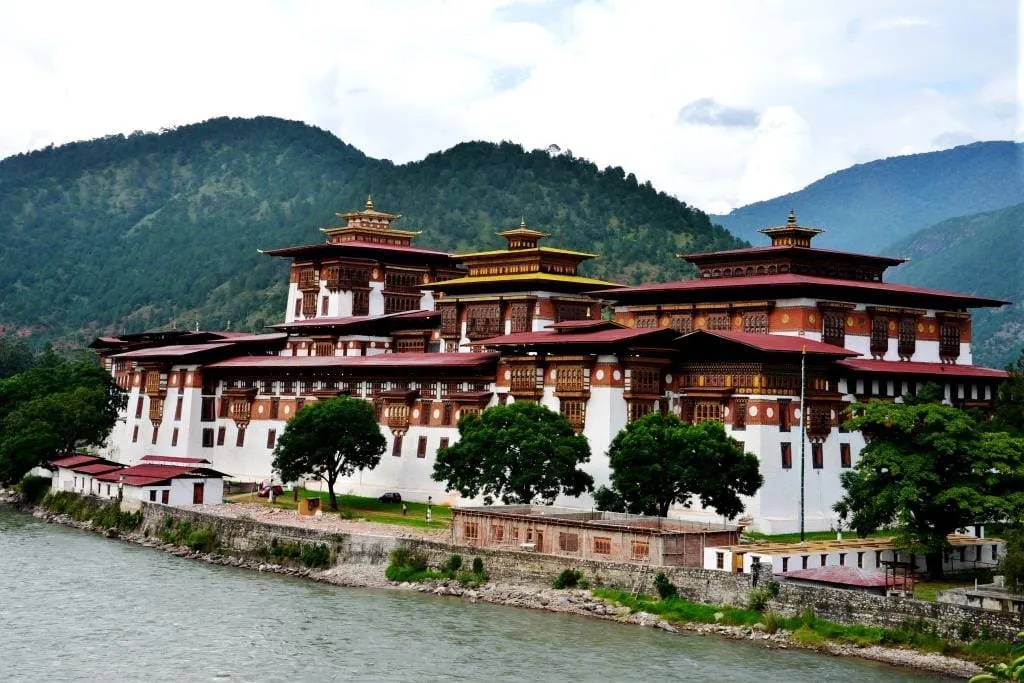
| Punakha Dzong | 1–1.5 hrs | A bridge and a steep stairway; three courtyards on different levels | Feb–Mar, Oct–Nov |
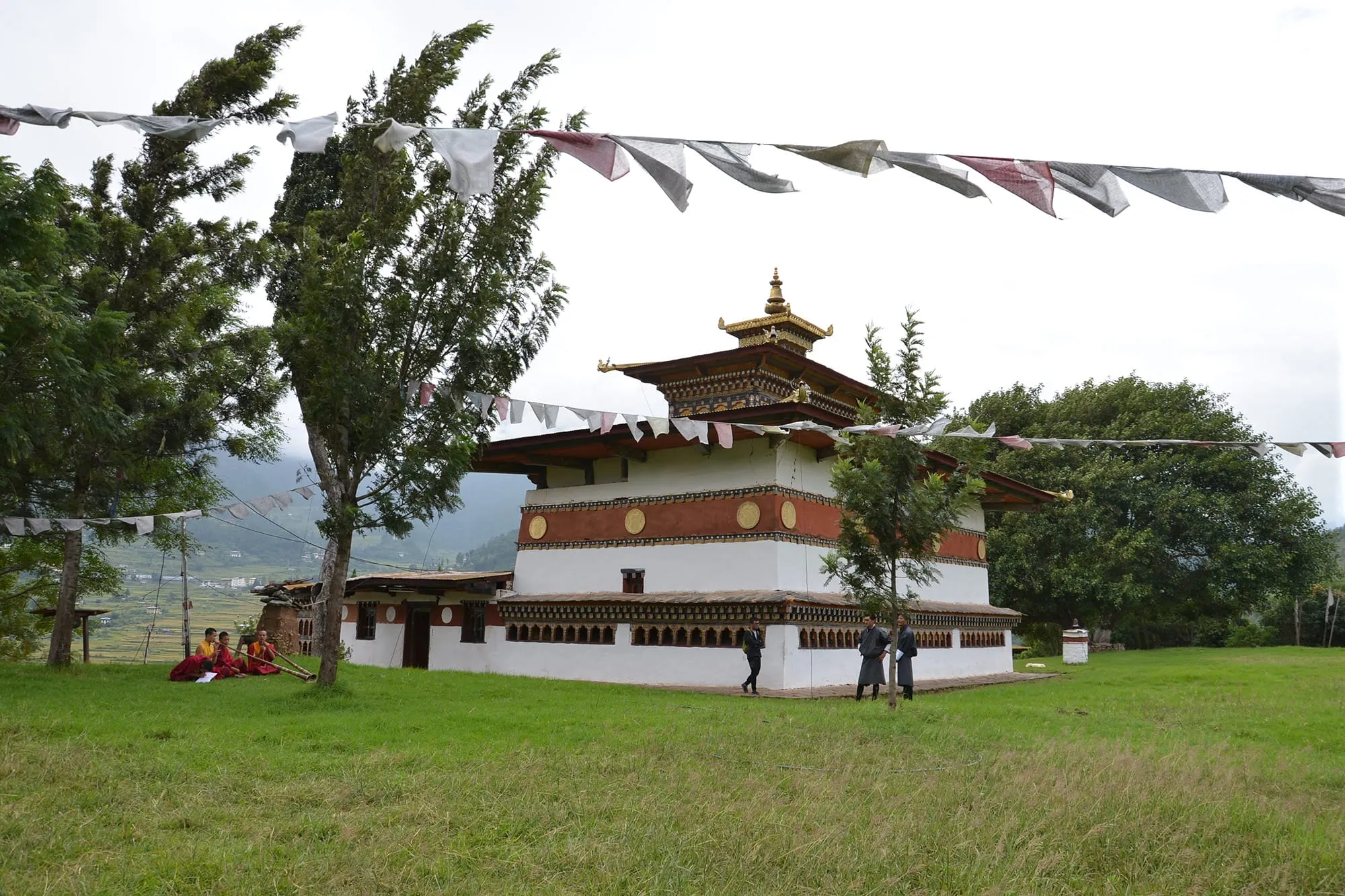
| Chimi Lhakhang | ~1.5 hrs | 20-min walk each way on a farm track, muddy after rain | Feb–Mar, Oct–Nov |
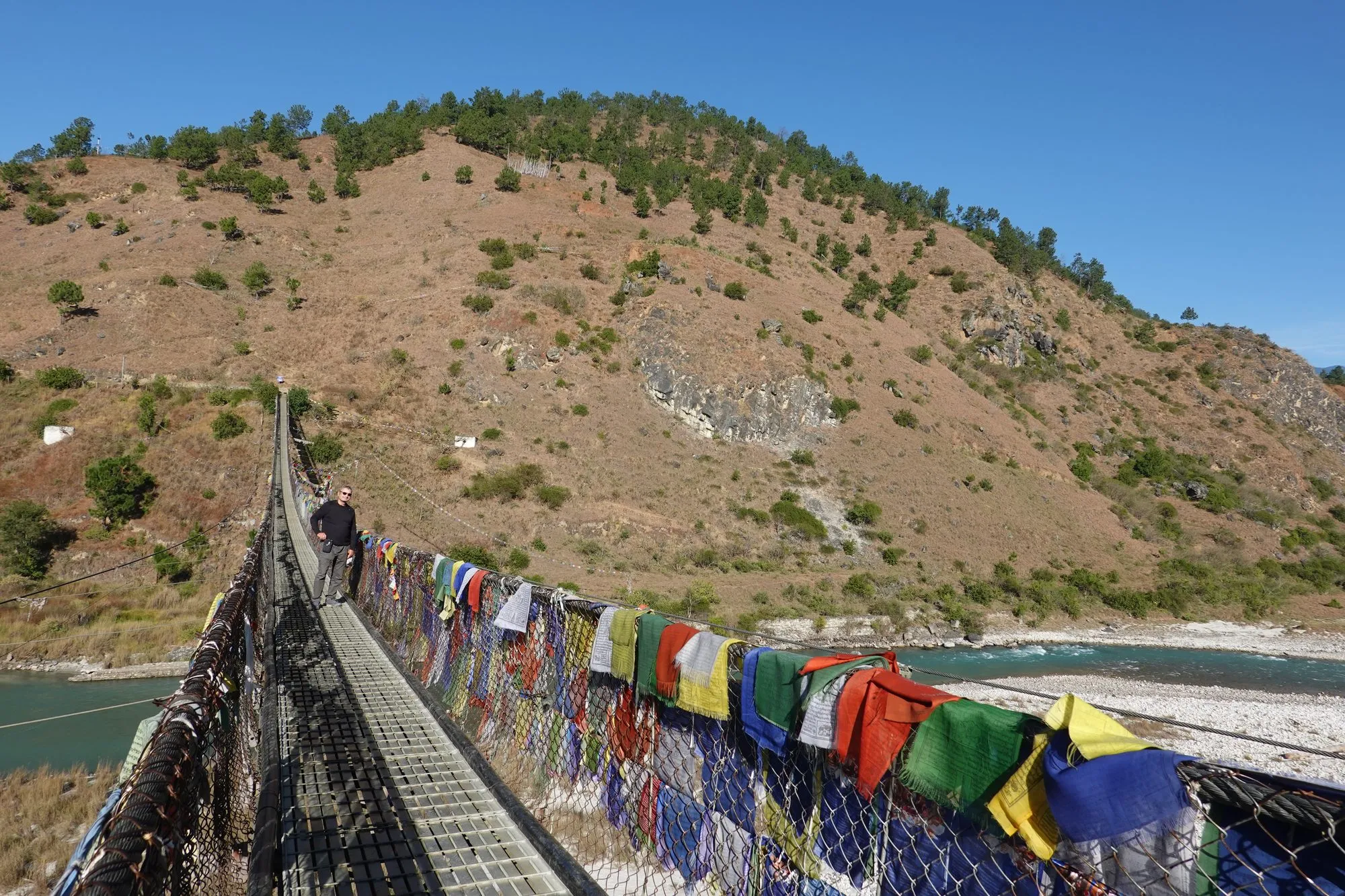
| Punakha suspension bridge | ~45 mins | 15-min walk each way from the dzong; the deck sways | Oct–Apr, calm mornings |
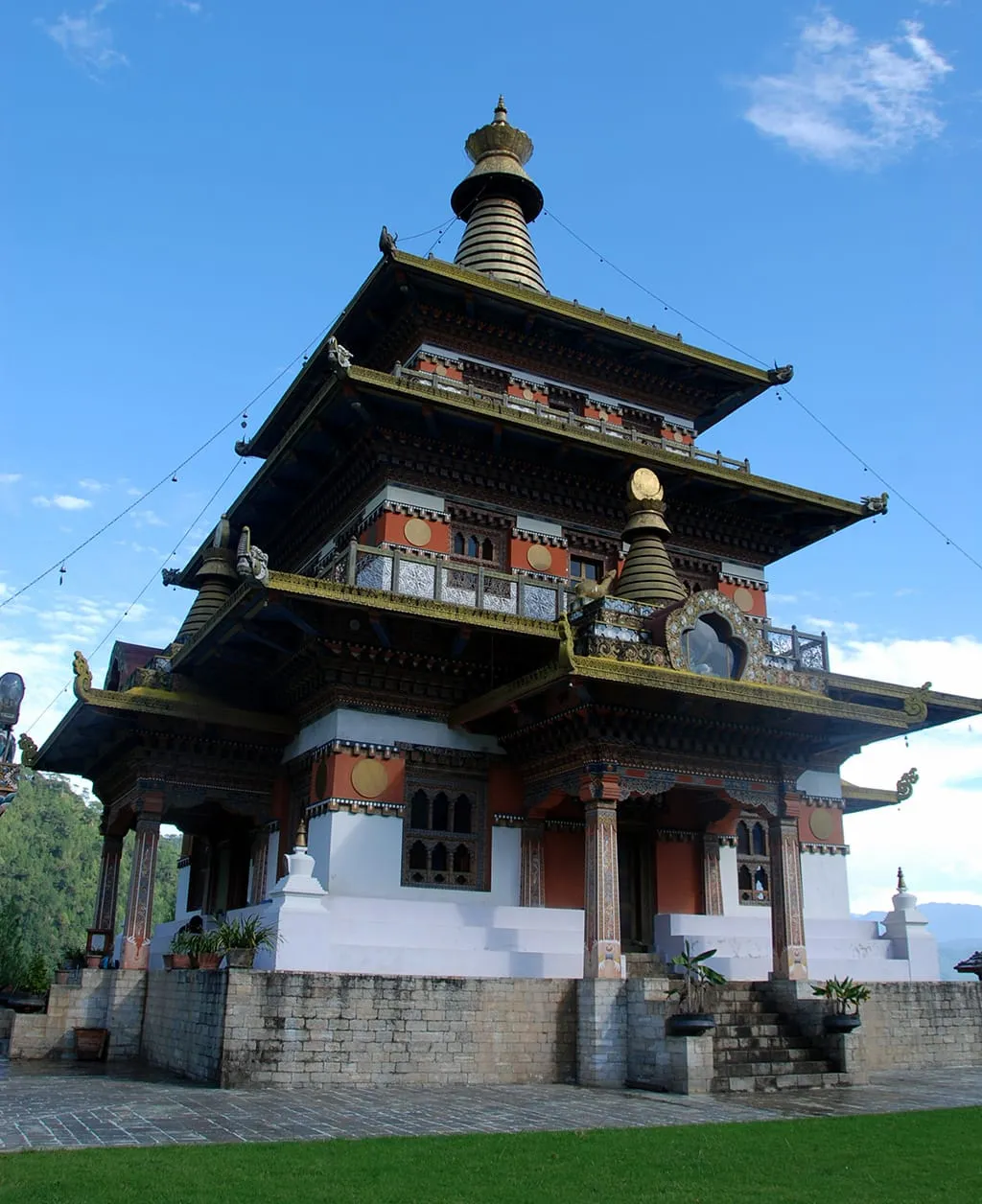
| Khamsum Yulley Namgyal Chorten | 2–3.5 hrs | A real uphill hike, 45 min–1.5 hrs each way | Feb–Mar, Oct–Nov |
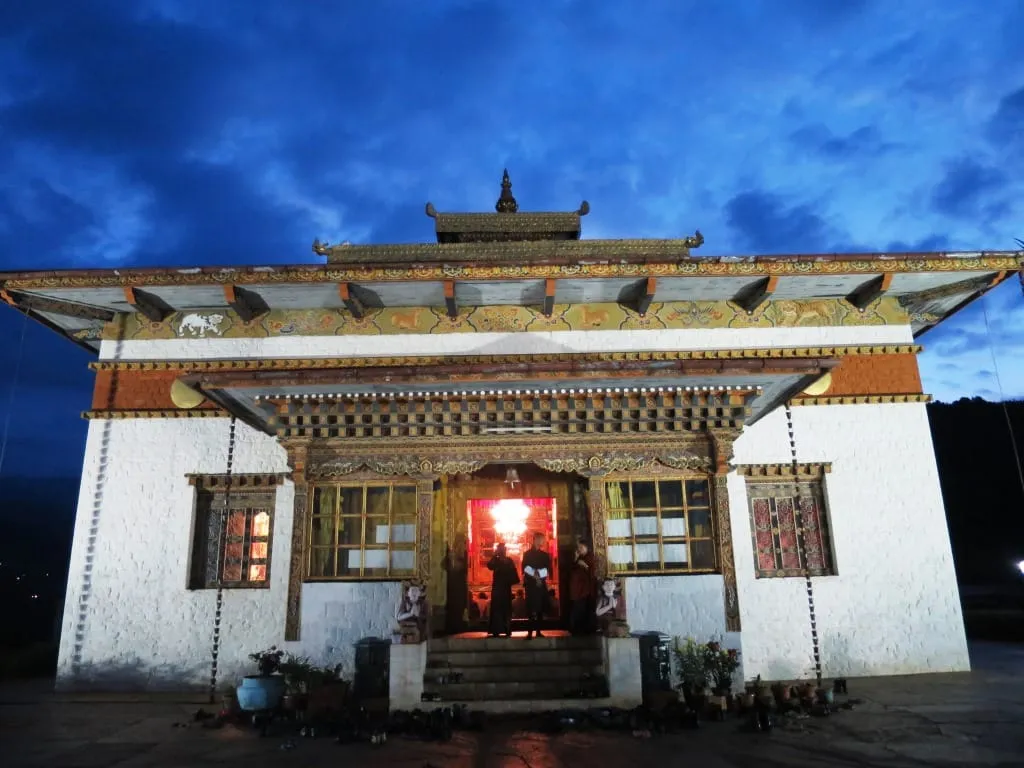
| Sangchhen Dorji Lhuendrup nunnery | Under an hour | Road access to the door; steps inside | Feb–Mar, Oct–Nov |
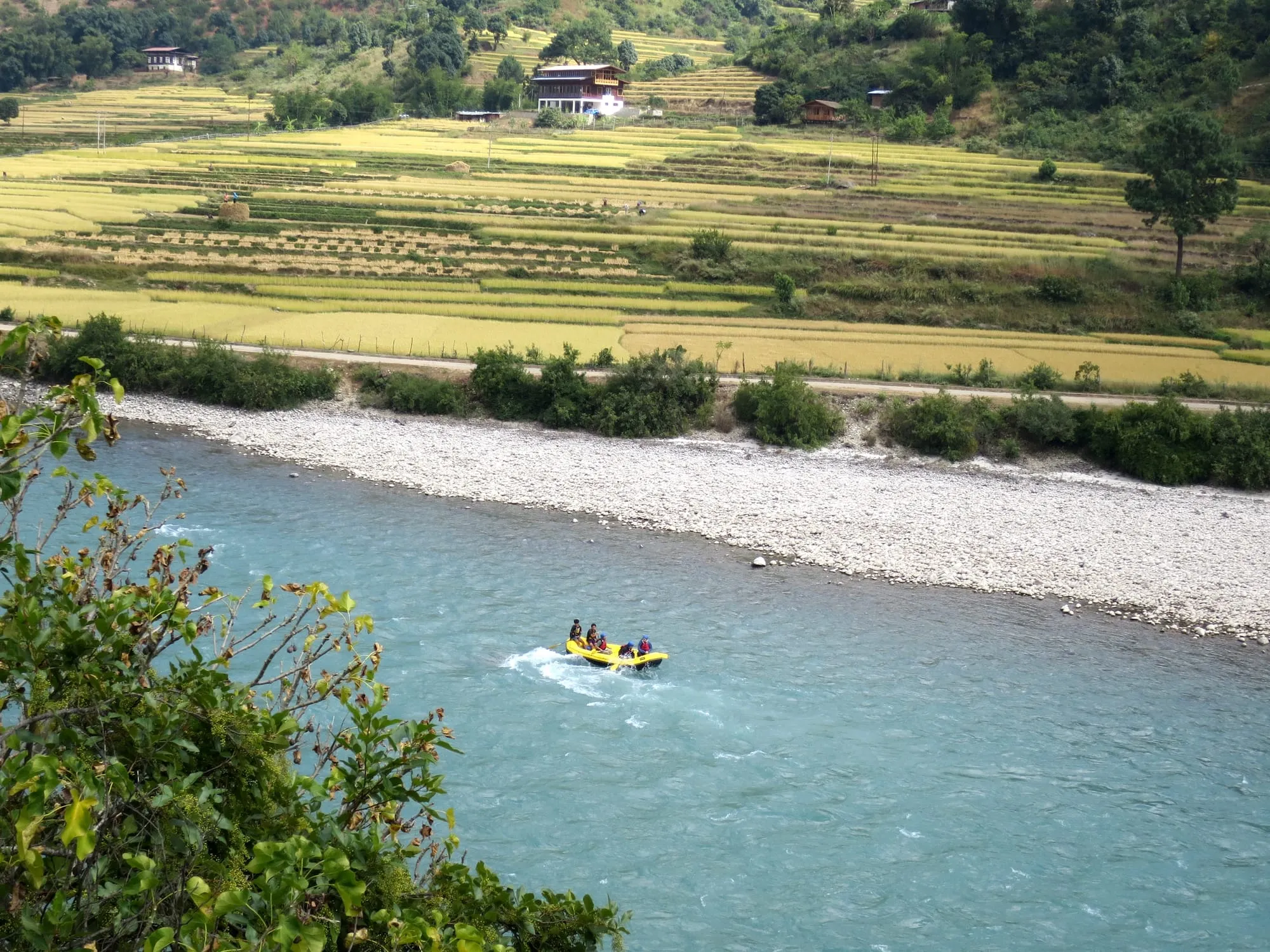
| Rafting the Mo Chhu | A morning | 9 km of Class II+ water, finishing below the dzong | Ask us |
Two monuments in Punakha charge admission, and each is Nu 500: Punakha Dzong and Chimi Lhakhang. Those are the rates the Department of Tourism set with effect from 15 March 2023, when monument fees were halved and the charging list was cut to seven sites nationwide. Nothing else in the valley is on that schedule — not the nunnery, not Khamsum Yulley, not the suspension bridge — whatever the fee tables on the aggregator sites still say. Both fees are included in every tour we run — your guide handles the tickets, so you are not paying at each gate.
How to spend a day here
The classic Punakha day is the dzong in the morning, when the light comes across the confluence and the courtyards are quiet, then the fifteen-minute walk up to the suspension bridge, and Chimi Lhakhang in the afternoon with the paddies in low light. That's comfortably full without being rushed.
With a second night you can add the climb to Khamsum Yulley Namgyal Chorten or a morning rafting the Mo Chhu — and those two connect neatly, since the raft puts in at the same bridge you cross to start the hike. If anyone in your group would rather not walk, the nunnery has road access right to the door and a view over three valleys.
Getting there from Thimphu
About 74 km, and two to two and a half hours' drive over the Dochu La pass at 3,100 m. Everyone stops at the pass for the 108 chortens and, on a clear morning, the Himalayan skyline. Road-widening work beyond the pass has been slowing the second half, so treat it as a morning out rather than a transfer.
The descent is the good part: down through cloud forest and rhododendron into a valley that's suddenly, obviously warmer.
Why the valley is warm
Punakha's floor sits at about 1,250 m, the lowest and mildest stop on a classic western circuit, while the district climbs to 4,800 m in the north. That altitude is the whole character of the place — rice rather than barley, oranges in winter, and comfortable walking weather in January when Thimphu and Paro are cold.
It's also why the Je Khenpo and Bhutan's Central Monastic Body winter here, coming down from Thimphu for the season. Punakha was the country's capital until 1955, and the Pho Chhu and Mo Chhu rivers still meet at the dzong that ran it.
When to come
February and March bring the Punakha Drubchen and Tshechu into the dzong's courtyard, and late spring brings the jacaranda into flower along the approach. October and November bring the rice harvest, clear post-monsoon skies and the valley at its greenest. Winter is mild and quiet — Punakha's quiet advantage over the rest of western Bhutan. The monsoon is green and wet, and the walk in to Chimi Lhakhang turns to mud.
Festival dates move with the lunar calendar, so check with us before building a trip around one.
Attractions in Punakha
Tailor-made travel
Begin your journey to the Last Shangri-La
Every Little Bhutan itinerary is private and tailor-made. Tell us what draws you to Bhutan — festivals, treks, monasteries, food — and we will design the journey around it.