Bhutan
Last updated:
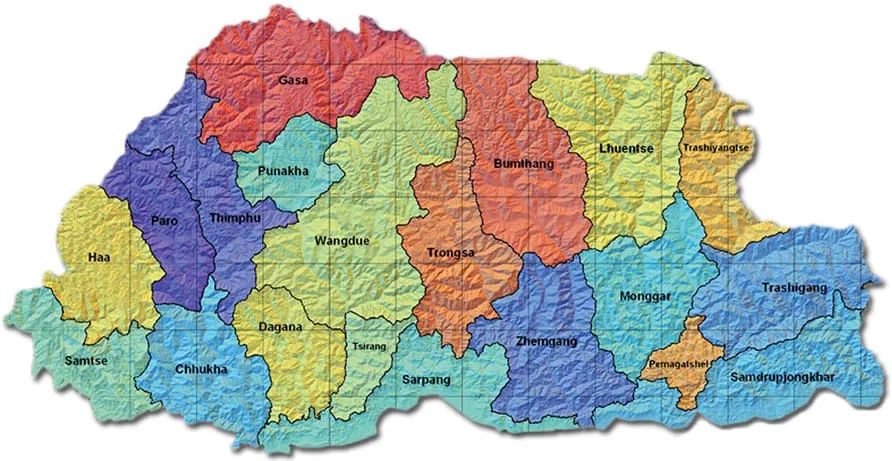
Nestled in the Eastern Himalayas between China and India, the small Buddhist Kingdom of Bhutan opened itself to the outside world only in the 1960s. Until then it had been largely mysterious even to its neighbours, and abandoning its self-imposed policy of isolation left it grappling to find a precarious balance between modernization and the preservation of its culture and traditions. Bhutan does seem to have found that balance: it is making tremendous developments in all sectors while holding onto a unique identity that makes it unlike any other country in the world — all with a population of under 800,000.
Facts about Bhutan
Location: Southern Asia. Landlocked between China and India. Area: 38,394 square kilometers. Altitude: 100 meters above sea level in the south to 7,570 meters at Gangkhar Puensum in the north — the highest unclimbed mountain in the world.
National symbols of Bhutan
The National Flag, National Emblem, National Anthem, National Animal, National Bird, National Butterfly, National Flower, National Tree, National Dress, National Game, National Day, National Language and National Dish, and the story behind each one.
Brief History of Bhutan
Bhutan was inhabited 4,000 years ago; archaeological evidence indicates settlements dating back to 2000–1500 BC. Bonism was the main religion before the arrival of Buddhism in the 8th century, and the country has travelled from warring valleys to unification, monarchy and democracy since.
Culture, Language and People
Bhutan has a rich culture that has remained intact because of the self-imposed isolation it kept up until the second half of the twentieth century. Dzongkha, meaning the language of the fort, is the national language.
Gross National Happiness
Bhutan measures prosperity by taking into consideration the citizens’ happiness levels and not the gross domestic product. We call this development philosophy Gross National Happiness, and it rests on four pillars.
Plants and Animals
With 69 percent of Bhutan under forest cover the country has a rich variety of plants and animals. Bhutan has three different zones, the alpine zone (4000m and above) above the tree line, the temperate zone and the subtropical zone.
Weather and Climate
Bhutan has four seasons and the climate varies depending on the altitude. March to May is spring when the weather is pleasant and the flowering trees blossom. June to August is summer, also referred to as the monsoon season because we get plenty of rain. Autumn runs September to November and winter December to February.
Explore
Tailor-made travel
Begin your journey to the Last Shangri-La
Every Little Bhutan itinerary is private and tailor-made. Tell us what draws you to Bhutan — festivals, treks, monasteries, food — and we will design the journey around it.