
Things to do in Zhemgang
Zhemgang was once called Kheng, and its people, the Khengpas, have been in south-central Bhutan for thousands of years. The district holds parts of two national parks — including Royal Manas, the oldest protected area in the country — and runs from hill country in the north down to the Assam border in the south. This is a district for naturalists, and for people who have already seen the dzongs.
Things to do in Zhemgang, compared
| Attraction | Time needed | Legwork | Best season |
|---|---|---|---|
| Royal Manas National Park | A day from Panbang — what fills it varies by itinerary | Hot, humid lowland forest — heat and damp, not altitude | Nov–Mar |
| Buli Tsho | About an hour, plus ~15 mins' walk each way | A rough forest road to a gate, then a made footpath | Any open month — closed roughly Sep–Nov |
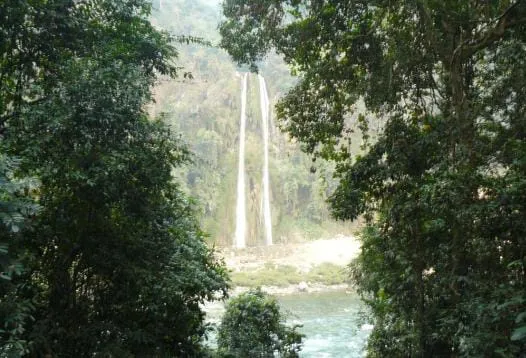
| Twin Waterfall | 20–30 mins | Beside the Gomphu–Panbang highway, with a short walk in | Nov–Mar, with the district |
| Berti Eco Lodge | It is where you sleep | Riverside cabins near Tingtibi | Nov–Mar |
Entrance fees are included in every tour we run, so there's no ticket window to queue at and no cash to carry at any of them.
What actually fits in a day?
Nothing on that table is near anything else on it. Buli Tsho sits east of Zhemgang town; Berti is on the Mangdechhu near Tingtibi, in the northern half of the district; the Twin Waterfall and Royal Manas are both down at Panbang, at the far southern end — and Panbang is 194 km and seven and a half to eight hours from Trongsa on our own itinerary.
Add the column up and it still isn't a day's sightseeing, it is a route. The park alone is a full day out of Panbang; everything else on the table comes to about two hours of activity between them, spread across the length of a district — the waterfall is twenty minutes on the way in or out, and the lake belongs to the northern leg entirely. Zhemgang is somewhere you travel through slowly, which is the whole reason to come.
Royal Manas, which is the reason to come
1,057 km² on UNESCO's tentative World Heritage list, the fourth largest of Bhutan's national parks, spanning Sarpang, Zhemgang and Pemagatshel and linked by biological corridors to four other protected areas. It became a wildlife sanctuary in 1966 and a national park in 1993, which makes it the oldest protected area in the country.
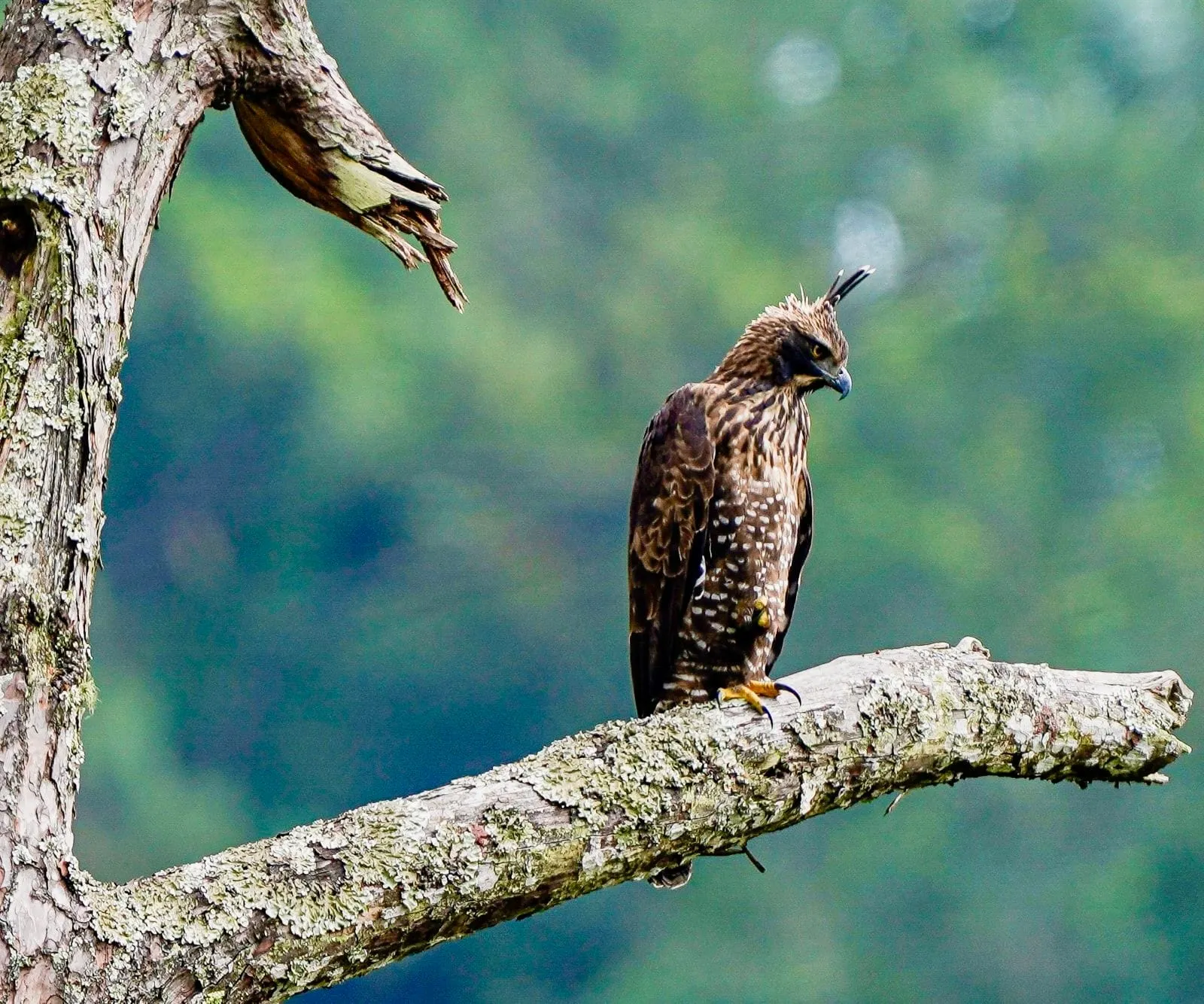
The elevation range is what makes it — about 108 m on the Manas river plain to 2,600 m in the hills, which is why the species list runs from elephant and one-horned rhinoceros to the endangered golden langur in the canopy.
We enter it at Panbang, the riverside town at the park's southern edge — either down the Tingtibi–Panbang highway from Trongsa and Zhemgang, or from the east through Nganglam. Gelephu, in Sarpang, is a different approach, and it is where the park's own office happens to sit.
A day is what our itineraries give it, and what fills that day is not the same on all three — an eco-trail walk on one, the river on another, birding on the third. There is also a four-day community walk, the Gomphu–Manas–Norbugang trail between five village eco-camps, and that is a separate trip with permits of its own: ask us rather than assume it.
Gelephu is worth knowing about for what is coming rather than what is there. It is the site of Gelephu Mindfulness City, the Special Administrative Region being built on the southern border, and what happens there will change how easy this corner of Bhutan is to reach. We keep that on its own page, because it is the fastest-moving subject on this site: see what GMC is and what you can actually see today.
Berti Eco Lodge is not where you stay for the park — it is a community-run place of riverside cabins near Tingtibi, most of a district away — but it is worth a paragraph of its own. It was built by the dzongkhag on a stretch of the Mangdechhu that is habitat for the critically endangered white-bellied heron, in a valley held back from ordinary development for that reason: the lodge is the community's income in exchange.
The lake that closes for the harvest
Buli Tsho is a tsho — a sacred lake, which in Bhutan means the palace of a protective deity with power over the villages below it.
This one belongs to Tshomen Kuntu Zangmo, also called Buli Menmo, described everywhere as half woman and half snake — the English word for a tshomen is "mermaid", and it gives you the wrong picture. She is said to have come from Tibet in the 17th century, following her brother, who became the local chieftain of Buli.
And it shuts. For about three months each year, roughly September to November, the community closes the lake over the harvest. Ask us before you plan an autumn day around it — the dates are set locally and they move with the lunar calendar.
Kheng, and what it makes
Bjoka, in the lower Kheng country under Panbang Dungkhag, is the district's centre for tsharzo — cane and bamboo weaving, one of Bhutan's thirteen traditional arts. Zhemgang is where the bangchung — the lidded bamboo basket used all over Bhutan — comes from.
The district calls itself Khengrig Namsum, "the three Khengs" — Upper Kheng in the high, cool north, Middle Kheng around the district town, and Lower Kheng running down towards the plains. It is also, on the dzongkhag's own account, one of the last places where Bon practice survives alongside Buddhism.
The Zhemgang Tshechu falls in March; the dates are in our festival calendar, and they move with the lunar year.
The rest of the district
2,421 km² and 17,763 people at the 2017 census, across eight gewogs — Bardo, Bjoka, Goshing, Nangkor, Ngangla, Phangkhar, Shingkhar and Trong — plus a dungkhag at Panbang. The district town sits at about 1,910 m; Panbang, at the other end, is under 300 m above sea level.
The Nabji–Korphu trail is not here. It runs through Jigme Singye Wangchuck National Park in Trongsa, even though Zhemgang dzong and town are visible from parts of it — see things to do in Trongsa.
When to come
November to March. Zhemgang is low, southern and subtropical, and the monsoon — June to August — makes both the roads and the walking hard. Along with Chhukha at the other end of the country, it is one of the few places on a Bhutan itinerary where you pack for heat and humidity rather than for altitude.
Attractions in Zhemgang
Tailor-made travel
Begin your journey to the Last Shangri-La
Every Little Bhutan itinerary is private and tailor-made. Tell us what draws you to Bhutan — festivals, treks, monasteries, food — and we will design the journey around it.