
Things to do in Lhuentse
Lhuentse is the ancestral home of Bhutan's Royal Family, formerly known as Kurtoe, and one of the least-visited districts in the country. It is a long way east and there is no town to speak of — what brings people is Khoma, where the finest textiles in Bhutan are woven, and the dzong on its ridge above the river. A day and a night does it properly.
Things to do in Lhuentse, compared
| Attraction | Time needed | Legwork | Best season |
|---|---|---|---|
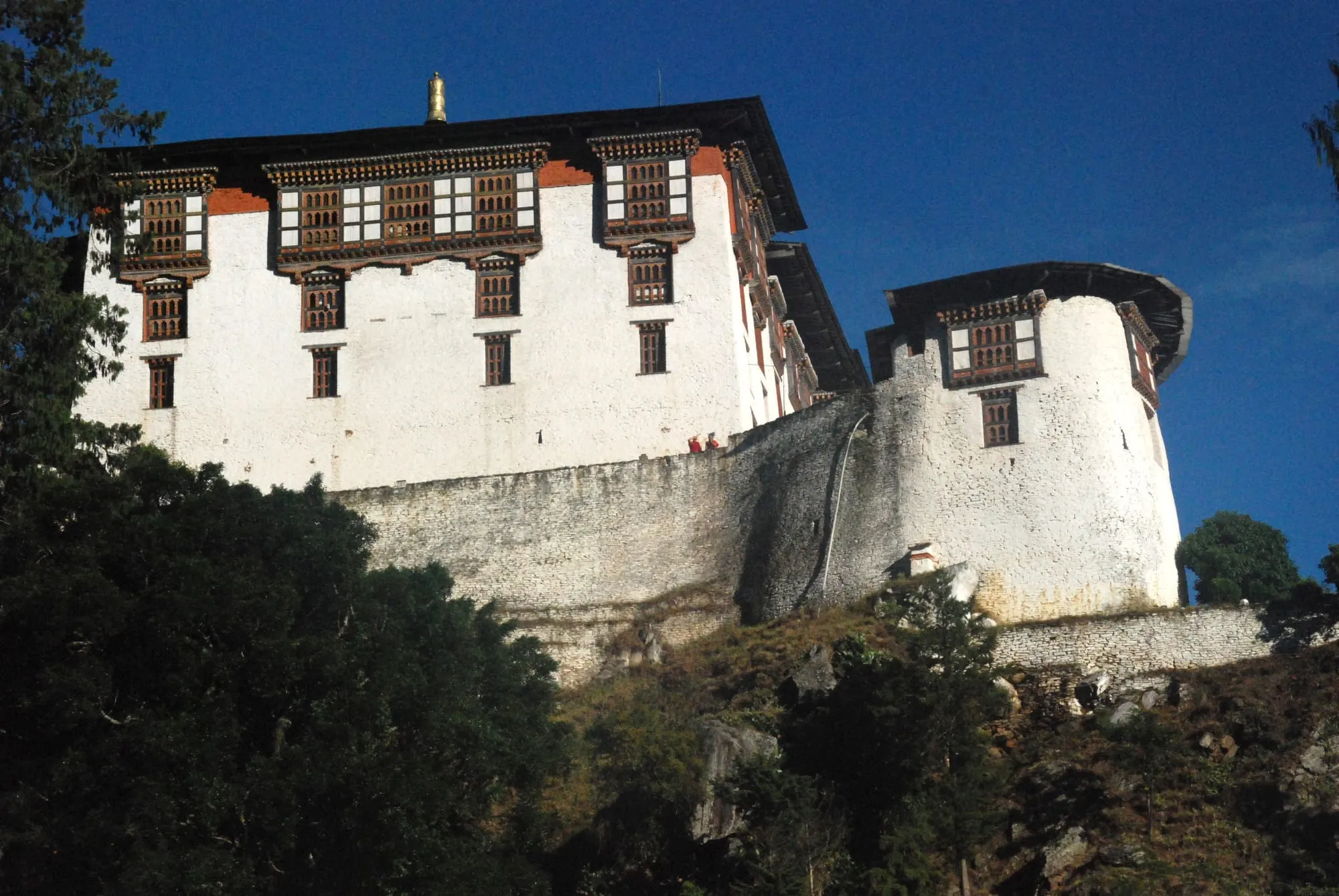
| Lhuntse Dzong | 1–1.5 hrs | On a ridge — a climb up, then temples on several levels | Mar–May, Sep–Nov |
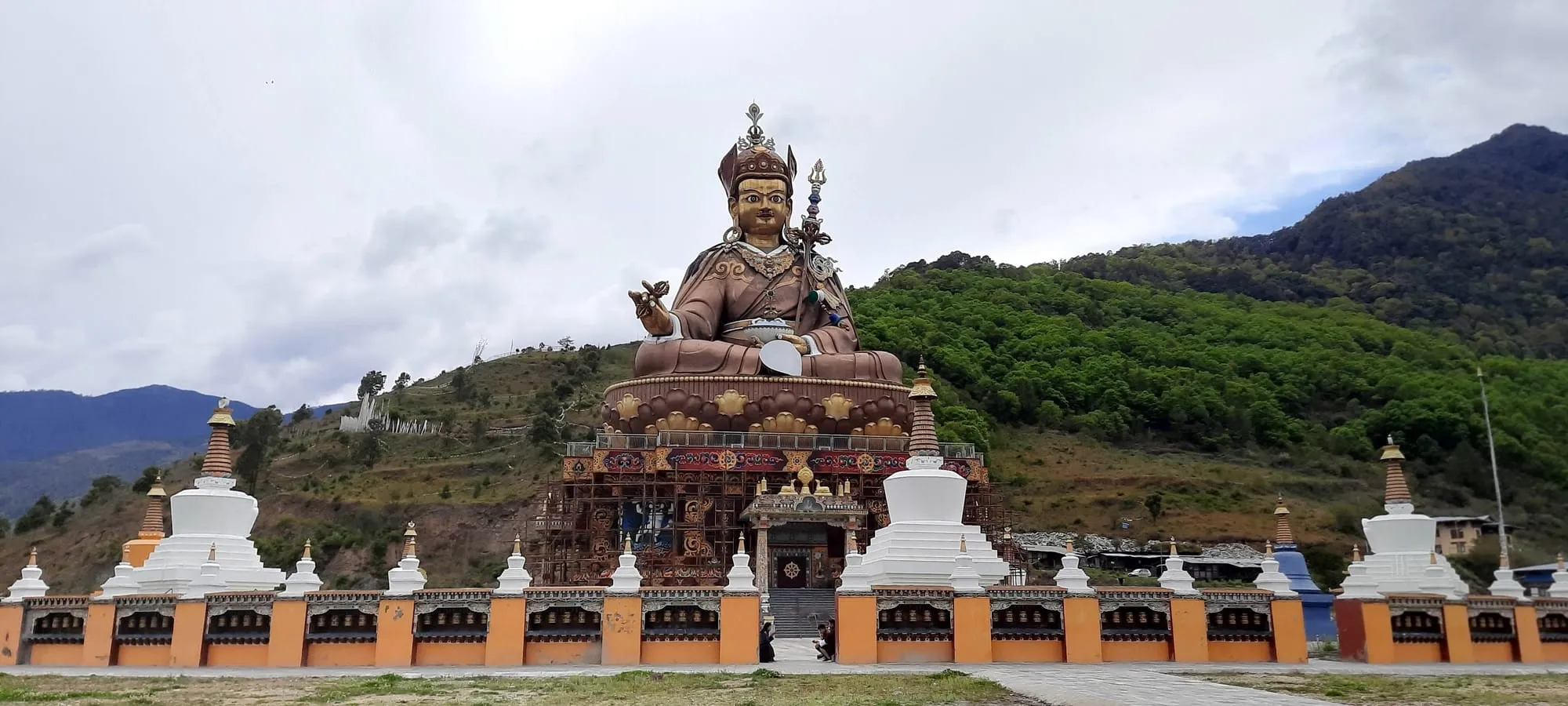
| Takila Guru Statue | 45 mins–1 hr | Road access; steps up to the base of a 154 ft statue | Year-round |
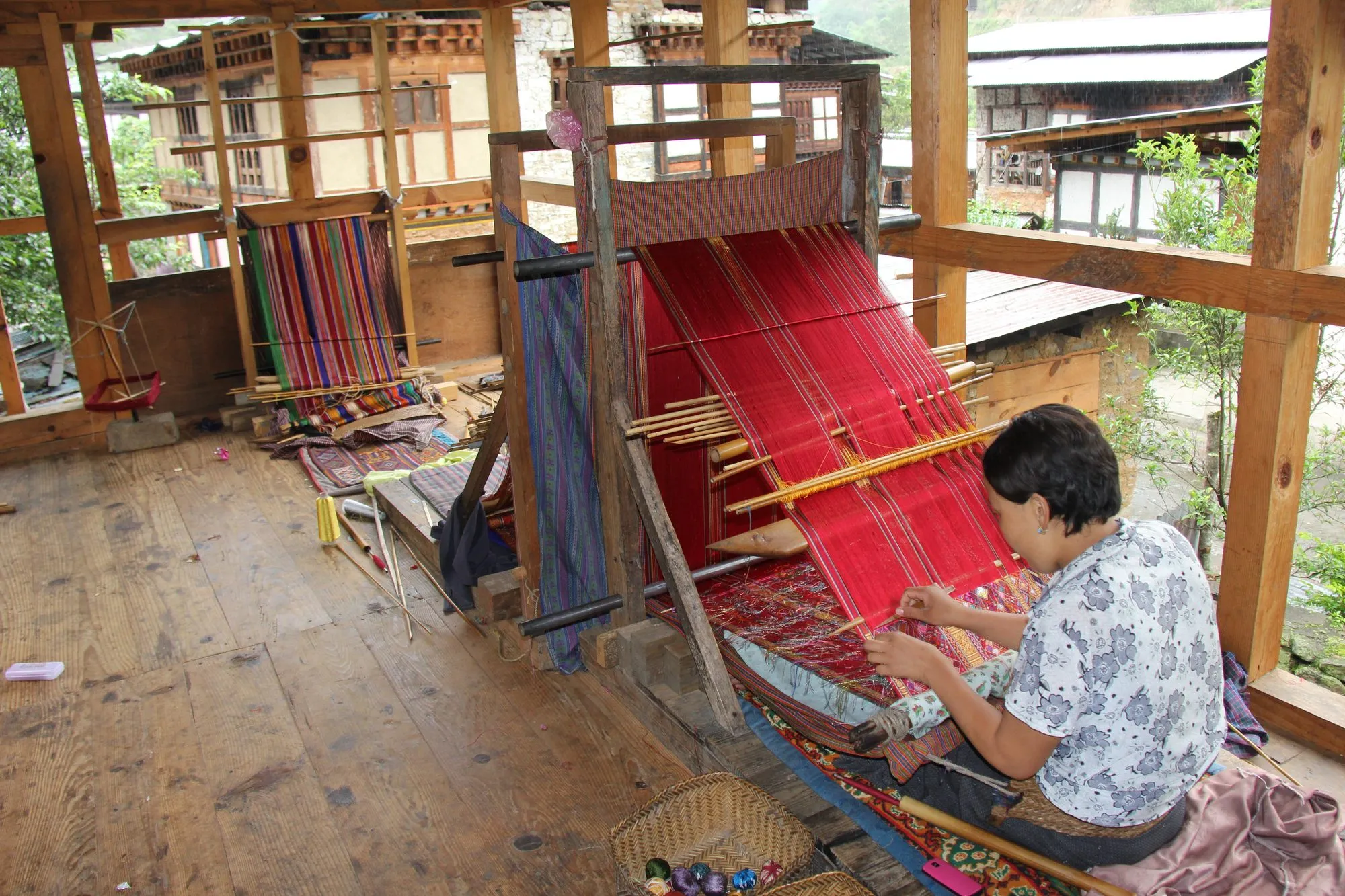
| Khoma Weaving Center | 1–1.5 hrs | Level once you're in the village; the road in is rough | Year-round |
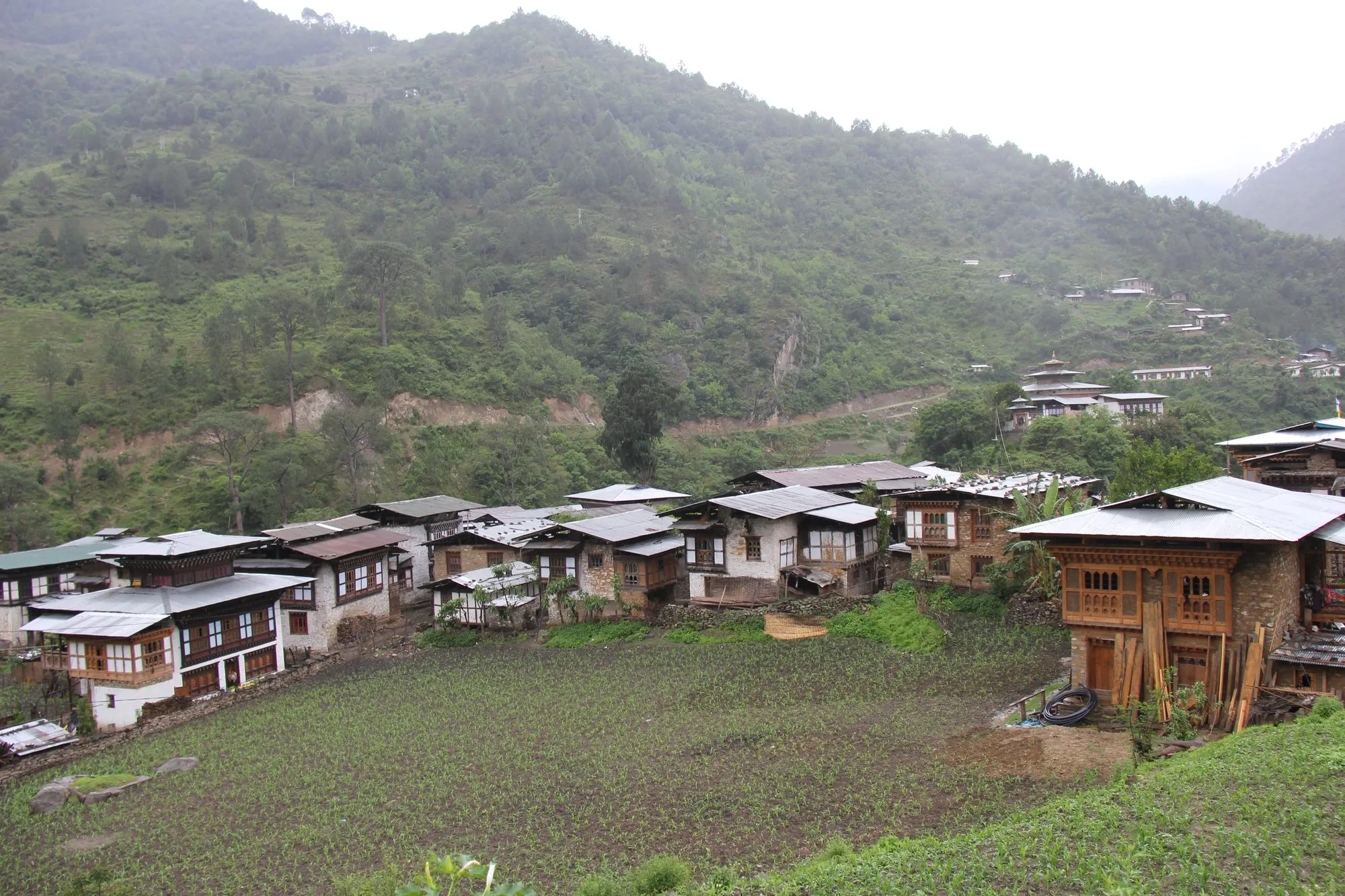
| Khoma Village Home Stay | An overnight | A village house — stairs; the hot stone bath is indoors | Year-round |
| Singye Dzong | Closed to foreign visitors | A three-day walk from the roadhead — for Bhutanese pilgrims with a permit | Not open to us in any season |
Entrance fees are included in every tour we run, so there's no ticket window to queue at and no cash to carry at any of them.
Khoma, and why the weaving matters
Kishuthara is the most intricate textile made in Bhutan: patterned silk kira, woven on a backstrap loom, and a fine one takes six months to a year. Bhutanese reporting puts a piece at Nu 30,000 to over Nu 100,000, and the most complex at up to Nu 240,000. Almost 80% of household spending in the gewog is met by selling it, and all five of Khoma's chiwogs weave.
The village is where that happens — looms in houses and in yards, fullest after the harvest. You are watching a technique that has not changed and an economy that depends on it, which is a different experience from a demonstration laid on for visitors. A weaving hall and showroom funded by the Department of Tourism was announced in 2023; ask us what is standing when you travel.
Stay the night. The district's own tourism site lists eleven certified homestays in Khoma village alone, run by the weaving families, with home cooking and a hot stone bath — and a night here turns a long drive into a reason to have made it. Our own itineraries note that there are no hotels in the district; ask us, because that is the sort of thing that changes.
The dzong, and the statue
Lhuntse Dzong sits on a ridge above the Kuri Chhu. Yongzin Ngagi Wangchuck built a meditation centre here in 1554; the fortress you climb to went up in 1665 under Trongsa Penlop Chogyel Minjur Tenpa, eleven years after the Druk Desi's forces brought Kurtoe under the central government. Its older name is LeyLey Dzong, the Fortress of the Goat. The Lhuentse Tshechu fills it in December or January; see the festival calendar for dates.
Takila is the newer draw: at 154 feet (46.9 m), the largest Guru Rinpoche statue in Bhutan, begun in 2008, consecrated in 2015 and ringed by eight large and 108 small chortens. It is not the tallest statue in the country — Buddha Dordenma is 54 m — but almost nobody outside Bhutan has heard of it, and you will have it to yourselves.
Kurtoe, and the family that came from here
Lhuentse's older name is Kurtoe, and Dungkar Naktshang in Kurtoe gewog is the birthplace of Jigme Namgyel, father of Bhutan's first King — the reason this remote district is the ancestral home of the Wangchuck dynasty. Our weaving tour gives it a day excursion; ask us what can be seen inside.
Getting there, and the one place we cannot take you
Lhuentse is reached from Mongar, which is itself a long way east: our own itineraries give Trongsa to Lhuentse as 270 km and 10.5 to 11 hours, and Lhuentse to Trashigang via Mongar as 153 km and 6 to 6.5 hours over Kori La at 2,450 m. The district borders Trashi Yangtse to the east, Mongar to the south, Bumthang to the west and Tibet (China) to the north; the dzongkhag puts its area at about 2,854 km², and the 2017 census counted 14,437 people across eight gewogs.
Singye Dzong is closed to foreign visitors. It is the sacred place of Guru Rinpoche's enlightened activity — the only one of the five in Bhutan — at 3,894 m against the Tibetan border, three days' walk from the nearest road, and thousands of Bhutanese pilgrims make that walk every year with a permit from the Khoma Gewog Centre. We cannot take you, and we would rather say so than sell a trek we cannot deliver.
Attractions in Lhuentse
Tailor-made travel
Begin your journey to the Last Shangri-La
Every Little Bhutan itinerary is private and tailor-made. Tell us what draws you to Bhutan — festivals, treks, monasteries, food — and we will design the journey around it.