
Dung and Jaling Makers of Tsebar

Families in and around Tsebar (also written Tshebar), a village at about 1,620 m in Khar gewog, make the instruments of Bhutanese monastery music: the dung, the long ceremonial horn, and the jaling, a shawm. The work is done by hand in small workshops beside the houses, with a hammer, a mandrel, tongs and a charcoal forge.
The metal is copper sheet, hammered into tubes. The decorative bands are German silver, an alloy of copper, nickel and zinc with no silver in it at all.
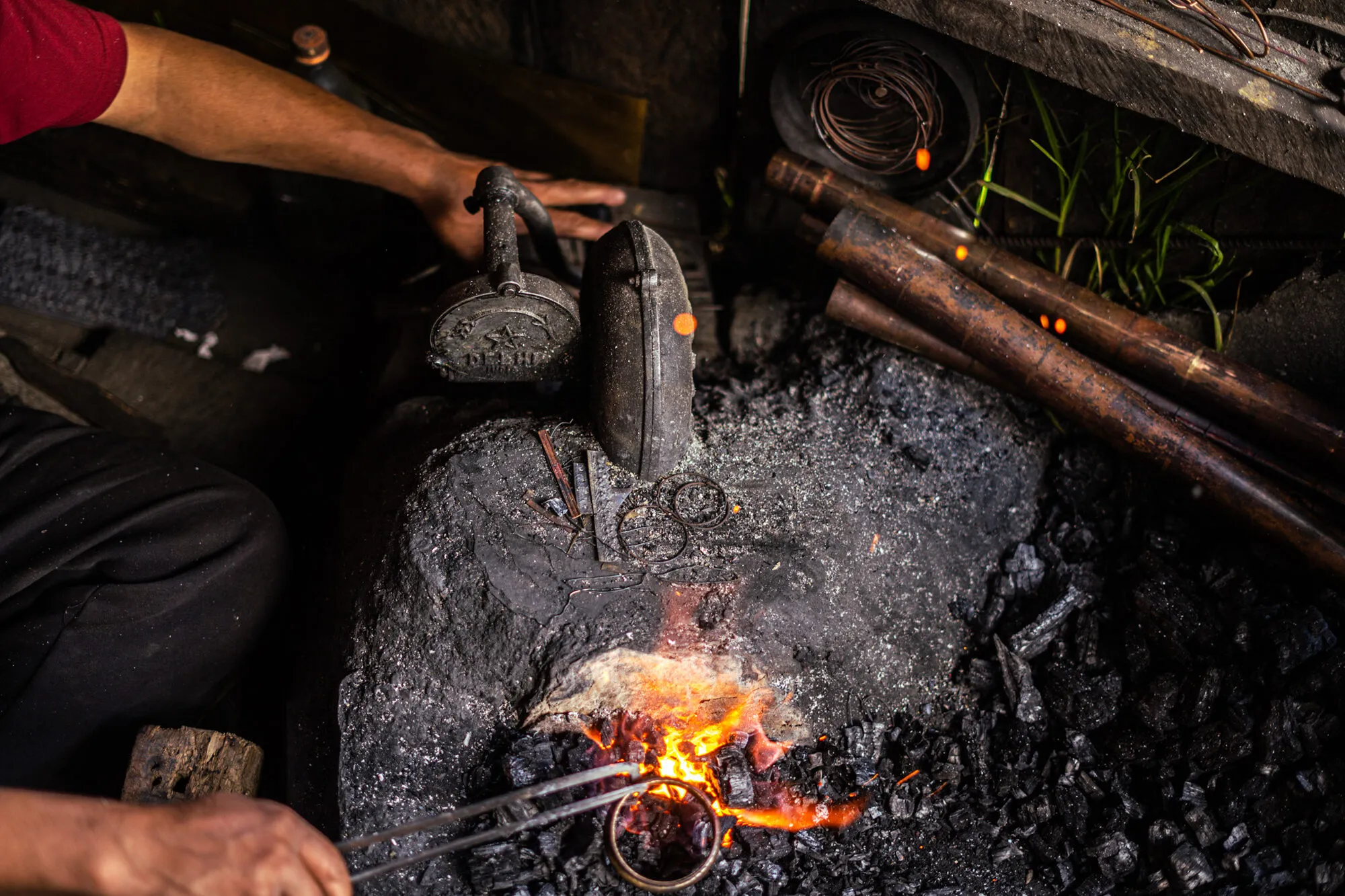
A lama’s fundraising
The craft came to Tsebar in the late 1980s with Lama Sangay Dorji, who was building the Zangdopelri at Thonphu Goenpa on the ridge above. When the money ran out he went to Samdrup Jongkhar to learn to make trumpets, and the sale of the instruments paid to finish the temple. He brought the art of making dung and jaling back with him, and passed it on.
The work
By 2021 more than 20 households in the area were making them. A couple takes four to five days to make a pair of dung, and about three days for a pair of jaling. The embossed pattern plates, the tay, are largely women’s work.
Orders come from across the country, and the makers’ group has supplied handicraft shops in Thimphu. Buyers have their own view of the trade. “Tshebar produces the best,” one told Bhutan Today in 2018, and hand-made horns are preferred over machine-made imports from India and Nepal.
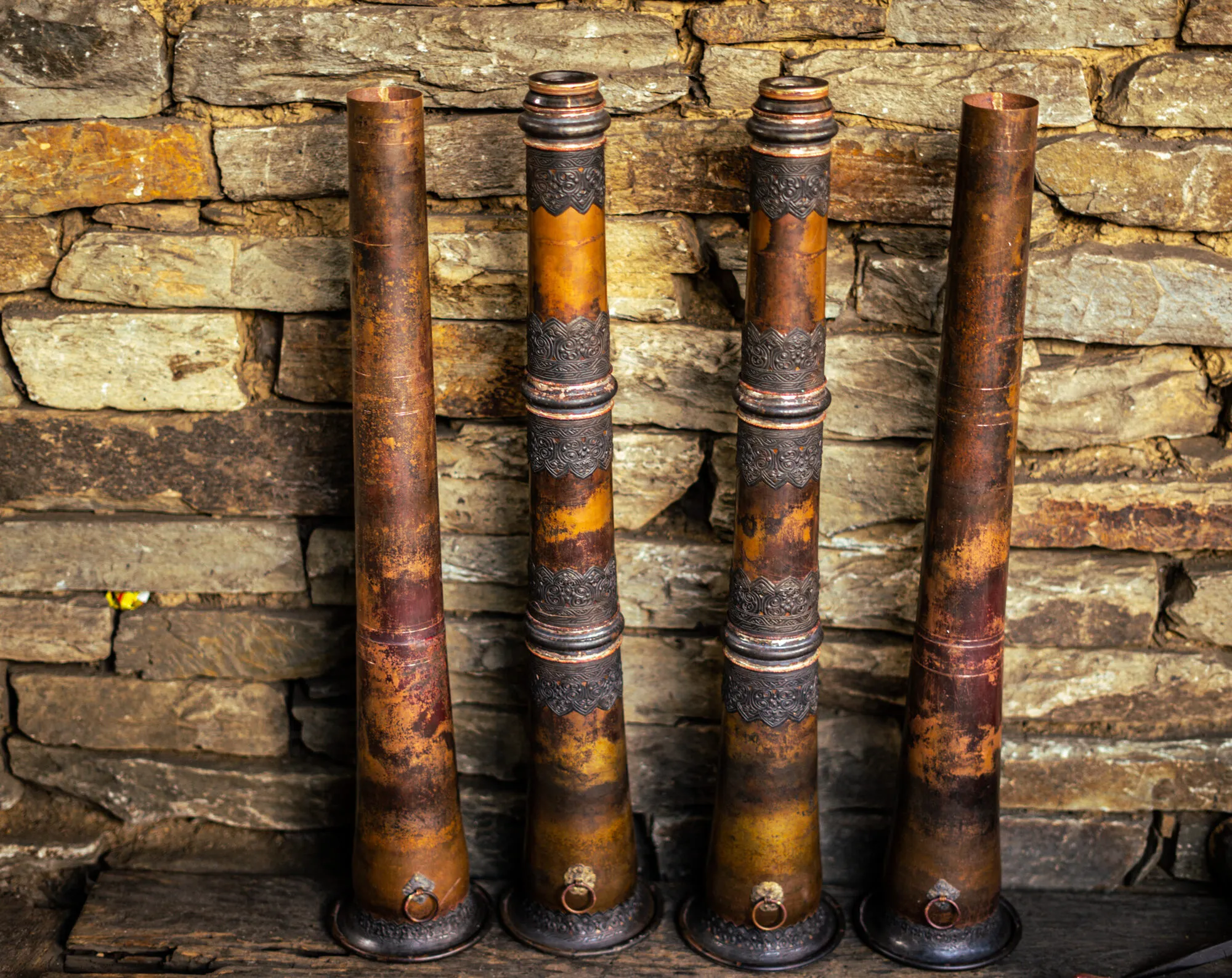
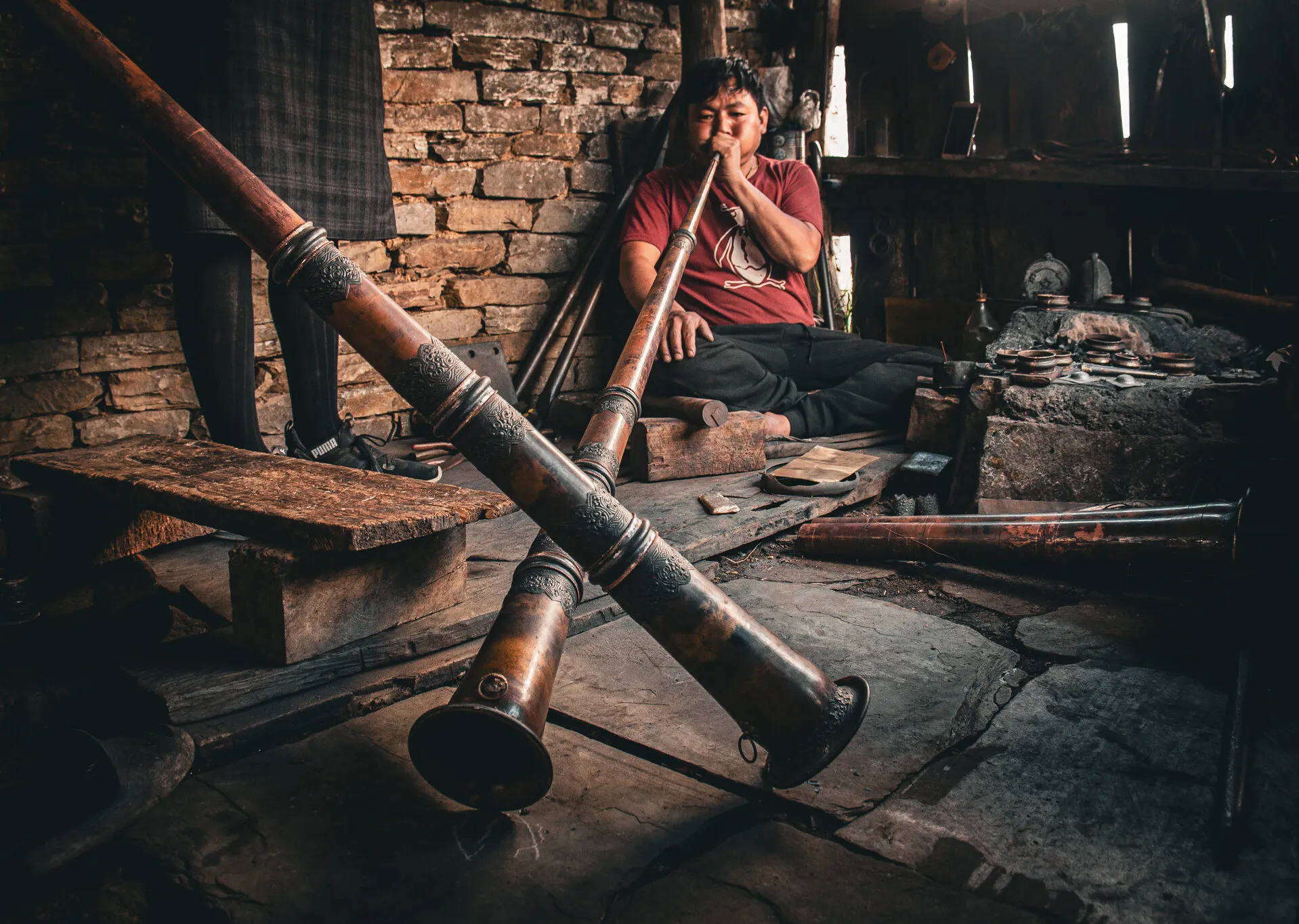
The workshops stand beside the makers’ houses, so a visit is by arrangement. See things to do in Pemagatshel for the rest of the district.
Tours that visit Pemagatshel

Bird Watching Tour
Frequently asked questions
What are dung and jaling?
The instruments of Bhutanese monastery music. The dung is the long ceremonial horn; the jaling is a shawm, a reed pipe. Families in and around Tsebar, in Khar gewog, make both by hand.
What are the Tsebar horns made of?
Copper sheet, hammered into tubes, with embossed decorative bands of German silver, an alloy of copper, nickel and zinc that contains no silver at all.
How long does a pair of dung take to make?
Four to five days for a couple working together, and about three days for a pair of jaling, as reported in 2018.
Tailor-made travel
Begin your journey to the Last Shangri-La
Every Little Bhutan itinerary is private and tailor-made. Tell us what draws you to Bhutan — festivals, treks, monasteries, food — and we will design the journey around it.