
Thongsa Cotton Weavers (Kamthangma)

The women of Thongsa, a village at about 1,110 m in Chongshing gewog, grow their own cotton, spin it, dye it and weave it into a plain handloom cloth: Thongsa kamthangma, also written kamthagma, and known locally as mongan khamung. The cotton is a native variety they cultivate. The indigo is grown here too, and the other dyes come from wild plants and minerals.
The craft has been practised since their forefathers’ time, and nobody in the village can say when or with whom it began.
From seed to cloth
Six steps take the cotton from the field to the loom:
- Planting the cotton.
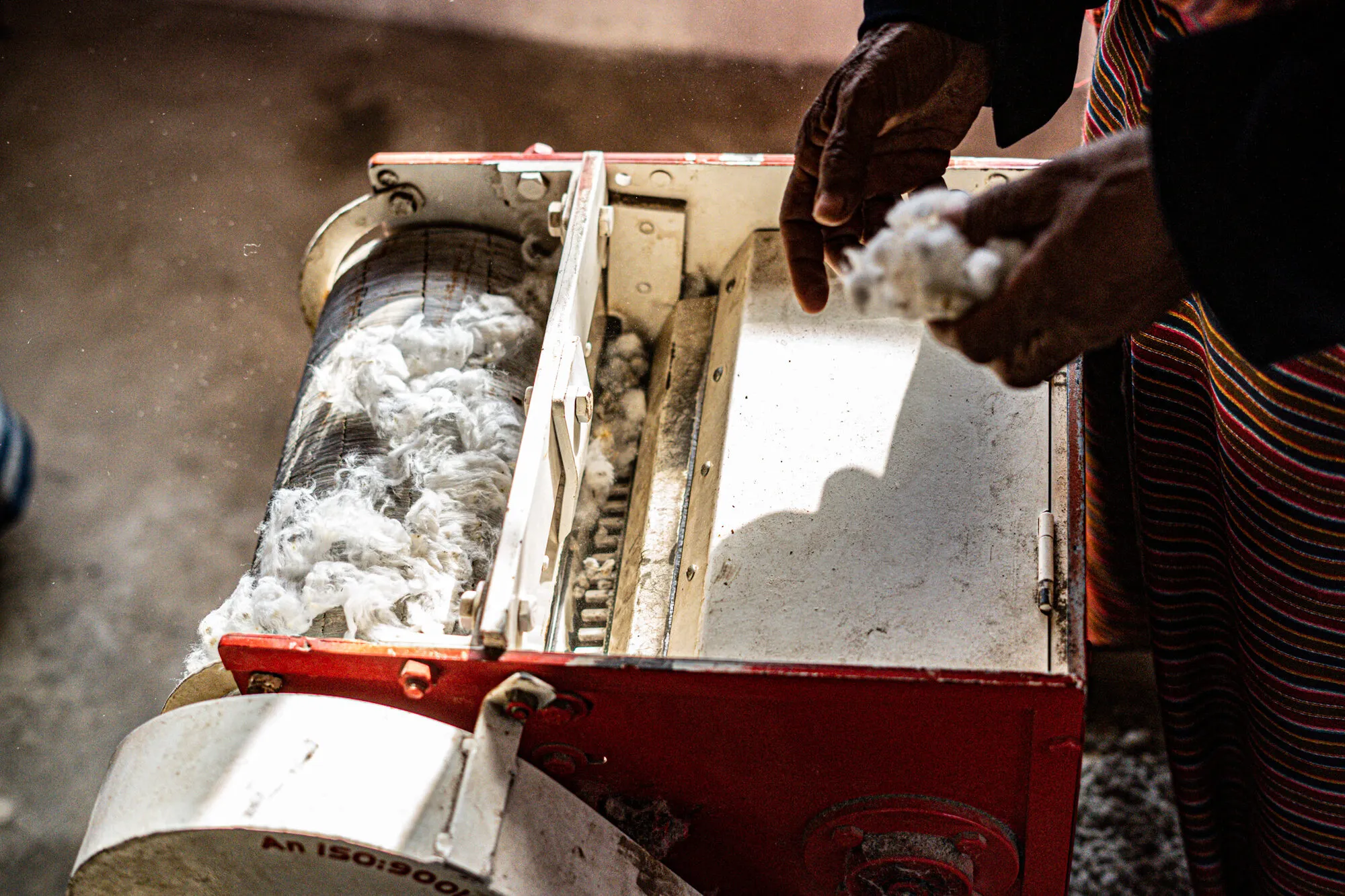
- Ginning: separating the fibre from the seed. By hand, with a kre-shing, a kilogram usually takes a day; the machine at the centre does 30 to 40 kilograms a day.
- Carding: fluffing the fibre, traditionally with the bow-like li-khang, now by machine.
- Spinning on a wheel, the son-daring.
- Dyeing, with jung (yonga in Dzongkha), yang leaves and zim leaves, boiled with the cotton and ash.
- Weaving on a traditional loom.
Machines now do the ginning and carding at the centre. The hand methods have not gone.
The centre
The Thongsa Cotton Cluster Common Facility Centre was set up by the Agency for Promotion of Indigenous Crafts (APIC) and the dzongkhag, with trade-development funding from the Enhanced Integrated Framework, a programme for the world’s least-developed countries. The group that uses it is largely made up of women.
The dzongkhag invites visitors to the centre to see the cloth and to buy it. The craft is not safe for all that. In 2024 one of Thongsa’s master weavers told Kuensel she feared for its future.
See things to do in Pemagatshel for the rest of the district.
Tours that visit Pemagatshel

Bird Watching Tour
Frequently asked questions
What is Thongsa kamthangma?
A plain handloom cotton cloth from Thongsa village in Chongshing gewog, also written kamthagma and known locally as mongan khamung. The weavers grow the cotton, spin it and dye it themselves.
Can visitors buy the cloth?
Yes. The dzongkhag invites visitors to the weaving group's centre at Thongsa to see the cloth and buy it.
How is Thongsa cotton dyed?
With indigo grown in the village and other natural dyes from wild plants and minerals: jung (yonga in Dzongkha), yang leaves and zim leaves, boiled with the cotton and ash.
Tailor-made travel
Begin your journey to the Last Shangri-La
Every Little Bhutan itinerary is private and tailor-made. Tell us what draws you to Bhutan — festivals, treks, monasteries, food — and we will design the journey around it.