
Yongla Goenpa

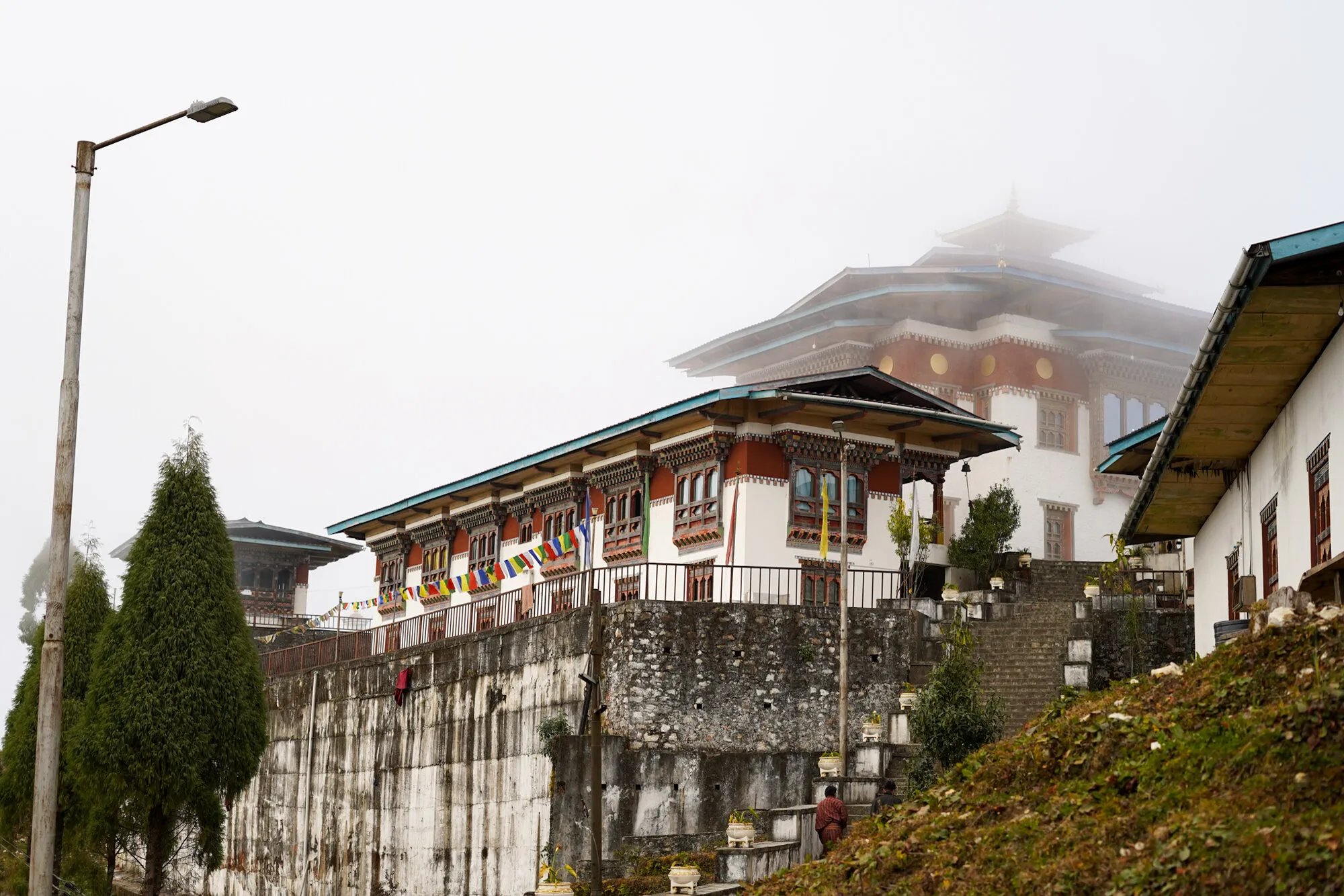
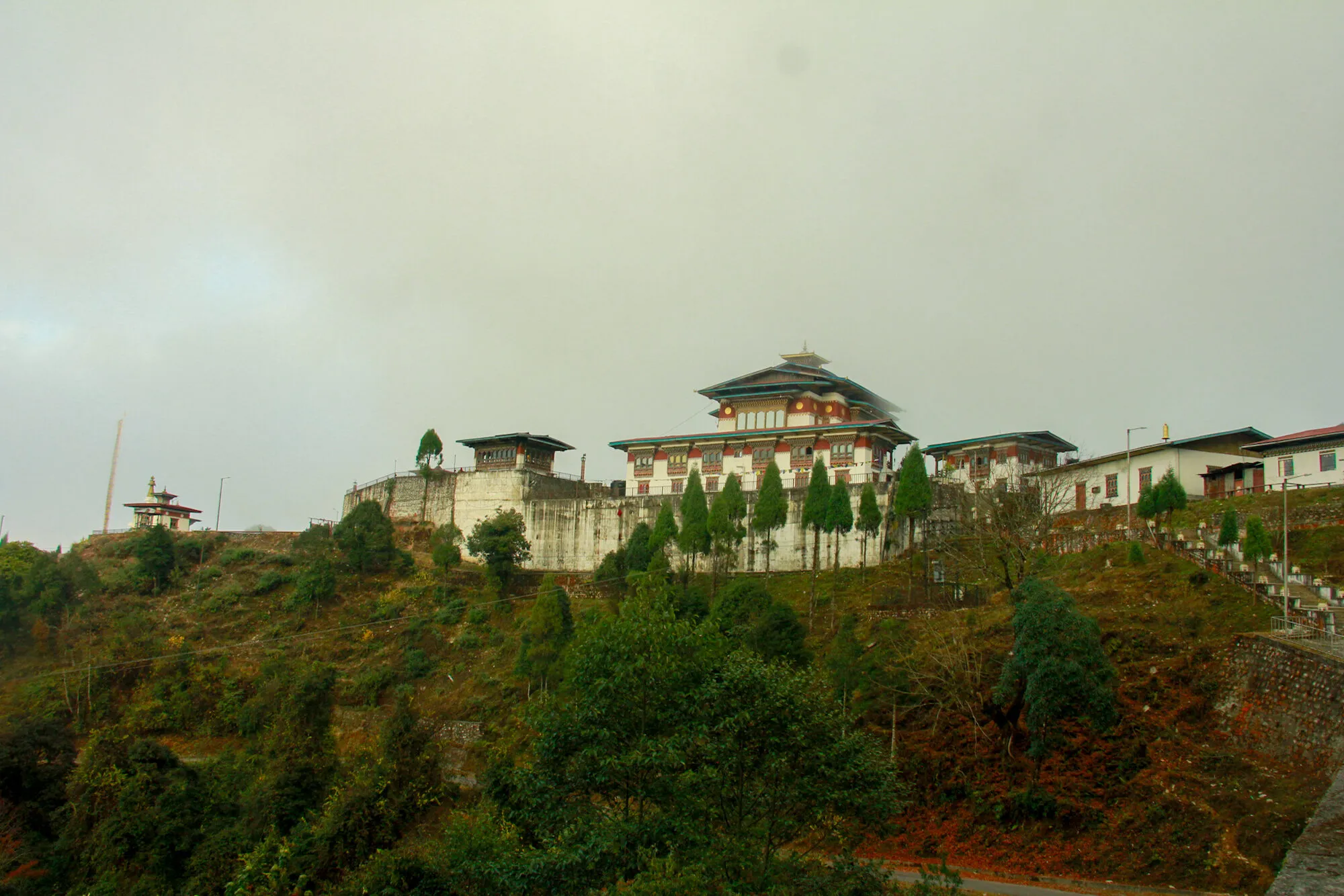
Yongla Goenpa stands on a summit ridge at about 2,480 m in Zobel gewog, above the road that climbs into Pemagatshel from the highway at Tshelingore. Its full name is Yongla Riwo Pelbar Dargeychhoeling Goenpa. It was founded in the 18th century by Jigme Kundrol, a disciple of Jigme Lingpa, and the dzongkhag names it as one of its three most sacred sites, out of 122 lhakhangs.
A hill shaped like a dagger
Tradition holds that Jigme Lingpa told his disciple to look for a place that looked like a phurba, the ritual dagger, and sent him south. It is the hill that has the shape, and the shape is why the goenpa’s great annual rite is a Phurba one.
The name comes with its own story. When Jigme Kundrol asked the dakini Khandro Dechen Gyalmo whether this was the place his master had foretold, she answered “yong yong”: yes, yes.
The war legend
The goenpa’s founding account tells of an army from India that camped at Kumarikata and overran the Bhutanese side. The commissioner of Dungsam set fire to Shali Dzong and made ready to flee. Jigme Kundrol told him to stay, and performed the Palchhen Dorji Phurpa tordog rite. The enemy camp caught fire, snakes appeared, the oxen went mad, and the invaders withdrew.
Elders in Zobel still say that a Phurpai Drubchen at Rigsum Goenpa in the upper east and at Yongla in the lower east keeps war away from the country.
Revival, and a name for the district
Over the generations the drubchen lost some of its standing. Lama Sonam Zangpo revived Yongla in the late 1960s: he rebuilt it, brought back the drubchen and its masked dances, and wrote down the goenpa’s history and its line of lamas.
In 1970 Dudjom Rinpoche visited, and gave the district the name it carries now: Pemagatshel, the blissful land of the lotus.
The earthquake and the rebuild
The 6.1-magnitude earthquake of 21 September 2009 left the lhakhang severely damaged. His Majesty visited that year and commanded its restoration. The work ran slowly at this height, with water carried up from the valley below, and was reported complete in May 2019. It cost about Nu 165 million, and added a water supply, a hostel for monks and residences for the lams.
Monks in summer, the drubchen in September
Yongla is the summer seat of the Pema Gatshel Rabdey, the district’s monk body, which moves up here for the summer months. The Yongla Phurpai Drubchen is held every September. Once paid for from the villages’ post-harvest offerings, it is now sponsored by the government.
On a clear day the ridge looks south over Samdrup Jongkhar to the plains of Assam. The view works both ways: travellers on the highway at Tshelingore can pick out the goenpa on its hill.
Jashar Goenpa, a nunnery, is 6 km and about half an hour from Yongla, back down on the road towards the old town. See things to do in Pemagatshel for the rest of the district.
Tours that visit Pemagatshel

Bird Watching Tour
Frequently asked questions
Who founded Yongla Goenpa?
Jigme Kundrol, a disciple of the Nyingma master Jigme Lingpa, in the 18th century. Tradition says Jigme Lingpa sent him south to find a mountain shaped like a phurba, the ritual dagger, and that this ridge was it.
How did Pemagatshel get its name?
From a visit to Yongla. Dudjom Rinpoche came in 1970 and gave the district its present name, Pemagatshel, "the blissful land of the lotus".
When is the Yongla drubchen?
The Yongla Phurpai Drubchen, a Vajrakilaya rite with masked dances, is held every September and is now sponsored by the government. The date has moved before, so it needs checking for the year you travel.
How do you get to Yongla Goenpa?
The goenpa is 7 km and about half an hour up a side road from the Tshelingore junction on the Samdrup Jongkhar–Trashigang highway, and 25 km and 1 to 1.5 hours from Denchi, where the district's new dzong stands.
Tailor-made travel
Begin your journey to the Last Shangri-La
Every Little Bhutan itinerary is private and tailor-made. Tell us what draws you to Bhutan — festivals, treks, monasteries, food — and we will design the journey around it.