Brief History
Last updated:
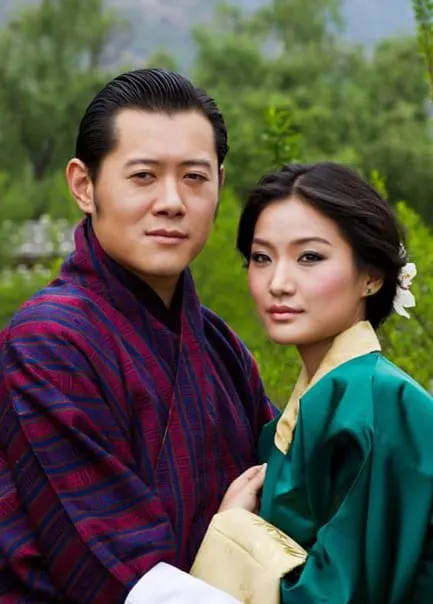
Bhutan was inhabited by people as early as 4,000 years back. There are archaeological evidences indicating settlements in Bhutan dating back to 2,000-1,500 BC. Bhutan in ancient times had many different names; it was known as Druk Yul or the Land of the Thunder Dragon in the 17th century. The outside world however called it Bhutan, derived from a Sanskrit word Bhu-Uttan meaning ‘High Land.’
Bonism was the main religion in Bhutan before the arrival of Buddhism. It was only in the 8th century that an Indian saint Guru Padmasambhava, popularly know as Guru Rinpoche brought Buddhism to Bhutan.
Many warlords battling constantly with one another ruled Bhutan until Zhabdrung Ngawang Namgyal from Tibet unified the county in 1616 AD. He established a dual system of governance – the Choe Sid (Spiritual and Religious tradition). After the long period of civil strife that followed the death of Zhabdrung in 1651, power was finally consolidated with the crowning of Gongsar Ugyen Wangchuck as the first hereditary monarch in 1907.
The monarchical system continued till 2008 before the Fourth King stepped down and introduced democracy in Bhutan. Today it is a Democratic Constitutional Monarchy.
Democracy has bedded in quickly. Bhutan has held four National Assembly elections since 2008, and the governing party has changed at every one of them — three peaceful transfers of power in a decade and a half. At the most recent general round, on 9 January 2024, the People’s Democratic Party won 30 of the 47 seats and Tshering Tobgay was sworn in as Prime Minister on 28 January 2024, for a second, non-consecutive term.
The next chapter is taking shape in the south. In his National Day address on 17 December 2023, His Majesty announced Gelephu Mindfulness City, a development on the Indian border that has since been established as a Special Administrative Region with its own legal and judicial system.
Tailor-made travel
Begin your journey to the Last Shangri-La
Every Little Bhutan itinerary is private and tailor-made. Tell us what draws you to Bhutan — festivals, treks, monasteries, food — and we will design the journey around it.