
Mebartsho (Burning Lake)
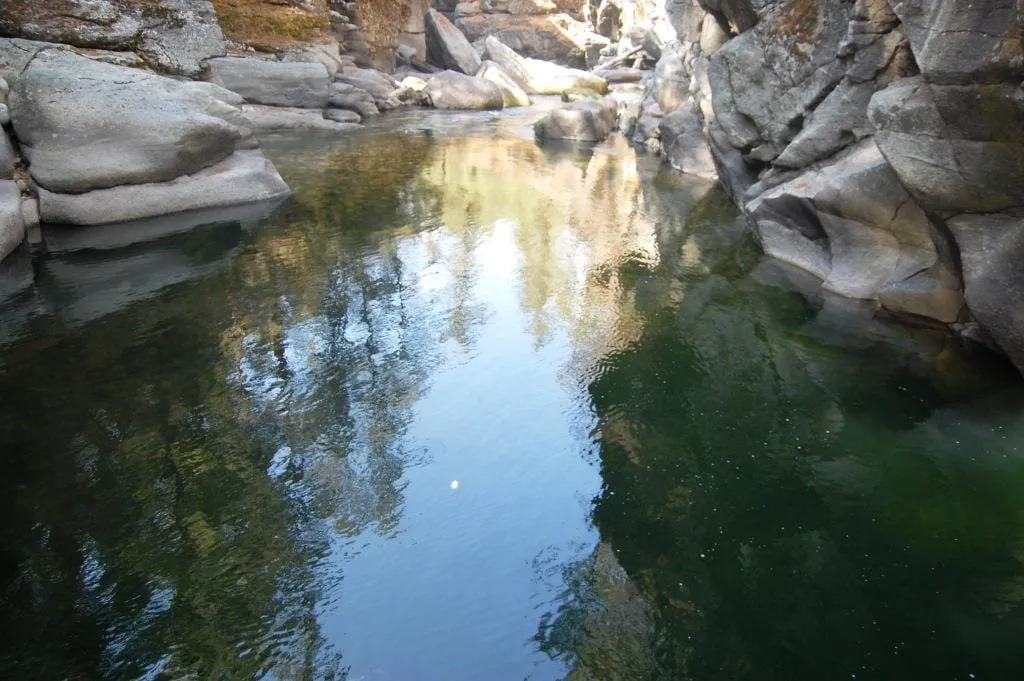
Mebartsho — the Burning Lake — is not a lake. It is a deep pool in the gorge of the Tang Chhu, about thirty minutes’ drive from Chamkhar and five minutes on foot below the road, and it is where Pema Lingpa made the discovery that made him the most important treasure revealer in Bhutanese history. Allow 30–45 minutes. Entry is included in your tour.
What happened here
Pema Lingpa (1450–1521) was born in the Tang valley, a few kilometres up this same road. He dreamt that he should come to this pool, and looking into it he saw a temple at the bottom with many doors, one of them open. He dived, entered a cave, was handed a treasure chest by a woman inside, and came up on dry land.
Nobody believed him.
So he went back, in front of a crowd, holding a lit butter lamp — and said that if he were a genuine revealer of treasures, he would return with the treasure and with the lamp still burning. He went under, stayed under a long time, and surfaced holding a statue, a treasure chest, and the lamp still alight.
The pool has been Me-bar tsho, the burning lake, ever since. Among the things he is said to have brought up from it: a self-spoken Guru statue, a scroll, and a ritual skull.
Guru Rinpoche is said to have given Pema Lingpa an inventory of 108 major termas — hidden treasures — of which he revealed about half in his lifetime. This pool was the beginning of it.
Before you go down: the thing nobody tells you
The rock above the water is polished, often wet, and there is nothing to stop you going in. The current in the gorge is fast.
On 4 November 2015 a French visitor fell in while taking photographs. A twenty-six year old Bhutanese guide jumped in after him and pushed him to the bank, where another visitor pulled him out. The guide was swept away and drowned. The visitor died a few minutes later. It was the fifth drowning at Mebartsho since April 2011.
Tourist safety here had been raised in the Bumthang district assembly since 2013. Two years after the deaths none of the trails had been fenced — the district’s own engineer said the work could not proceed for fear of disturbing the sanctity of the site, which is a real and understandable reason and does not make the rock any less slippery.
So: stay on the path and on the bridge. Take your photographs from there. Do not climb down towards the water for a better angle — that is precisely what killed two people in 2015, one of them a guide doing his job.
Everything else about a visit here is gentle. This is the one thing worth being firm about, and we would rather say it than have you read it somewhere else afterwards.
What the visit is actually like
A short steep path down from the road, and then a gorge — narrow, cool, loud with water, and much darker than the drive in prepares you for. A rickety wooden bridge crosses the narrowest part and it is the best place to stand.
The rock walls and the ledges are covered in tsatsas: small conical clay mounds, many of them stamped with Buddhist symbols, some containing human remains. Prayer flags run across the gorge. Butter lamps are lit in a small cupboard by the bridge, kept there by the nuns of the nearby Pema Tekchok Choling nunnery, who look after the site.
This is a working pilgrimage site, not a viewpoint. Dress and behave accordingly, and if you can, come when it is quiet.
The tradition is that only the enlightened can see the temple that lies beneath the water. That is not a challenge; it is a description of what Pema Lingpa said he saw.
When to go, and how it fits your day
Year-round. The gorge sits deep and is in shadow early and late, so the middle of the day sees the most of it.
Mebartsho is the first stop of a Tang valley day, which continues to Ta Rimochen, Pema Choeling Nunnery and Ogyen Choling at the head of the valley. That is a full day out of Jakar and it is the best second day in Bumthang. See things to do in Bumthang for how it compares with the rest.
Tours that visit Bumthang


Frequently asked questions
Why is Mebartsho called the Burning Lake?
Because of what Pema Lingpa did here in the late 1400s. Challenged by sceptical locals to prove he was a genuine revealer of hidden treasures, he dived into the pool holding a lit butter lamp, saying that if he were genuine he would come back with the treasure and the lamp still burning. He surfaced with a statue, a treasure chest and the lamp still alight. Me-bar tsho — the burning lake.
Is Mebartsho actually a lake?
No. It is a deep pool in the gorge of the Tang Chhu, a river. The name is traditional rather than geographical, and the scale surprises people who arrive expecting open water.
How do you get to Mebartsho, and how long does it take?
About 30 minutes' drive from Chamkhar into the Tang valley, then roughly five minutes on foot down from the road. Allow 30–45 minutes at the site.
Is Mebartsho dangerous?
Yes, and it is worth taking seriously. The rock above the pool is polished and often wet, the current is fast, and there are no railings. In November 2015 a visitor fell in while taking photographs and drowned, along with the Bhutanese guide who went in after him — the fifth drowning here since 2011. Stay on the path and the bridge, and do not climb down towards the water for a photograph.
Who was Pema Lingpa?
Pema Lingpa (1450–1521), born in the Tang valley just up this road, and the most important terton — treasure revealer — Bhutan has produced. Guru Rinpoche is said to have given him an inventory of 108 major hidden treasures; he revealed about half of them. He also built Tamshing, where he died.
Tailor-made travel
Begin your journey to the Last Shangri-La
Every Little Bhutan itinerary is private and tailor-made. Tell us what draws you to Bhutan — festivals, treks, monasteries, food — and we will design the journey around it.