
Tachog Lhakhang
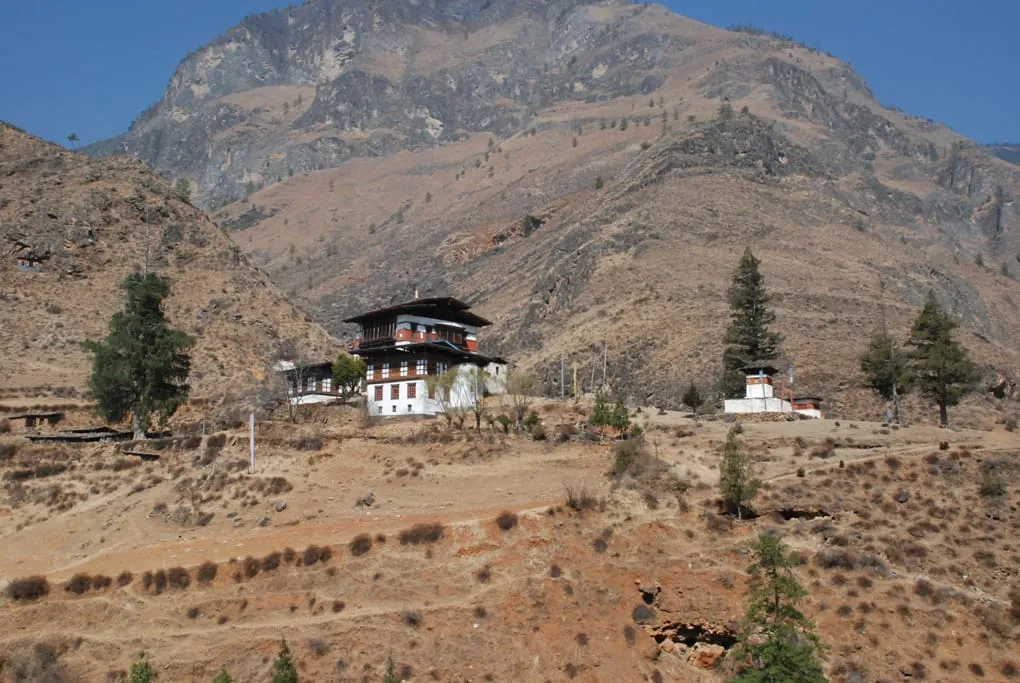
Tachog Lhakhang sits above the Paro–Thimphu highway, reached by walking across an iron-chain suspension bridge over the Pa Chhu. The bridge is why you stop: it was rebuilt in 2005 using Thangtong Gyalpo’s original chain links. Allow 30–45 minutes; entry is included in your tour.
Why the bridge is the point
Most reconstructions are replicas. This one is not.
Thangtong Gyalpo’s original bridge here was washed away by flood in 1969. When it was rebuilt in 2005, on a royal directive, the builders recovered the original links and joined them with unused chain from his other bridges. What hangs across the Pa Chhu today is a modern deck on fifteenth-century ironwork.
Walk out onto it. It moves — that is what chain bridges do — and the prayer flags strung along it make a noise in the wind that people remember longer than the photographs. Look down at the links while you are standing there. They were forged before Columbus sailed.
What to expect on the ground
The temple is on the far bank, up the slope. The climb is steeper than it looks from the road, which catches people out because the bridge makes it feel like the hard part is over.
Inside is a small, dark, working temple, privately held. It is run by the descendants of Thangtong Gyalpo — one of very few temples in Bhutan still in a founding family’s hands rather than the state’s or the monk body’s. That is also why we confirm access before we stop rather than assuming a door will be open.
Shoulders and knees covered, shoes off inside. Photograph the bridge and the exterior freely; ask before you photograph inside.
How it fits your day
It is not a trip — it is a stop. Tachog sits on the Paro–Thimphu highway between Isuna and Chuzom, the confluence where the Pa Chhu meets the Wang Chhu. Everyone driving between Paro and Thimphu passes it, which makes it the cheapest half-hour in either district’s itinerary.
Year-round, and no season changes it. See things to do in Paro for how everything in the valley compares.
A little history
Thangtong Gyalpo (1385–1464) — engineer, blacksmith, physician, and the founder of Tibetan opera — is known across the Himalaya as Chagzampa, “the iron-bridge maker”. He built chain bridges across Tibet and Bhutan; how many is disputed, and the number most often quoted is a formulaic one, so we will say dozens and leave the counting to people who can cite it.
He built this temple after a vision, while meditating here, of Balaha, the spiritual horse — an emanation of Avalokiteshvara. Tachogang means “temple of the hill of the excellent horse”. He put one of his bridges in at the same time.
Our page said the fourteenth century for years. It cannot have been: he was born in 1385 and did his building in the fifteenth. His other Paro work, Dungtse Lhakhang, is dated to the 1420s or 1430s — the same working period, and the right one for this.
Tours that visit Paro


Frequently asked questions
Is the iron bridge at Tachog Lhakhang the original?
The bridge is a 2005 rebuild, but the chains are not new. The original was washed away by flood in 1969; the 2005 reconstruction reused the salvaged original links, extended with unused links from Thangtong Gyalpo's other bridges. The ironwork under your feet is around 550 years old.
Who was Thangtong Gyalpo?
A 15th-century Tibetan polymath (1385–1464) — engineer, blacksmith, physician and founder of Tibetan opera — known as Chagzampa, "the iron-bridge maker", for the chain bridges he built across Tibet and Bhutan. He also built Dungtse Lhakhang up the valley in Paro.
How long do you need at Tachog Lhakhang?
Thirty to forty-five minutes, and it is a stop on the drive rather than a trip in itself — it sits on the Paro–Thimphu highway, so it costs you almost nothing on the day you transfer between the two.
Can you cross the bridge at Tachog Lhakhang?
Yes, on foot, and that is the reason to stop. It is a chain-link suspension deck over the Pa Chhu hung with prayer flags, and it moves under you. The climb up to the temple on the far side is steeper than it looks from the road.
Who owns Tachog Lhakhang?
It is privately run by the descendants of Thangtong Gyalpo — one of the very few temples in Bhutan still held by a founder's family rather than by the state or the monk body. Access is arranged rather than assumed, which is why we confirm before we stop.
Tailor-made travel
Begin your journey to the Last Shangri-La
Every Little Bhutan itinerary is private and tailor-made. Tell us what draws you to Bhutan — festivals, treks, monasteries, food — and we will design the journey around it.