
Pemagatshel Dzong (Druk Migyur Dechen Dzong)

Druk Migyur Dechen Dzong — “Fortress of Unwavering Bliss” — at Denchi was begun in 2012, consecrated on 22 September 2023, and built on 6.5 acres for Nu 610 million with funding from the Government of India. It replaced the older dzong in the old town, 19 km away and far up the mountain. Allow 45 minutes to an hour.
Why is a brand-new dzong worth stopping for?
Because almost no dzong in Bhutan is new. Nearly every one you will see is a 17th-century fortress that has been damaged, burnt, rebuilt and repaired across four hundred years. This one was built from scratch, to the same plan, in your lifetime — traditional woodwork, murals and courtyards, with modern services behind the walls.
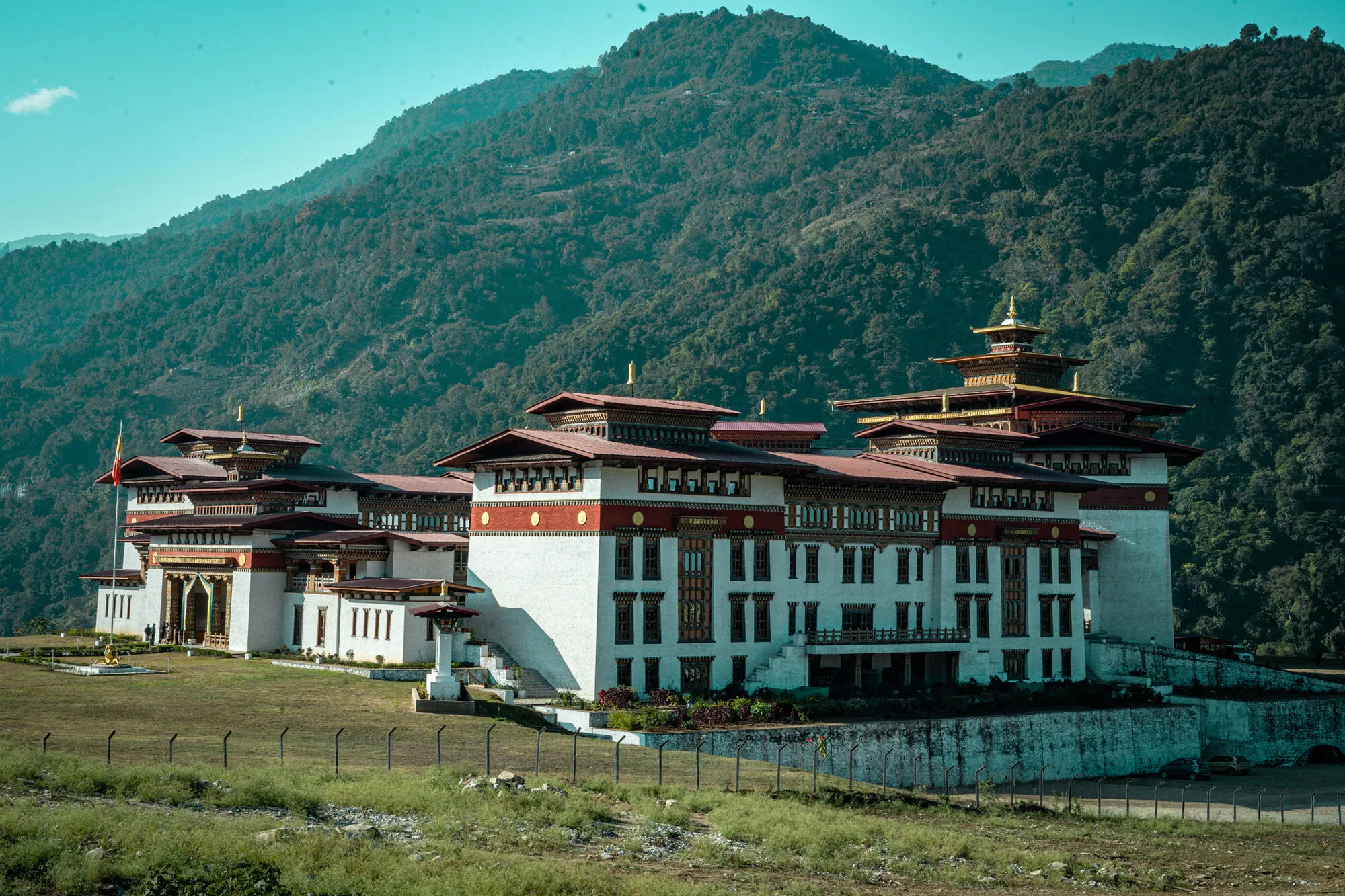
You may read that Pemagatshel had no dzong at all before 2023. That traces back to residents at the inauguration saying “we did not have such a Dzong”, meaning not one like this, rather than none at all.
If you have spent a fortnight looking at 400-year-old fortresses, twenty minutes in a three-year-old one is unexpectedly clarifying about what a dzong actually is: not a monument, but a building type Bhutan is still using.
What is it called?
Druk Migyur Dechen Dzong. The name was given by His Holiness the Je Khenpo.
Most listings call it simply “Pemagatshel Dzong”, which is the district’s name rather than the building’s.
How it was built
Construction started in 2012 and was expected to finish in 2018. That slipped to June 2020, and the dzong was finally delivered in 2023 — the district administration moved in on 16 March 2023. On 22 September 2023 the dzong was inaugurated by His Royal Highness Gyaltshab Jigme Dorji Wangchuck, with Tsugla Lopen Karma Rangdrol of the Central Monastic Body leading the consecration.
It cost Nu 610 million, funded by the Government of India.
A whole town is growing up around it: Denchi now has new residential development that followed the dzong, which is a small, live example of how administrative buildings still move Bhutanese settlement.
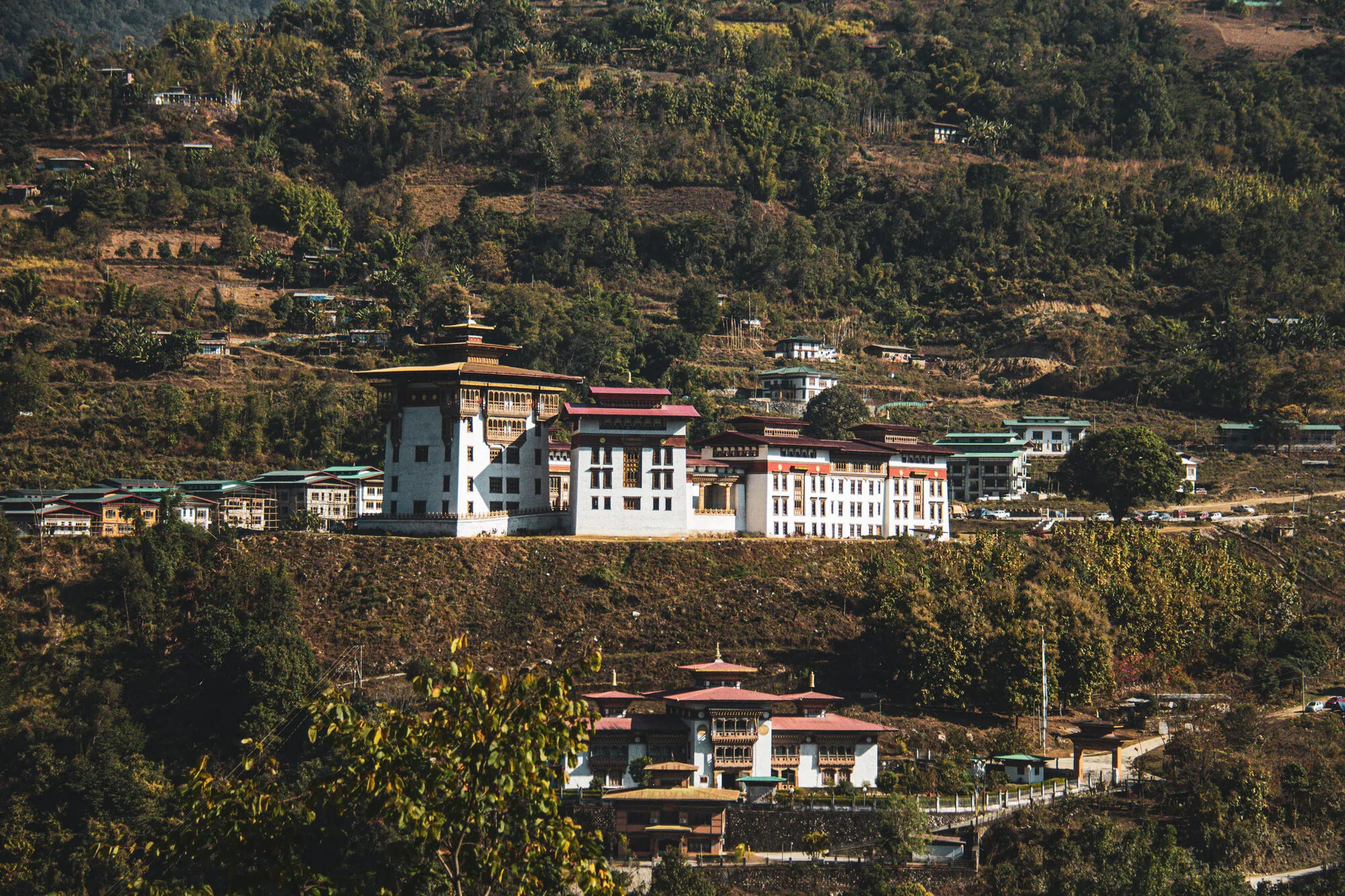
The old dzong
The old dzong is still there, in the old town, at roughly 1,640 m. When the administration moved down to Denchi in March 2023, it was to pass to the Pema Gatshel Rabday, the district monastic body.
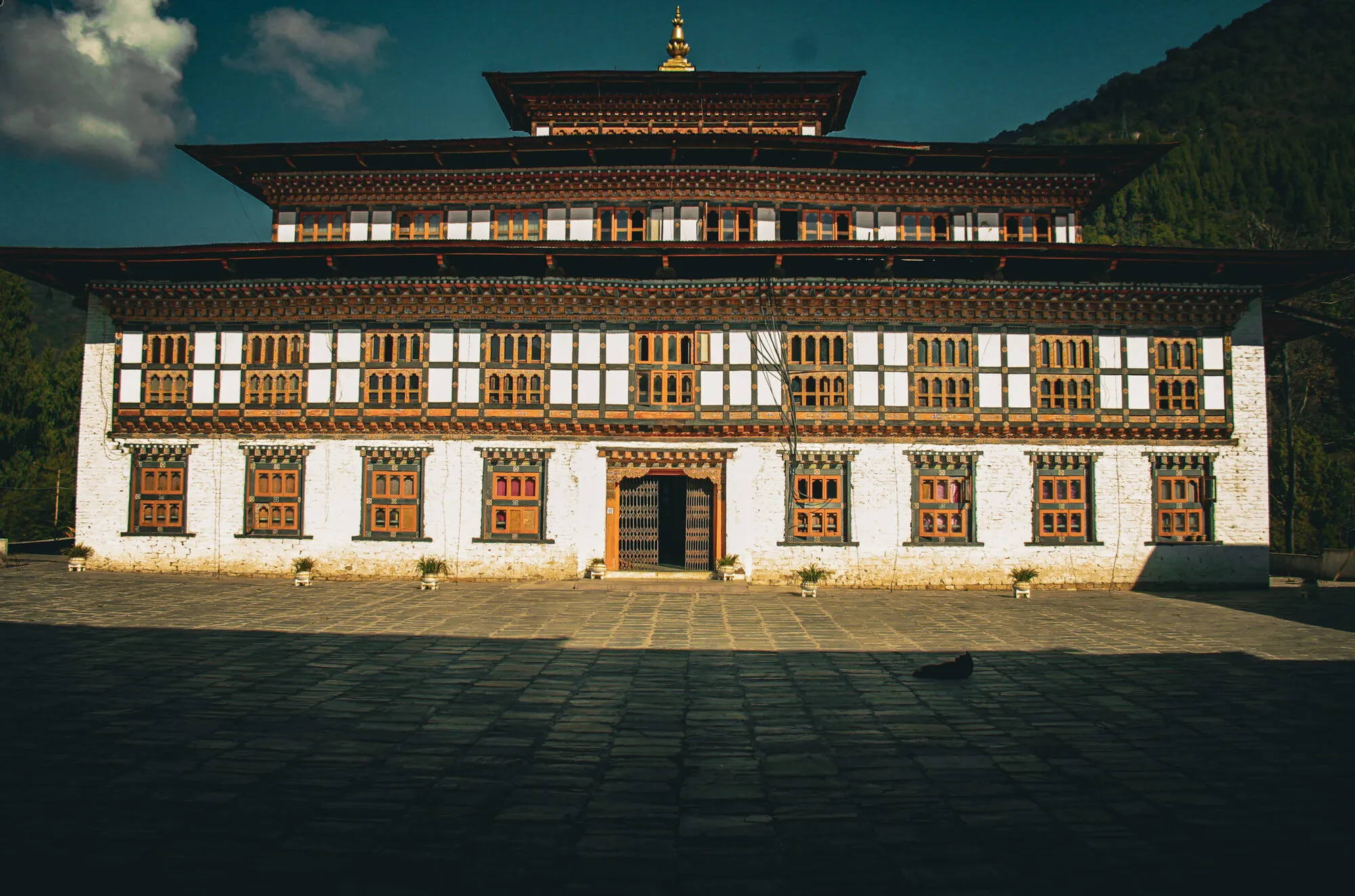
The tshechu moved here in 2023
The Pema Gatshel Tshechu, instituted in 1984, was held in the new dzong’s courtyard for the first time in October 2023, and drew about double the usual crowd. The old dzong had been too far for the villages of Yurung and Chhimoong gewogs, and their people could come to the festival again after a long gap.
ABTO’s tentative schedule puts the 2027 tshechu at 6–9 November, with the thongdrel, the giant appliqué banner, unrolled on the last day.
Getting there
About 19 kilometres from Pemagatshel old town — and only three kilometres in a straight line.
The gap is vertical. The old dzong sits at roughly 1,640 metres and the new one at about 780 — some 860 metres between them on the elevation models. What separates them is a long descent of switchbacks, so the drive takes a good deal longer than nineteen kilometres suggests, and it is a fair part of what you came for.
When should you come?
October to April. This is low, southeastern Bhutan — warm compared with the valleys, and wet through the monsoon, when the eastern roads are at their least reliable.
See things to do in Pemagatshel for the district, and Narphungla for the birding stop on the road that brings you here.
Tours that visit Pemagatshel

Bird Watching Tour
Frequently asked questions
When was Pemagatshel Dzong built?
Construction began in 2012, and both ceremonies fell on 22 September 2023: His Royal Highness Gyaltshab Jigme Dorji Wangchuck inaugurated the dzong, and Tsugla Lopen Karma Rangdrol of the Central Monastic Body consecrated it. It cost Nu 610 million, funded by the Government of India, and stands on 6.5 acres. It was due in 2018, then in June 2020, and arrived in 2023 — over eleven years. The district administration moved in on 16 March 2023.
Did Pemagatshel have a dzong before this one?
Yes. There was an older one in the old town, and the new dzong replaced it. It still stands, and was to pass to the Pema Gatshel Rabday, the district monastic body, when the administration moved out. What is unusual is that almost every dzong in Bhutan is a 17th-century fortress repaired across four centuries, and this one was built from scratch, to the same plan, in your lifetime.
What is the dzong actually called?
Druk Migyur Dechen Dzong, a name given by His Holiness the Je Khenpo. Most listings just call it "Pemagatshel Dzong", which is the district's name rather than the building's.
How far is the dzong from Pemagatshel old town?
About 19 km, against only three kilometres as the crow flies. The difference is the mountain: the old dzong sits at roughly 1,640 m and the new one at about 780 m — some 860 metres between them on the elevation models. It is a long series of switchbacks for a short distance on the map, and the drive is a good part of the visit.
Tailor-made travel
Begin your journey to the Last Shangri-La
Every Little Bhutan itinerary is private and tailor-made. Tell us what draws you to Bhutan — festivals, treks, monasteries, food — and we will design the journey around it.