
Tshatshi Buram

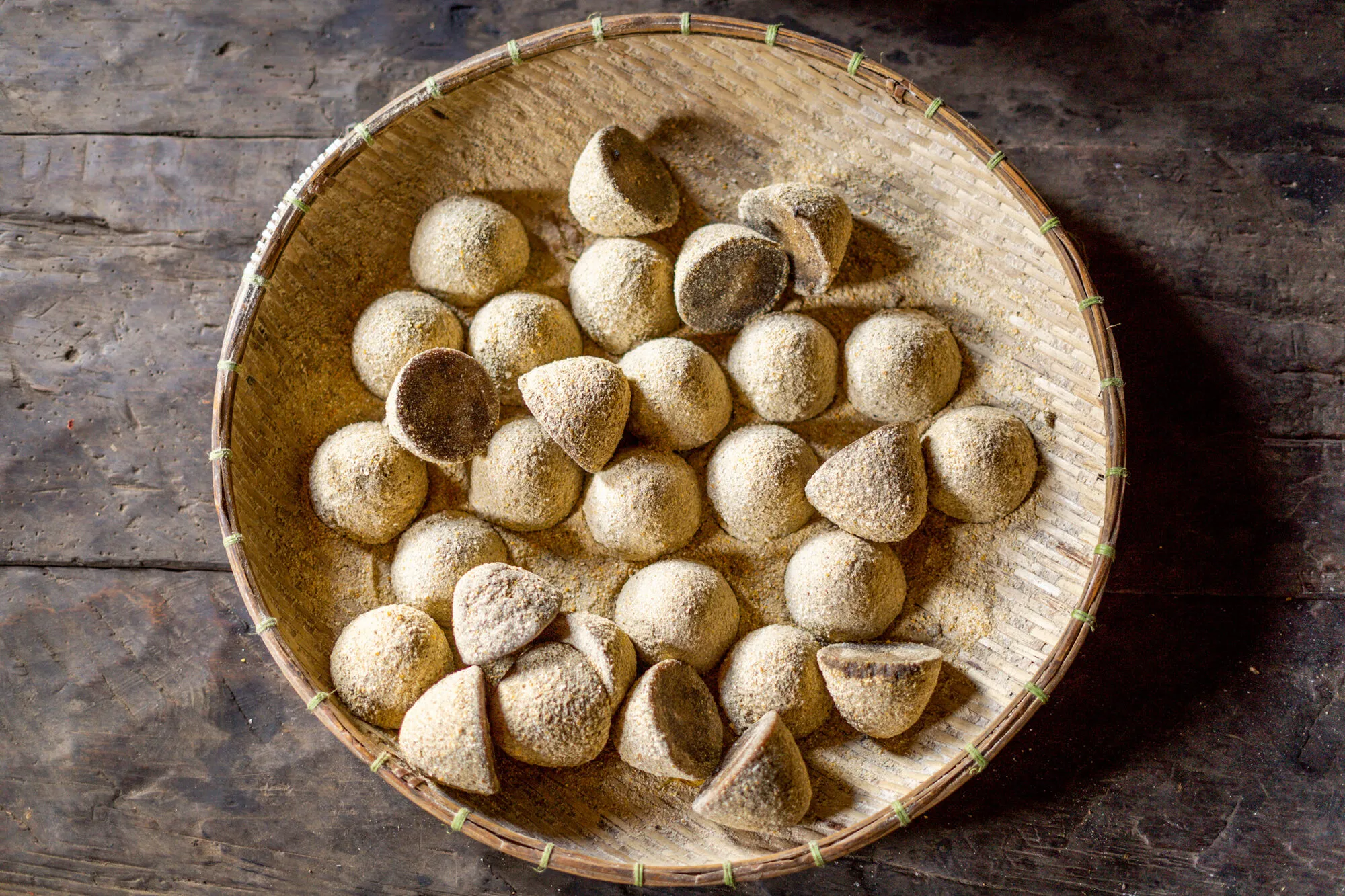
Tshatshi buram is a cone of hard, dark jaggery made from sugar-cane juice. It takes its name from Tshatshi (also spelled Tshatsi), a village in Nanong gewog in the north-east of Pemagatshel, where the school and the village chorten stand at about 1,460 m. The dzongkhag counts it as what Nanong is known for. In 2021 about a hundred households in two of Nanong’s chiwogs, Tshatshi among them, were making it.
It is not only Pemagatshel’s. Families across the border in neighbouring Lumang gewog of Trashigang make it too, and jaggery itself is made across the subcontinent. What belongs to Tshatshi is the name and the way it is done.
How it is made
The cane goes through a crusher first. The traditional one, the Kri-ti, has to be pushed by hand, or sometimes by an ox. The government has since supplied motor crushers to Nanong’s farmers.
The juice is boiled for several hours, until the water has gone and it has turned into a thick brown syrup. That syrup is poured into cone-shaped hollows cut into a wooden plank, dusted first with maize flour so the sweet does not stick. After an hour of cooling, the cones are ready.
The juice keeps, too. In the pandemic, when sales stalled, one farmer stored his in barrels and boiled it later.
Seeing it made
This is a household visit, not a site. The work happens at home, so a visit is to a family at work. Cane was being crushed and cones set in the moulds in early January 2024.
See things to do in Pemagatshel for the rest of the district.
Tours that visit Pemagatshel

Bird Watching Tour
Frequently asked questions
What is tshatshi buram?
A cone of hard, dark jaggery made from boiled sugar-cane juice, set in a wooden mould dusted with maize flour. It takes its name from Tshatshi, a village in Nanong gewog in north-east Pemagatshel.
Is tshatshi buram only made in Pemagatshel?
No. It is made in Nanong gewog and also across the dzongkhag border in neighbouring Lumang gewog, Trashigang. What is local is the name and the method.
How is tshatshi buram made?
The cane is crushed, the juice is boiled for several hours into a thick brown syrup, and the syrup is poured into cone-shaped hollows in a wooden plank dusted with maize flour. After an hour of cooling the cones are ready.
Tailor-made travel
Begin your journey to the Last Shangri-La
Every Little Bhutan itinerary is private and tailor-made. Tell us what draws you to Bhutan — festivals, treks, monasteries, food — and we will design the journey around it.