

Tiger's Nest (Paro Taktsang)
Last updated:
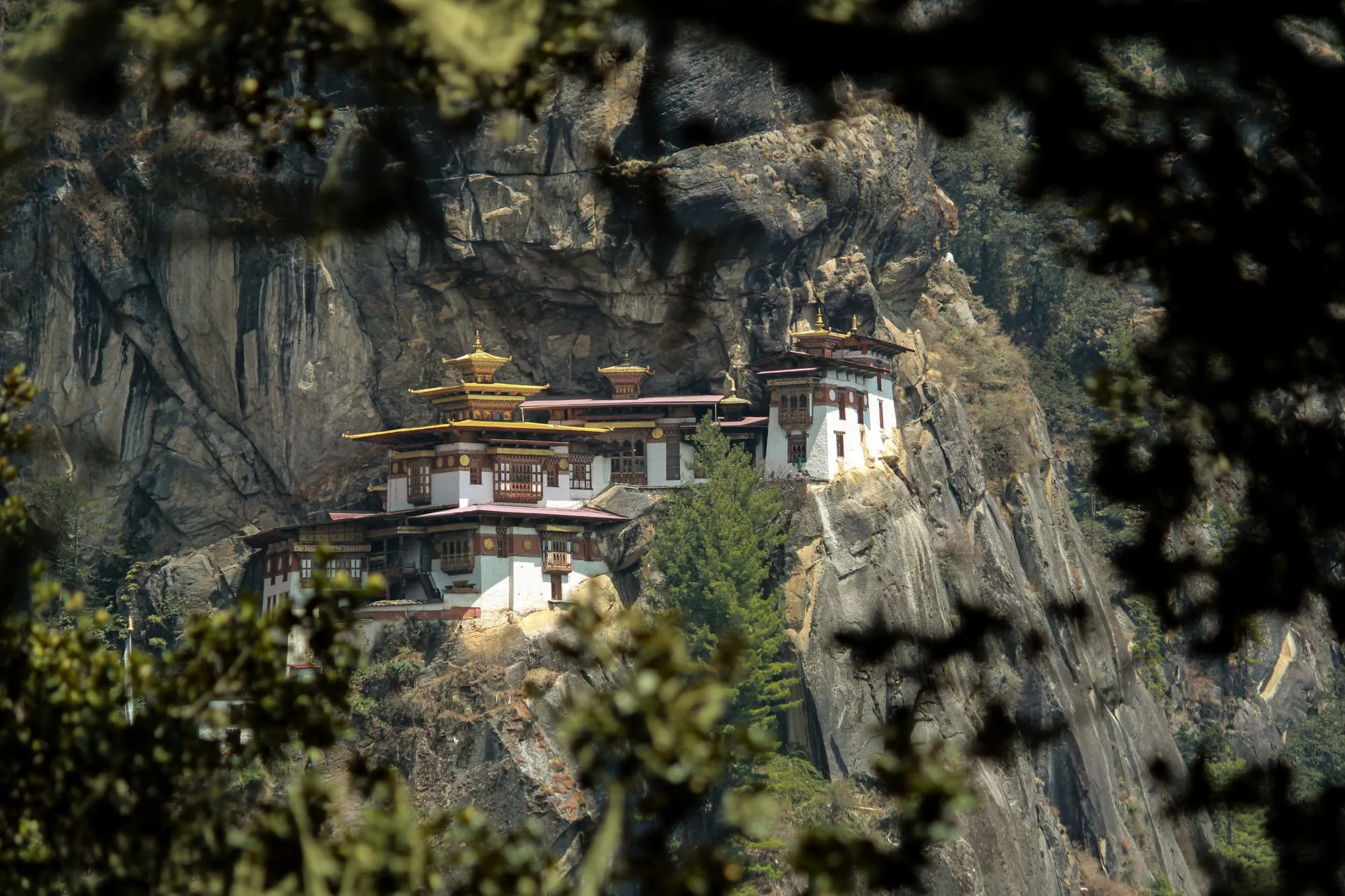
Paro Taktsang — the Tiger’s Nest — is the most famous sight in Bhutan, and for most travellers the unforgettable finale of their trip. The monastery clings to a sheer cliff high above the Paro valley, reached only on foot, and the climb to it is as much a part of the experience as the temples at the top. This page is our full brief on the day itself — how hard the hike honestly is, how the pony option works, and what happens between the trailhead and the temple door — from an operator whose guides walk it with guests every week.
Tiger’s Nest at a glance
- Altitude at the monastery: 3,120 m (10,240 ft) above sea level
- Height above the valley: about 900 m (2,950 ft) — the trail starts from a road-accessible trailhead partway up
- Distance: roughly 6 km (4 miles) round trip
- Time: 5–6 hours, including time inside the monastery
- Ponies: to the halfway viewpoint, ascent only
- Inside: lockers for bags and cameras, modest dress, no photography in the temples
How hard is the hike, honestly?
Two altitude figures get quoted for Tiger’s Nest, and it helps to keep them apart. The monastery sits at 3,120 m (10,240 ft) above sea level — that’s why the air feels thinner than it does at home. And it hangs about 900 m (2,950 ft) above the Paro valley floor — the drop in every photograph. Neither number is your climb: the trail begins at a road-accessible trailhead already well above the valley floor, so the ascent your legs actually do is a solid morning’s uphill walk, not the full 900 m. Plenty of write-ups blur these figures and make the hike sound either trivial or heroic; it’s neither.
The honest answer: it’s a sustained uphill walk and you will feel it, but it’s a walk — a wide, well-trodden trail with no scrambling and no technical sections, finishing with stone steps. If a couple of hours of steady uphill walking with rest stops sounds manageable, the trail will meet you where you are. The people who struggle are almost always the ones racing a group timetable, and that’s the quiet advantage of doing this privately: there is no group. Your guide walks at your pace, calls the rests before you need to ask for them, and builds the rest of the day around how the morning goes. The climb takes most people 1.5–3 hours, and both ends of that range arrive at the same monastery.
There’s also a structural reason the hike is friendlier than the numbers suggest, and it’s covered further down: by the time you walk it, you’ve usually had five nights in Bhutan’s valleys already.
Riding a pony: how the option works
If you’d rather not walk the whole ascent, you don’t have to. Ponies, led by handlers from the valley, carry riders from the trailhead up the broad forest trail to around the halfway cafeteria viewpoint. That covers the long, steady climbing of the first half — roughly half the ascent’s effort — and leaves you fresher for the more interesting second half.
Four things to know before you saddle up:
- Ascent only. Ponies go up, not down, and they stop at the halfway viewpoint — the trail beyond it, and the final stone steps, are for feet only. Everyone walks the descent — riding down steep ground is riskier, which is why the rule exists.
- It’s an easement, not an escalator. You’ll still walk the second half up and the whole way back, so think of the pony as taking the edge off the day rather than removing the hike from it.
- It’s a real mountain trail under hoof. Every pony is led by its own handler — the Taktsang horse-service rules require one horseman per horse — but the path has genuine drop-offs and the ponies tend to walk its outer edge. Sit centred, hold on, and let the handler do the steering. You should be comfortable sitting a saddle; if you’re not, or the trail is muddy from rain, walking at your own pace with plenty of rests is the better call.
- Book ahead — really. Horse services at Taktsang must be pre-booked; turn up without a booking and you may be left waiting for an on-site allocation. Tell us as soon as you know you’d like one and we arrange it in advance as part of planning the day. Long trousers make the ride considerably more comfortable.
For many of our guests the pony is what turns “I’m not sure I can” into a morning they talk about for years. There’s no prize for walking every metre; the monastery is the point.
Deciding for someone else — a parent with tired knees, a five-year-old with strong opinions? The family versions of this decision are covered honestly in our guides to Bhutan with children and Bhutan for seniors & less-mobile travellers, including the dignified alternatives to climbing at all.
The trail, step by step
Trailhead to the halfway viewpoint. The trail leaves the valley floor and climbs steadily through blue-pine forest hung with prayer flags, with rhododendrons flowering along the slopes in season. This is the longest sustained climbing of the day — and the stretch the ponies cover. It ends at the cafeteria viewpoint about halfway up: tea, a bench, and the first proper view of the monastery across the gorge. This is the classic photograph, and a natural long rest.
Viewpoint to the steps. The path continues climbing beyond the cafeteria until you draw level with the monastery — close enough now to see prayer flags strung across the void. Then comes the part everyone remembers: a series of stone steps that drop into the gorge and rise again to the monastery entrance. It looks dramatic because it is, but the steps are solid and the drama is the reward.
Inside the monastery. At the entrance, bags, cameras and phones go into lockers — photography is not permitted inside — and modest dress, with shoulders and knees covered, is required. Your guide leads you through the temple complex built around Guru Rinpoche’s meditation cave, and this is where a good guide earns the day: the murals, the cave shrine and the stories behind them come alive in a way no plaque can manage. Expect to spend around an hour inside. This is an active place of pilgrimage, not a museum — Bhutanese climb to it throughout their lives, and you’ll share the trail with them.
The descent. Back across the steps, then down through the forest the way you came. It’s much quicker than the ascent — this is where good, grippy shoes and (if you use one) a walking pole pay for themselves — and the cafeteria makes a pleasant lunch stop on the way down.
The legend and history
Legend has it that Guru Rinpoche, the saint who brought Buddhism to Bhutan, flew to this cliff on the back of a tigress and meditated in a cave for three years, three months, three weeks, three days and three hours — giving the Tiger’s Nest its name. The monastery was built around that cave in 1692, its temples pressed improbably against the rock face. A fire destroyed much of the complex in 1998; it has since been faithfully restored, and what you visit today is both a national icon and a living, working sacred site. Knowing the story changes the hike: you’re not walking to a viewpoint, you’re walking a pilgrimage route that Bhutanese have climbed for over three centuries.
Best time to visit — and time of day
Spring (March–May) and autumn (September–November) bring the clearest skies and the most comfortable walking weather. Winter is crisp and quiet with a chance of snow on the upper steps; during the summer monsoon the trail can be slippery and the monastery often wreathed in cloud — atmospheric in its own way, but pack accordingly.
Whatever the season, the time of day matters as much as the month. We start early, for three compounding reasons: the climbing happens in the cool of the morning rather than the midday sun; the trail is at its quietest before the day’s crowds arrive; and morning light on the cliff face gives the best photographs from the viewpoint. An early start also hands you back the afternoon — you’re down in the valley by mid-afternoon with the day’s centrepiece already behind you.
What to bring
- Broken-in walking shoes or boots with good grip — the descent is where soles matter
- Plenty of water and a few snacks, beyond what the cafeteria offers
- Layers — mornings are chilly, the top is cooler than the valley, and you’ll warm up fast on the climb
- Sun protection and a light rain layer, whatever the forecast says
- Modest clothing that covers shoulders and knees, so you can enter the temples without a change of plan
- A little cash if you would like a pony for the ascent
- A walking pole, if you normally use one — knees notice the steps on the way down
After the hike
One of the underrated pleasures of an early start is the afternoon it buys you. Back in the valley by mid-afternoon, there’s comfortably time for Kyichu Lhakhang — one of Bhutan’s oldest temples, and a serene counterpoint to the morning’s drama — or a slow wander through Paro town. And if your legs have opinions about the day’s climbing, the traditional Bhutanese answer is a hot-stone bath at a farmhouse: river stones heated in a fire, dropped hissing into a wooden tub, and an hour of heat that ends the argument. Most of our guests finish the day with a farewell dinner in Paro, since the hike usually falls on the last full day of the trip — which is no accident.
Why Tiger’s Nest comes at the end of your week
Almost every western Bhutan itinerary saves the Tiger’s Nest for the final full day, and the reason is sequencing, not sentiment. A typical week runs Paro → Thimphu → Punakha → Paro, which means that by hike day you’ve spent around five nights in Himalayan valleys — and the same climb that would feel punishing straight off an international flight instead feels like the natural crescendo of the week. It’s also the right note to end on: the hardest and most memorable day, followed by a hot-stone bath and a farewell dinner.
You can see exactly how the day slots into the classic week in our Bhutan 7-day itinerary. If the hike is the reason you’re coming, our five-day Tiger’s Nest & Sacred Valleys private tour builds the whole trip around it; with more time, Western Bhutan in Depth — 8 Days adds the Haa valley and two mountain passes before the climb. Either way the Sustainable Development Fee, visa and permits are arranged for you — see the Bhutan Travel Guide to plan the rest of your trip.
Want more before you go? Read Tiger’s Nest: Bhutan’s legendary hiking spot and One night at the Tiger’s Nest Camp from our journal.
Tours that visit Paro


Frequently asked questions
Is Tiger's Nest open every day? Does it close on Tuesdays?
It's open daily — there is no Tuesday closure, whatever some sites claim. We checked this directly with our own guides, who walk the trail every week. The monastery keeps regular daytime visiting hours year-round, and on a private tour your guide times the visit so you're never at the gate at the wrong moment.
How long is the Tiger's Nest hike?
About 6 km (4 miles) round trip — allow 5–6 hours including time inside the monastery. The climb up takes most people 1.5–3 hours depending on pace, with the cafeteria viewpoint roughly halfway to rest and take in the view; the descent is noticeably quicker.
How difficult is the Tiger's Nest hike?
Honestly: it's a real climb, and you will feel it. The monastery hangs about 900 m above the Paro valley floor at 3,120 m (10,240 ft) — though the trail starts from a road-accessible trailhead partway up, so your legs do less than that full 900 m. And it's a walk, not a scramble: a wide trail, no technical sections, and your own guide setting the pace with as many rests as you like. Most reasonably fit travellers manage it comfortably, and a pony can cover the first half of the ascent.
Can I ride a pony up Tiger's Nest?
Yes, on the way up. Ponies carry riders from the trailhead to around the halfway cafeteria viewpoint — ascent only. They don't continue beyond the viewpoint or come back down, so everyone walks the final stretch and the whole descent. Horse services at Taktsang must be pre-booked, so tell us as soon as you know you'd like one — we book it ahead; without a booking you may be left waiting for an on-site allocation.
Can you go inside Tiger's Nest?
Yes. Visitors enter the temple complex with their guide. Bags, cameras and phones go into lockers at the entrance, and modest dress — shoulders and knees covered — is required, as it is an active sacred site.
Can you take photos at Tiger's Nest?
You can photograph the monastery and the trail from outside — the halfway viewpoint gives the classic shot across the gorge — but photography is not permitted inside the temples; cameras and phones are stored securely at the entrance while you visit.
What should I wear for the Tiger's Nest hike?
Broken-in walking shoes with good grip, and layers — mornings are chilly, the top is cooler than the valley, and you'll warm up fast on the climb. Trousers or a longer skirt with a top that covers your shoulders lets you enter the temples without changing; add sun protection and a light rain layer.
What time should I start the hike?
Early. We like to be on the trail in the cool of the morning — the light on the cliff is at its best, the path is at its quietest, and you're back in the valley by mid-afternoon with energy left for Kyichu Lhakhang or a hot-stone bath.
Can children and older travellers do the hike?
This is a pilgrimage trail that Bhutanese walk throughout their lives, and on a private tour the pace is entirely yours — as many rests as you need, with a pony available for the first half of the ascent. Your guide reads how the day is going, and the halfway viewpoint, with its classic view of the monastery, is always a satisfying place to turn around.
When is the best time of year to hike Tiger's Nest?
Spring (March–May) and autumn (September–November) bring the clearest skies and the most comfortable walking weather. Winter is crisp and quiet with a chance of snow on the upper steps; in the summer monsoon the trail can be slippery and the monastery often sits in cloud.
Tailor-made travel
Begin your journey to the Last Shangri-La
Every Little Bhutan itinerary is private and tailor-made. Tell us what draws you to Bhutan — festivals, treks, monasteries, food — and we will design the journey around it.