Visit to Zorig Chusum School of 13 Traditional Arts and Crafts

Early Tuesday morning, we visited Zorig Chusum in Thimphu. The institute is one of the only other schools for traditional arts and crafts in Bhutan. The thirteen traditional arts and crafts loosely include :
- Shingzo (Carpentry)
2. Dozo (Masonry)
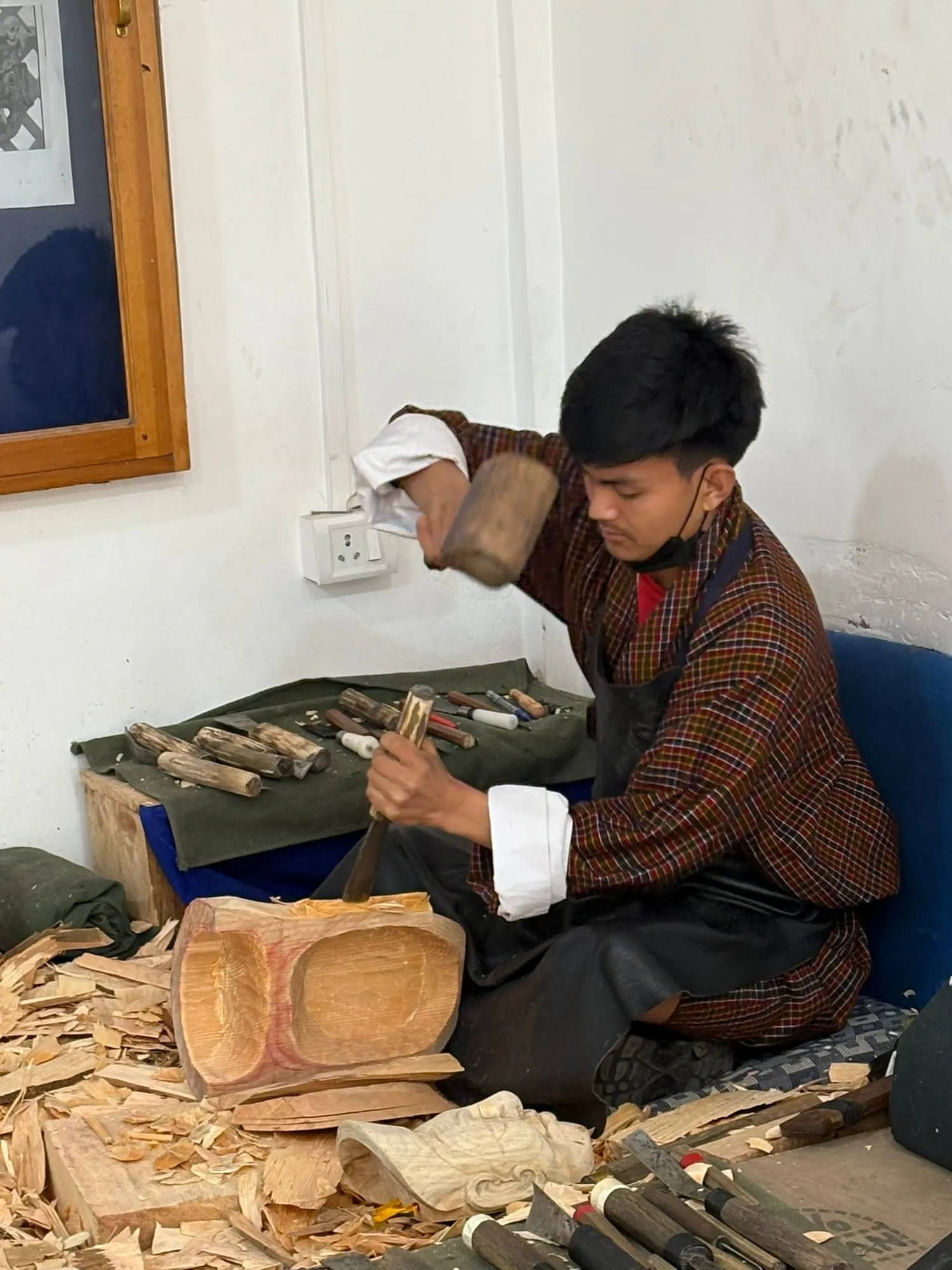
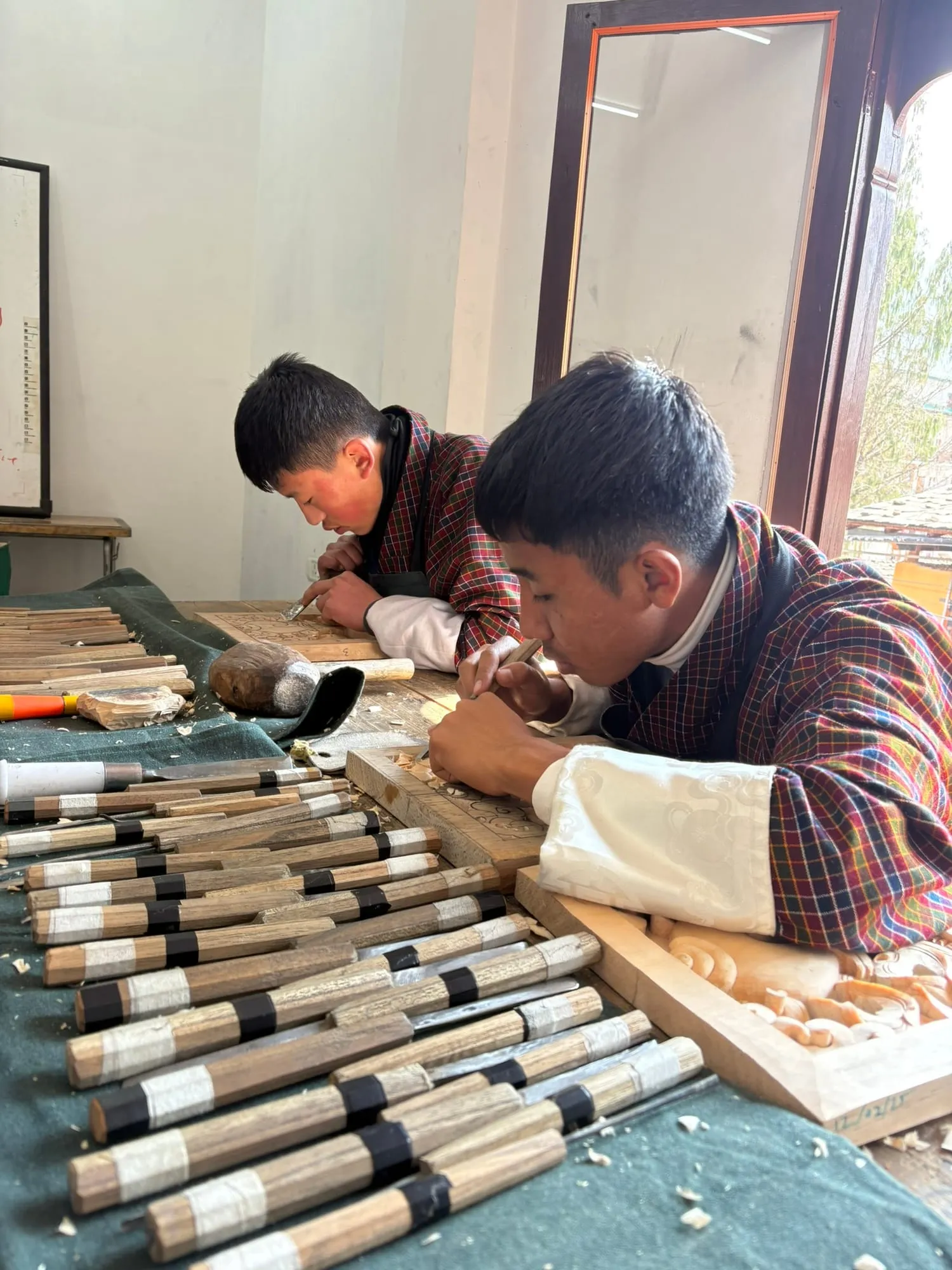
3. Parzo (Carving)
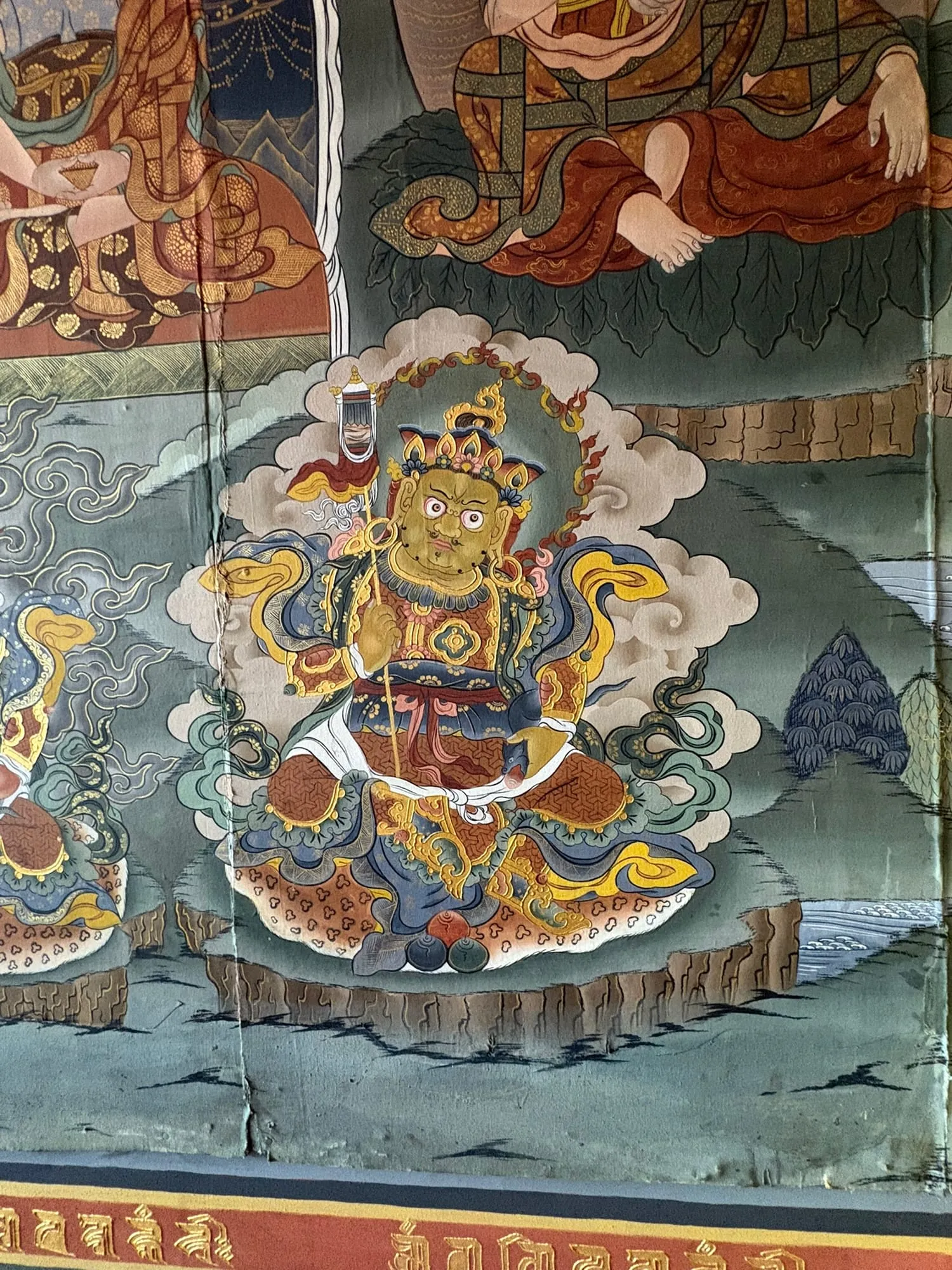
4. Lhazo (Painting)
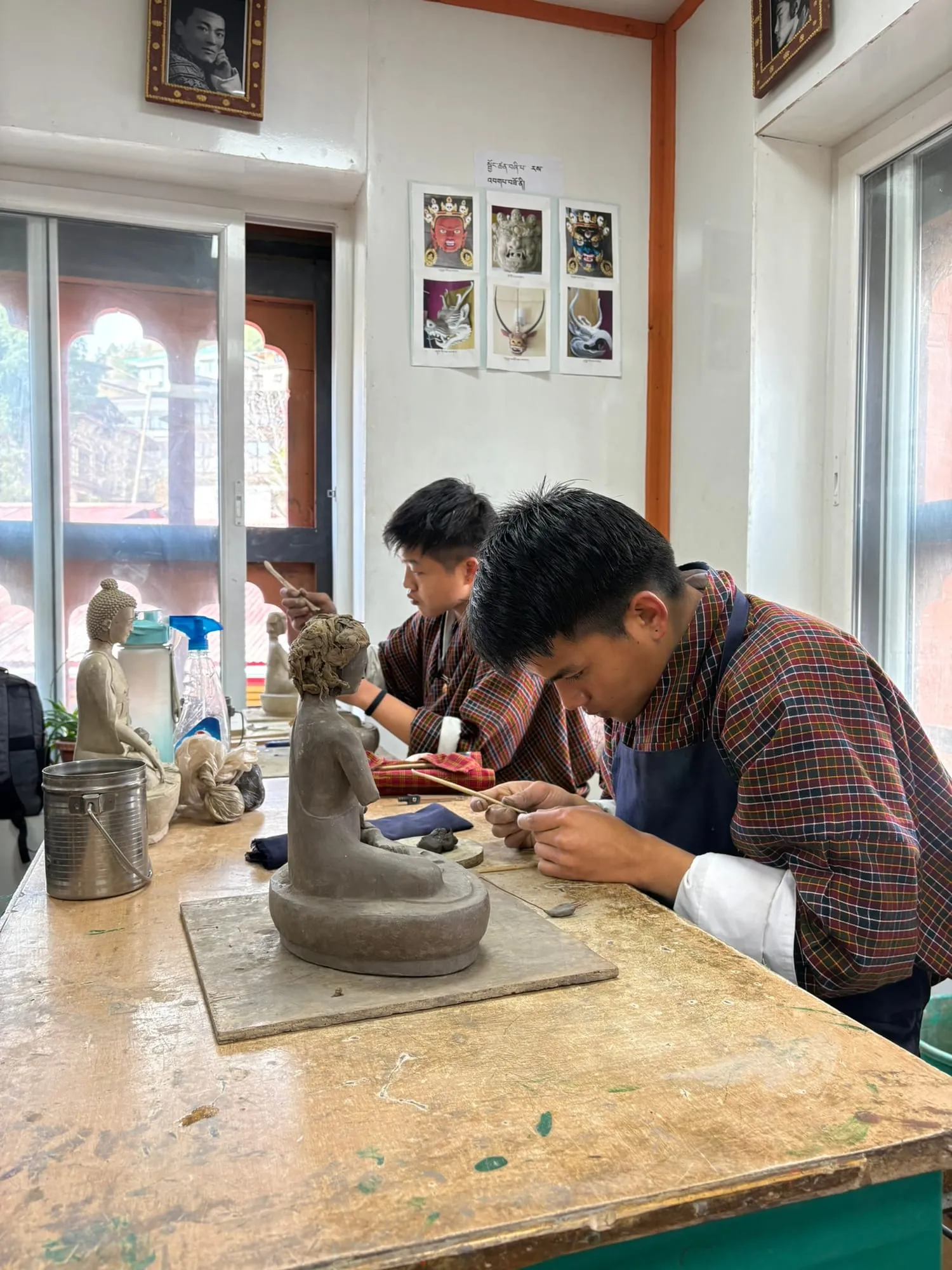
5. Jinzo (Sculpting)
6. Lugzo (Bronze Casting)
7. Garzo (Blacksmithing)
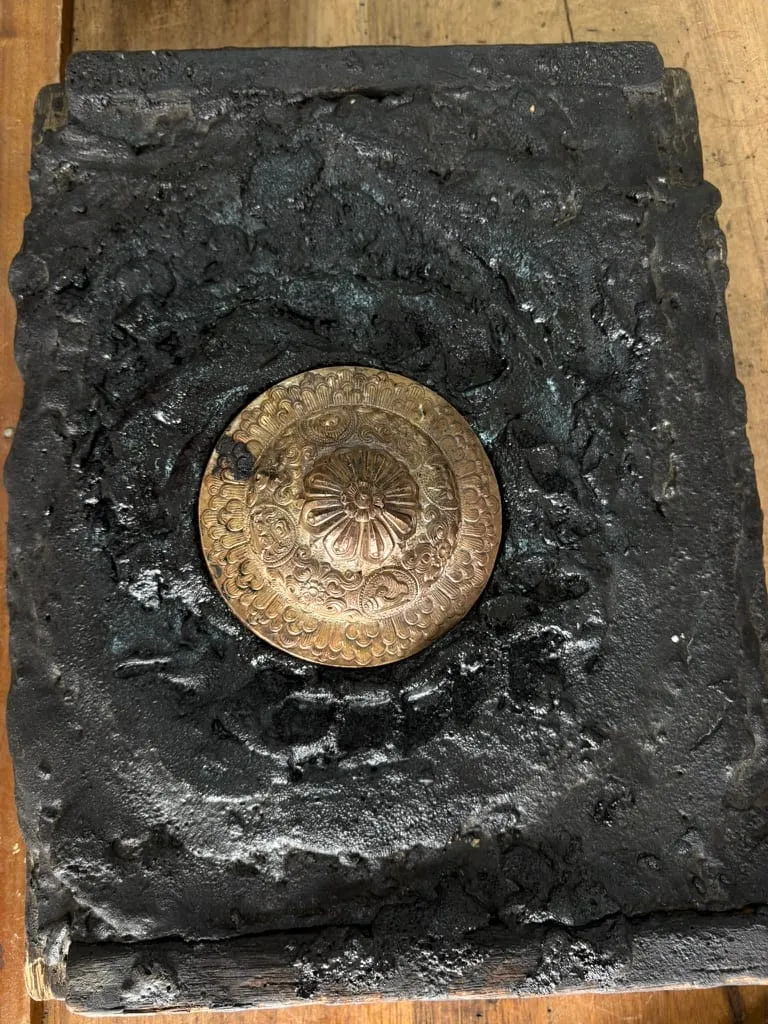
8. Troeko (Ornament Making)
9. Tsharzo (Cane And Bamboo Weaving)
10. Thagzo (Weaving)
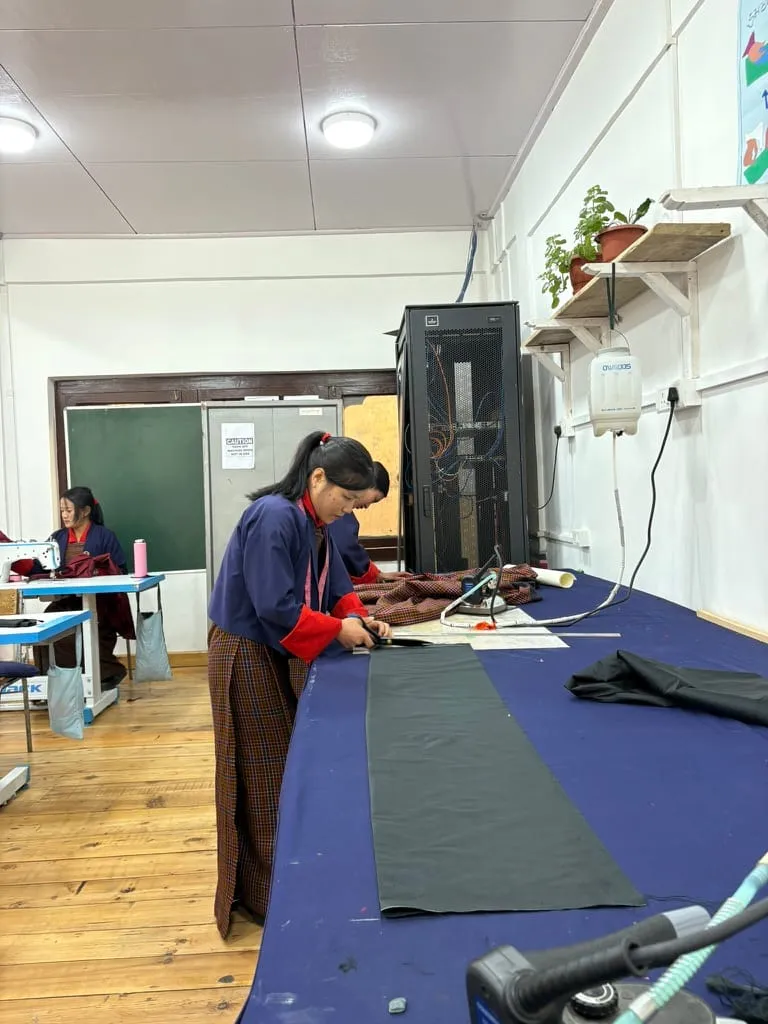
11. Tshemzo (Tailoring, Embroidery And Appliqué)
12. Shagzo (Woodturning)
Dezo (Paper-Making)
Some of the crafts such as Bamboo-making and leather work are not as popular anymore.
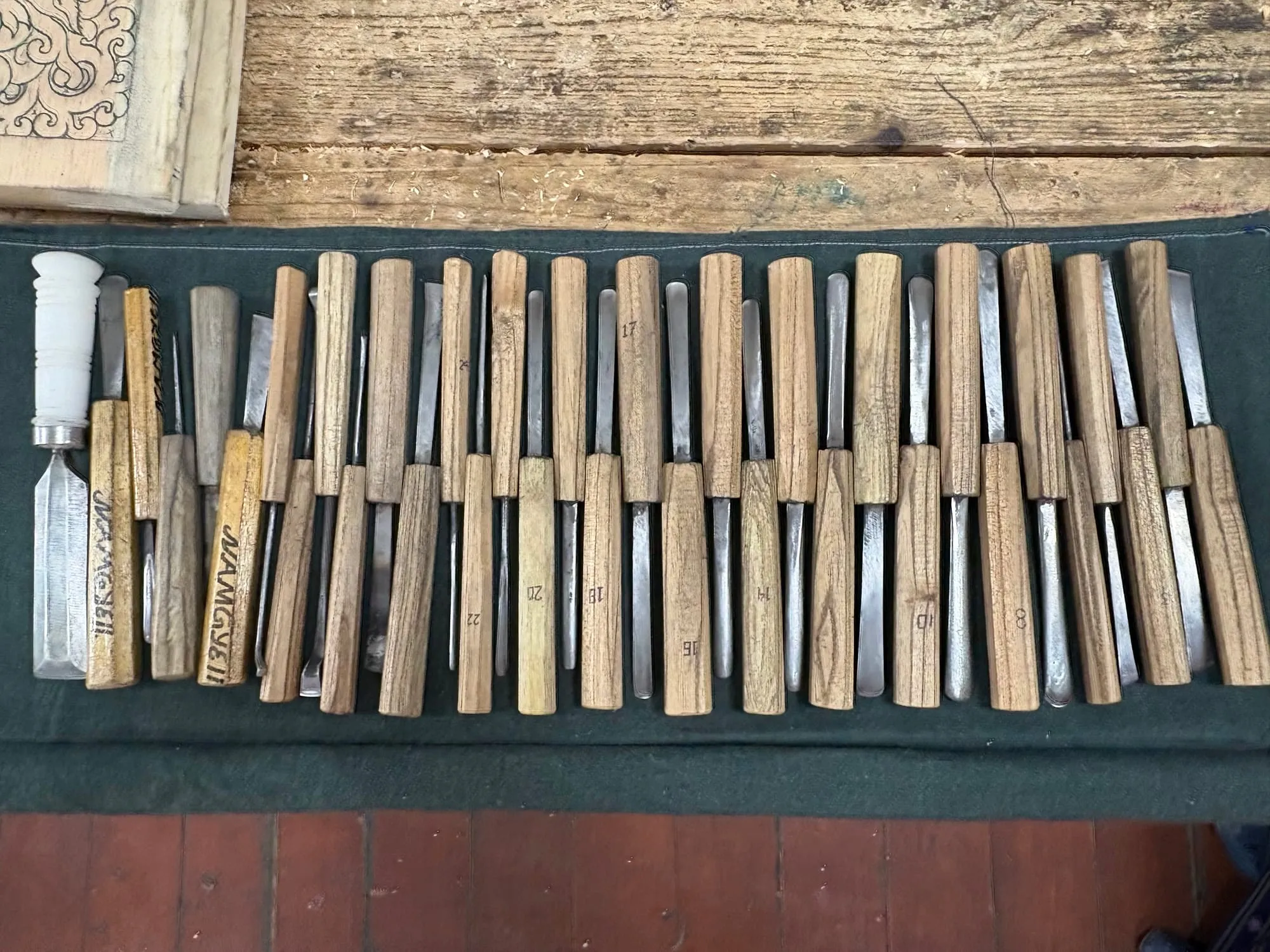
Tools for Wood-Working
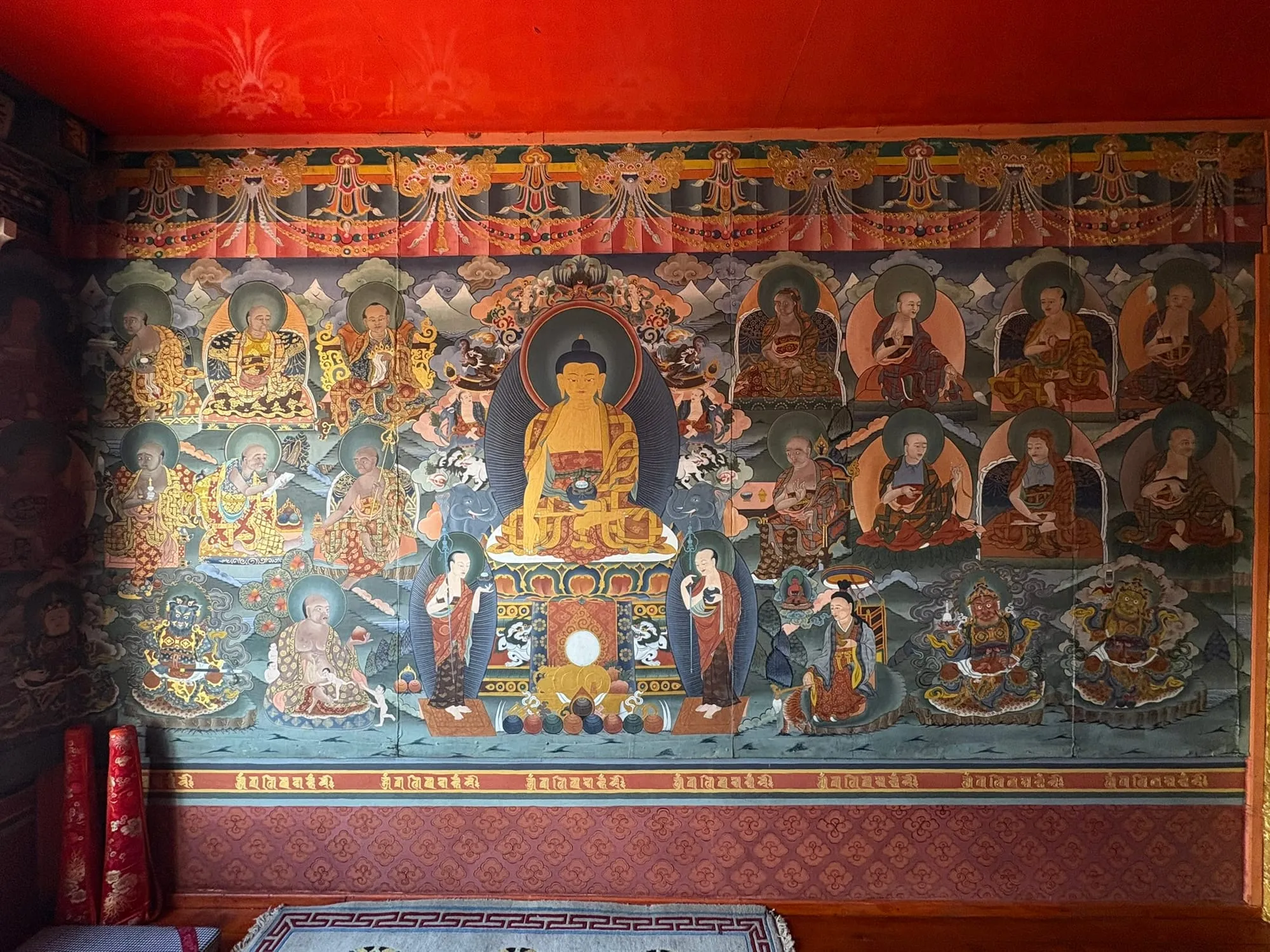
Painting done by students of the institute
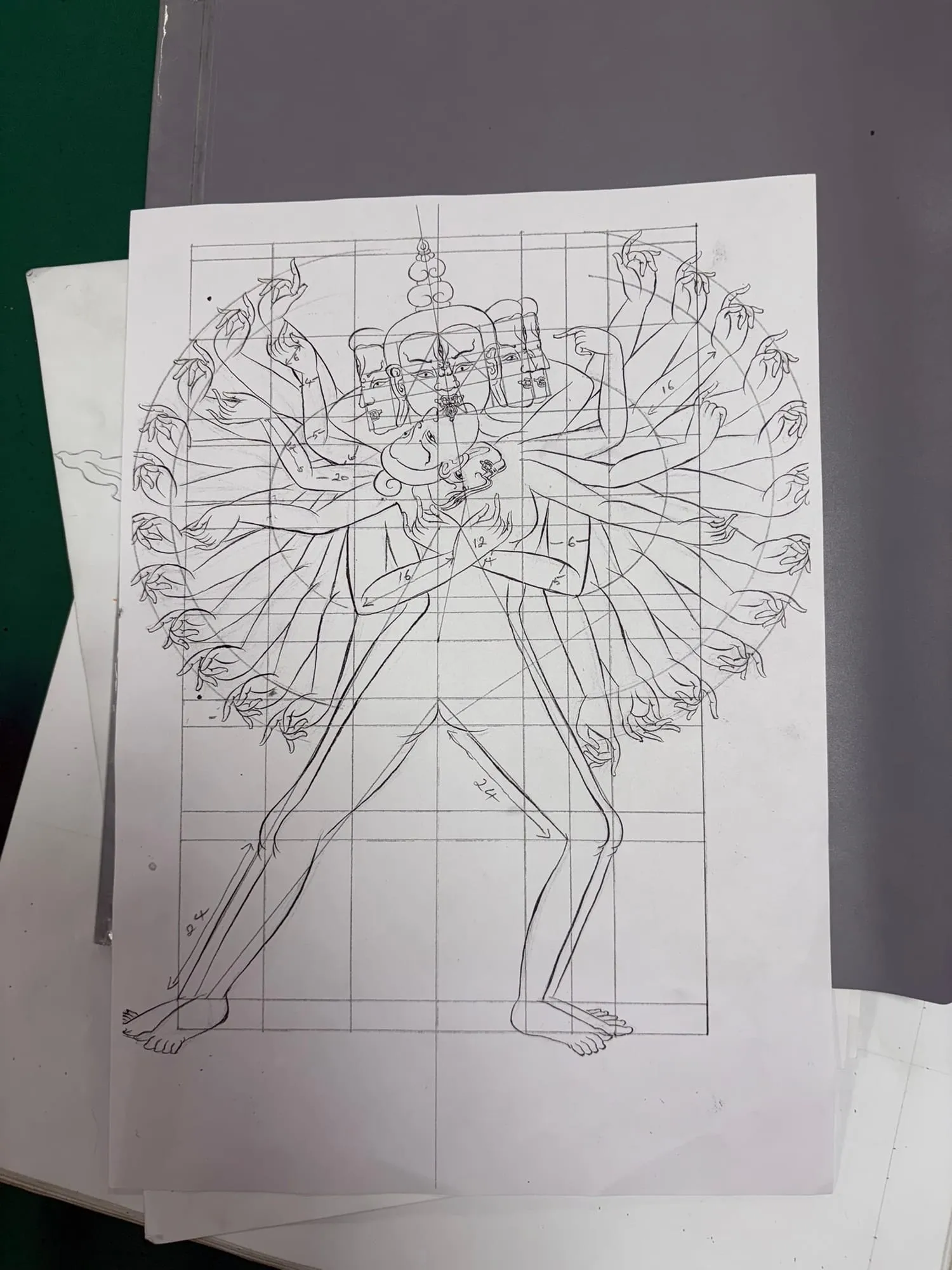
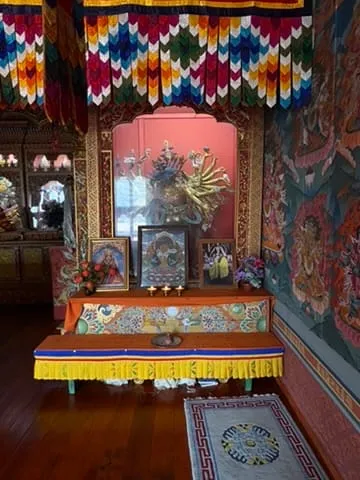
A sketch of the Zorig god
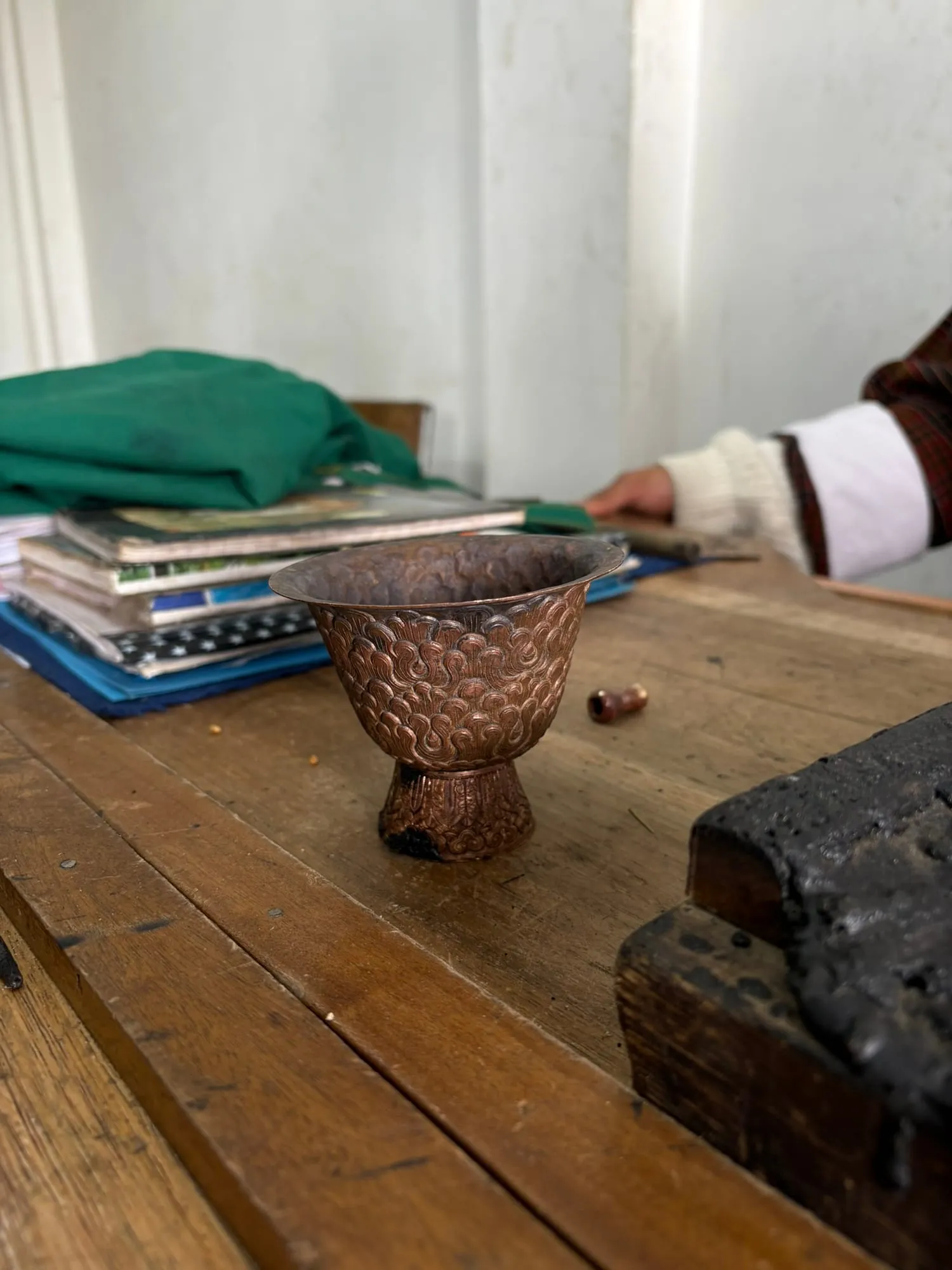
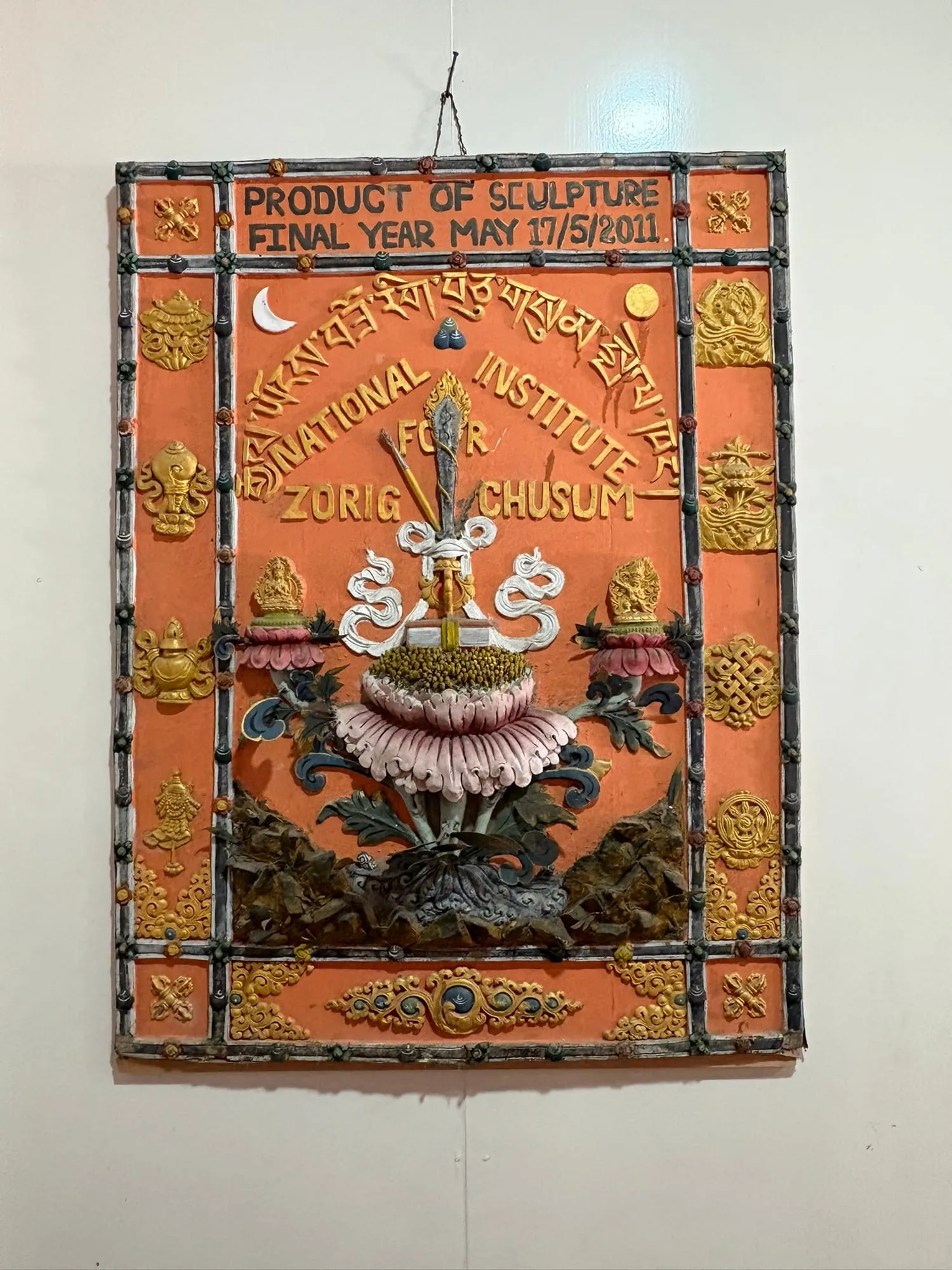
Final-product
Q&A with Sangay Tshewang, Instructor of Sculpting and Our Guide
Sangay Tshewang has been working at the Zorig Institute since 2014. Like some of the other instructors, he is a former student of the institute. Before moving to Thimphu, he worked at the Zorig Chusum in Trashiyangtse, the only other school for traditional arts and crafts in Bhutan.
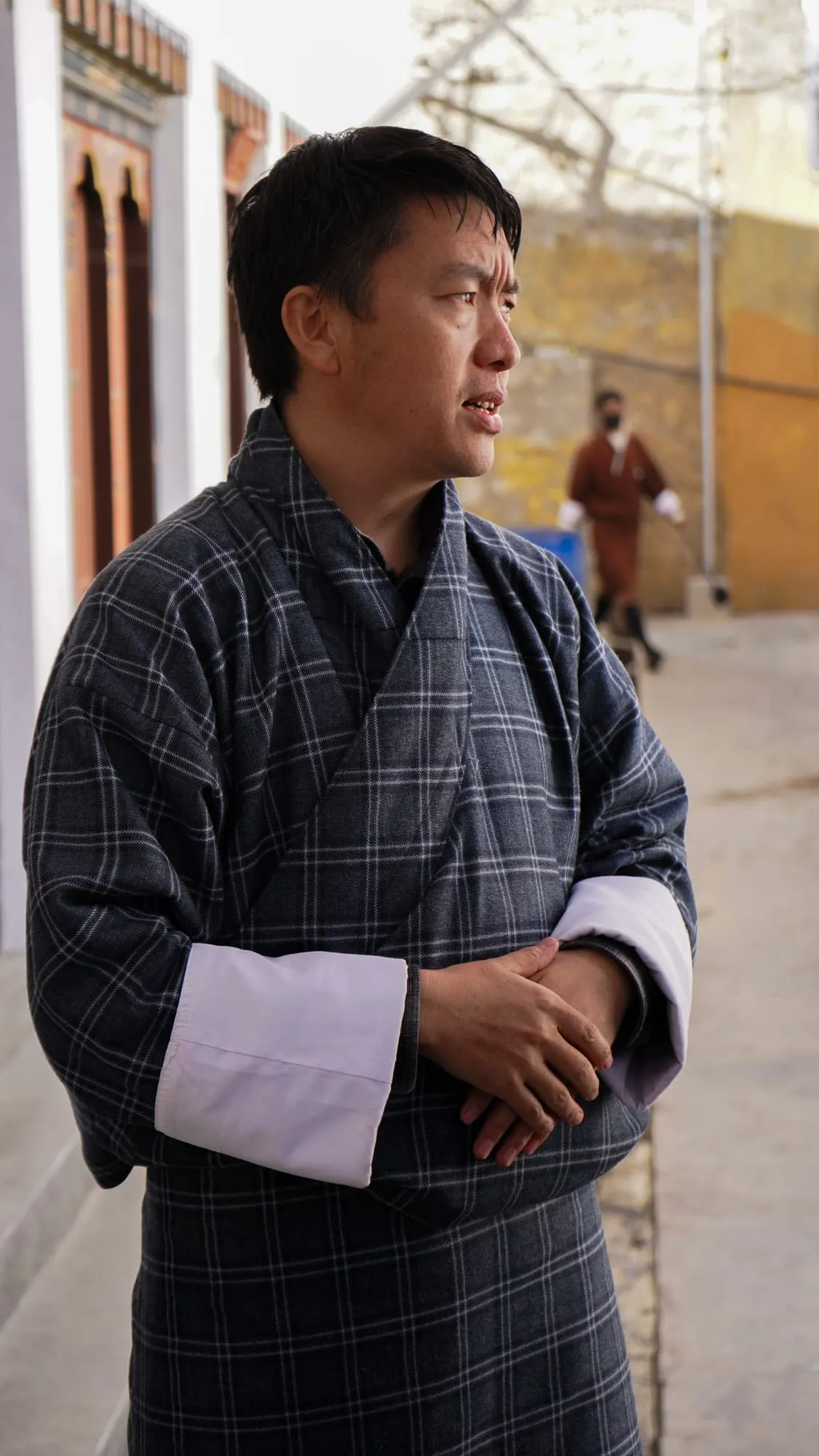
When and why was the institution established?
1971. It was established for the preservation of arts and crafts and to provide employment opportunities for youth.
How important is the institution in preserving traditional arts and crafts in Bhutan?
Very important. The Zorigchusum institutes in Thimphu and Trashiyangtse are the only two organizations in the country doing this kind of work.
How many students are currently studying at the institute, and how has student enrollment been like over the years?
Currently, we have one hundred and fifty students. We’ve maintained eighty percent enrollment rate over the years. Student employment is high.
Which art/craftwork has made a return?
- Tailoring
- Tsemdu (embroidery) – Machines have helped increase its popularity.
Does your institute work closely with the Zorig Chusum Institute in Trashiyangtse?
Yes.
As an instructor, what does your day look like?
-
8:30 AM – Arrival
-
Morning assembly
-
Class
- 9:00–10:00 AM – Theory Classess
- 10:00 AM onwards- Visiting hours for tourists
-
12:00–1:00 PM – Lunch break
-
1:00–4:20 PM – Afternoon class
Do you get tourists, including locals, visiting your school? What is their purpose?
Over the years, we’ve welcomed many high-level guests at our institute and the majority of tourists visit us, while in Bhutan. We also have students visiting on study tours, including guides in training.
Thimphu Zorig Chusum or Trashiyangtse Zorig Chusum? Why?
Thimphu Zorig Chusum. Things are easier for me here; More school options for my kids, and I’m from Wangdue, which is closer to Thimphu.


