

Paro Tshechu 2027: Dates, the Thongdrel & How to Attend
Last updated:
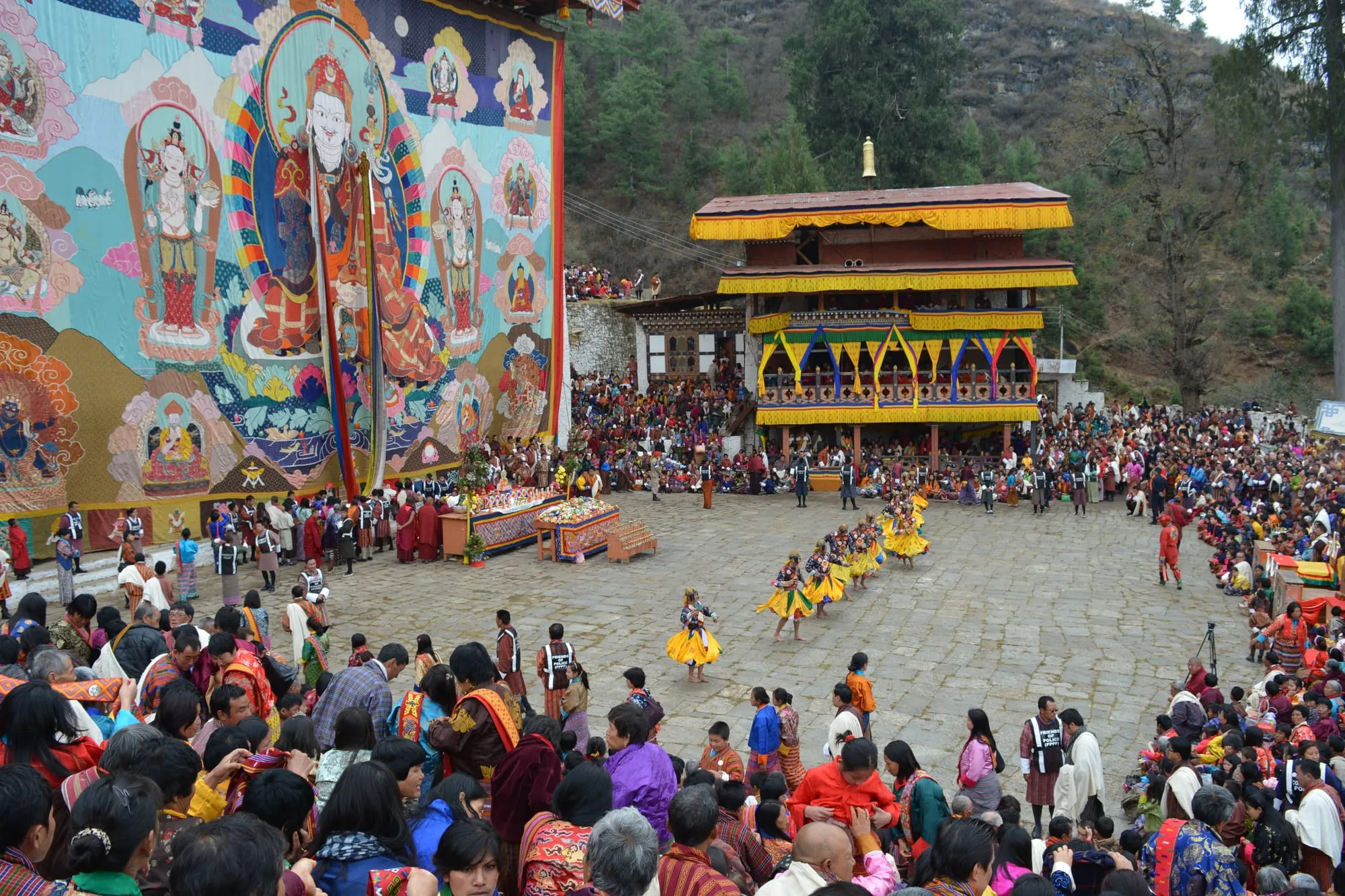
Every spring, the Deyangkha festival ground beside Paro’s Rinpung Dzong fills for five days of masked dance, and in the small hours of the final morning a giant silk thongdrel of Guru Rinpoche is unfurled before thousands of people. This is the Paro Tshechu — Bhutan’s most popular festival, and the event more of our guests plan a whole trip around than any other. We’ve been arranging journeys through Bhutan from our home in Thimphu since 2011, and this page is the practical answer to the questions we field about it every season: the published dates, what actually happens, and how attending works.
- 2027 dates: 18 – 22 Mar 2027, Deyangkha festival ground beside Rinpung Dzong, Paro.
- Dates follow the Bhutanese lunar calendar and shift year to year — reconfirm before booking flights.
- The thongdrel is unfurled around 3 a.m. on the final morning and stays up through the early morning.
- Our Paro Festival tour is a private itinerary built around the festival dates.
What the Paro Tshechu is
A tshechu is a religious festival of masked dance, held in honour of Guru Rinpoche — the saint who brought tantric Buddhism to Bhutan and, according to tradition, organised the first tshechu in Bumthang, where the eight manifestations of the Guru were presented through eight forms of dance. The dances, or chams, invoke the deities of the tantric teachings; through their power and blessings, misfortunes are removed. (The fuller history is in our festival calendar.)
Paro’s is the most popular of them all. For five days each spring, the Deyangkha festival ground in the shadow of Rinpung Dzong — the “Fortress on a Heap of Jewels” above the Paro river — becomes the stage for the dances, and families from across the valley and well beyond arrive in their finest gho and kira to watch, picnic, catch up and gain merit. That last point matters for understanding what you’re attending: this is a living act of devotion, performed for the community by monks and laymen, not a show staged for visitors. Tourists are welcome — genuinely so — but the festival would look exactly the same if not a single one came, which is precisely what makes it worth crossing the world for.
Paro Tshechu dates: 2027
| Year | Dates | Venue |
|---|---|---|
| 2027 | 18 – 22 Mar 2027 | Deyangkha ground, Rinpung Dzong, Paro |
Dates come from the tentative festival schedule published by the Association of Bhutanese Tour Operators, and one caveat applies to every tshechu: the dates follow the Bhutanese lunar calendar, not the Gregorian one, so they shift from year to year, sometimes by weeks. The Thimphu Tshechu is the live illustration. It was in late September in 2026; in 2027 it moves to 10 – 12 Oct. So our rule for festival trips is simple: plan the trip 6–9 months out, and reconfirm the dates with us before you buy flights or anything non-refundable. When dates move, we move the itinerary with them.
The thongdrel in the small hours
The festival’s defining moment comes at the end, and far earlier than most visitors expect. At about three in the morning on the final day, monks carry the thongdrel down from Rinpung Dzong in procession and unfurl it at the Deyangkha ground, where it covers the full three storeys of the building behind. Hundreds of people are already waiting in the dark to seek blessings beneath it up close, one last time for many, or for the first time.
The banner stays up through the early morning, the mask dances going on beneath it, and then it is rolled and carried back up to the dzong with the crowd pressing in along the steps for a last blessing as it passes. Arriving after sunrise does not mean you have missed it. But the unfurling itself happens in the dark, and those are the hours worth the alarm clock: a quiet crowd wrapped against the night chill, waiting in the cold for a banner most of them have known all their lives.
The mask dances
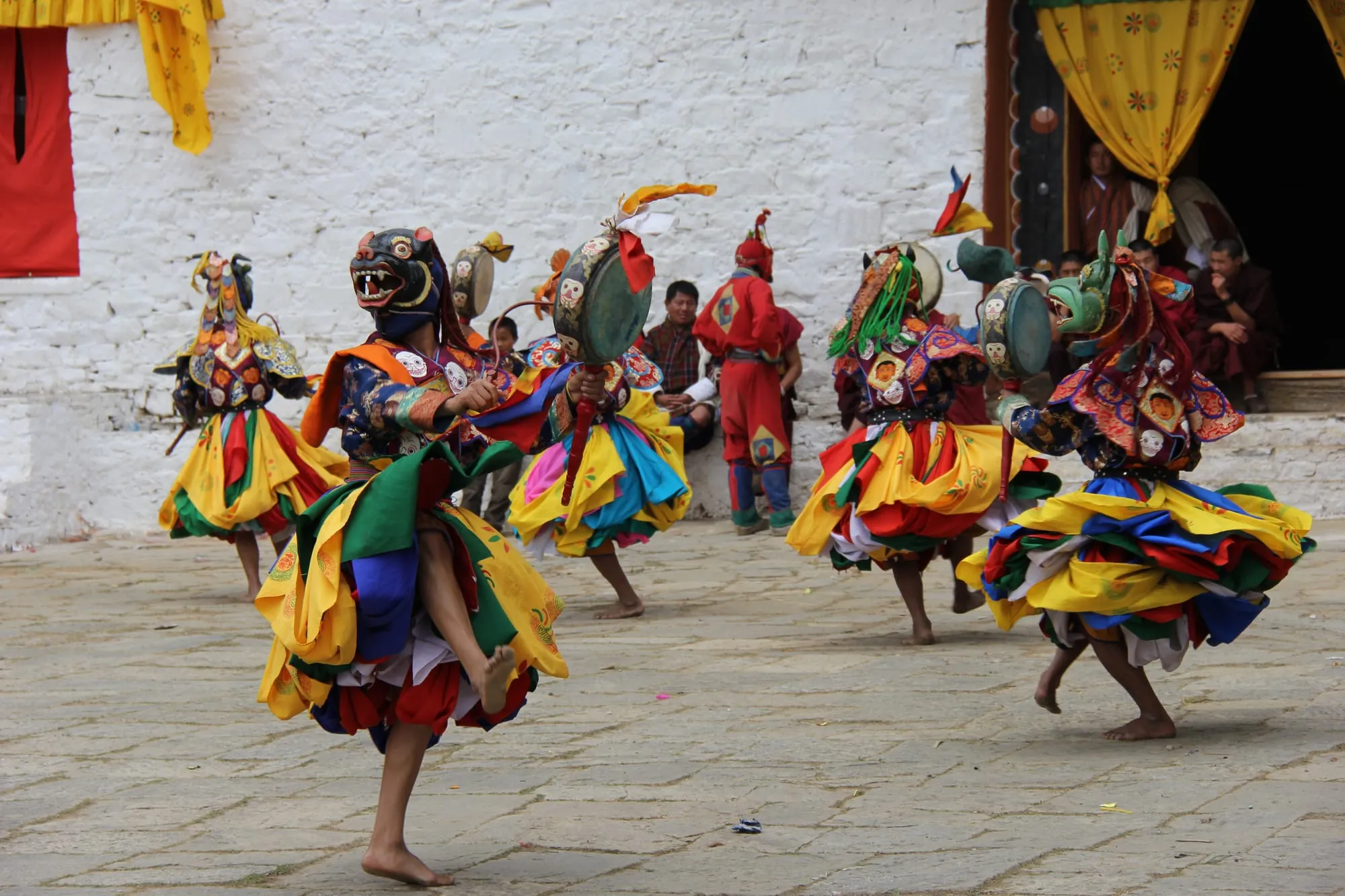
The dances commemorate the deeds of Guru Rinpoche, and the programme follows a traditional sequence. It commences with monks performing the Shingje Yab Yum — the dance of the lord of death and his consort — followed by Durdag, the dance of the lords of the cremation grounds. Then come the black-hat dancers of the Shanag, and the Drametse Ngacham, the dance of the drums from Drametse, its masked drummers among the most photographed sights in the country.
You don’t need to follow the iconography to be held by it — the swirling brocade, the masks, the horns and drums sounding off the dzong walls carry the day on their own. But this is where a good guide earns their keep: each dance tells a story, and knowing that the skeletal figures are lords of the cremation grounds, or why the black hats whirl the way they do, turns a spectacle into something you actually understand. Between dances, atsaras — the red-masked jesters — work the crowd, teasing spectators and keeping the long day light.
How to attend
The tshechu is a public religious festival — locals simply walk in, and you’ll attend alongside them with your guide. What attending actually requires is what any Bhutan trip requires: a visa or entry permit, the SDF, and a licensed guide — all arranged before you fly as part of your tour, so on the morning itself you just arrive, find a vantage point and settle in.
Two practical notes from experience. First, come early — the festival draws the biggest crowds in Bhutan, the festival ground fills up, and the best of the day belongs to those already seated when the horns sound. Second, pace yourself: a festival day is long, the spring sun at midday is stronger than it feels, and the eating and socialising around the edges of the dance ground are half the experience. Your guide will know when the dances you most want to see are due and when to slip away for tea.
Festival etiquette
A tshechu is a ceremony first and a spectacle second, and a few habits keep you on the right side of that line:
- Dress as for a dzong visit — long trousers or a long skirt, covered shoulders, nothing sleeveless. The Bhutanese around you will be in their finest; err on the smart side.
- Stay off the dance ground. Watch from the spectator areas, and never cut across the space where the chams are performed.
- Photograph with courtesy. The dances are fine to photograph from the crowd; for close-ups of people, ask first — and follow your guide’s word on when cameras should come down.
- Follow the crowd’s lead. When those around you stand or fall quiet, do the same; your guide will cue you.
None of this is onerous — Bhutanese festival crowds are warm, curious and quick to make room for a respectful visitor.
Planning a trip around the Paro Tshechu
The straightforward way in is our Paro Festival tour — a 7-day private itinerary timed to the festival dates, like everything else in our fully private catalogue. It pairs a full day at the tshechu (with the option of a second) with Thimphu, Punakha and the Tiger’s Nest hike, so the festival sits inside a proper first look at western Bhutan rather than standing alone.
If you’d rather travel privately, that works just as well: we build the same spring window around your own dates, pace and hotel preferences — the classic 7-day itinerary adapts to the festival naturally, with the tshechu taking one or two of its Paro days. Late March also stacks the deck in your favour more generally: it’s spring in the western valleys, one of the best seasons of the Bhutanese year — the month-by-month picture is in our best time to visit guide.
Dates for every major festival, both years, are in the festival calendar. When you’re ready, tell us your dates and we’ll reconfirm the tshechu dates against the current sheet and send a real, all-in price from Thimphu. Or head back to the Bhutan Travel Guide for the wider picture.
Plan the trip
Private tours that pair with this guide


Frequently asked questions
When is the Paro Tshechu in 2027?
18 – 22 Mar 2027, at the Deyangkha festival ground beside Rinpung Dzong in Paro. The dates come from the tentative festival schedule published by the Association of Bhutanese Tour Operators, and tshechu dates follow the Bhutanese lunar calendar, so they can shift. Reconfirm with us six to nine months before you travel, and before you book flights or anything non-refundable.
What is the thongdrel and when is it displayed?
A giant silk appliqué banner of Guru Rinpoche, tall enough to cover the three-storey building it hangs against. Monks carry it down from Rinpung Dzong in procession and unfurl it at about three in the morning on the festival's final day. The queue for blessings beneath it forms in the dark, hours before dawn, and the banner stays up through the early morning before it is rolled and carried back to the dzong. Come before first light if the thongdrel is your reason for travelling.
Do I need tickets for the Paro Tshechu?
It's a public religious festival — locals simply walk in, and you'll attend alongside them with your guide. What you do need is everything any Bhutan trip needs: a visa or entry permit, the SDF, and a licensed guide, all of which are arranged as part of your tour before you fly.
Can tourists attend the Paro Tshechu?
Yes — visitors are welcome, and the festival is the single most popular event on Bhutan's calendar for exactly that reason. You attend with your licensed guide as part of your tour, watching from the spectator areas alongside Bhutanese families who have come to gain merit.
What should I wear to the festival?
Dress as you would for any dzong visit — long trousers or a long skirt, covered shoulders, nothing sleeveless. The Bhutanese around you will be in their finest gho and kira, so err on the smart side; you'll also feel more at home in the crowd for it.
How many days of the festival should I attend?
One full day is enough to see a rich programme of mask dances; the final morning is the one to add if the pre-dawn thongdrel unfurling falls within your window. Our festival departure includes a full day at the tshechu with the option of a second, alongside Paro sightseeing and the Tiger's Nest hike.
Is there a tour that includes the Paro Tshechu?
Yes — our 7-day Paro Festival tour, a private itinerary built around the festival dates, with Thimphu and Punakha included. Prefer a different shape? We build the same spring window around your own dates — the classic 7-day itinerary adapts to the festival naturally.
Tailor-made travel
Begin your journey to the Last Shangri-La
Every Little Bhutan itinerary is private and tailor-made. Tell us what draws you to Bhutan — festivals, treks, monasteries, food — and we will design the journey around it.