

Thimphu Tshechu 2027: Dates & How to Attend
Last updated:
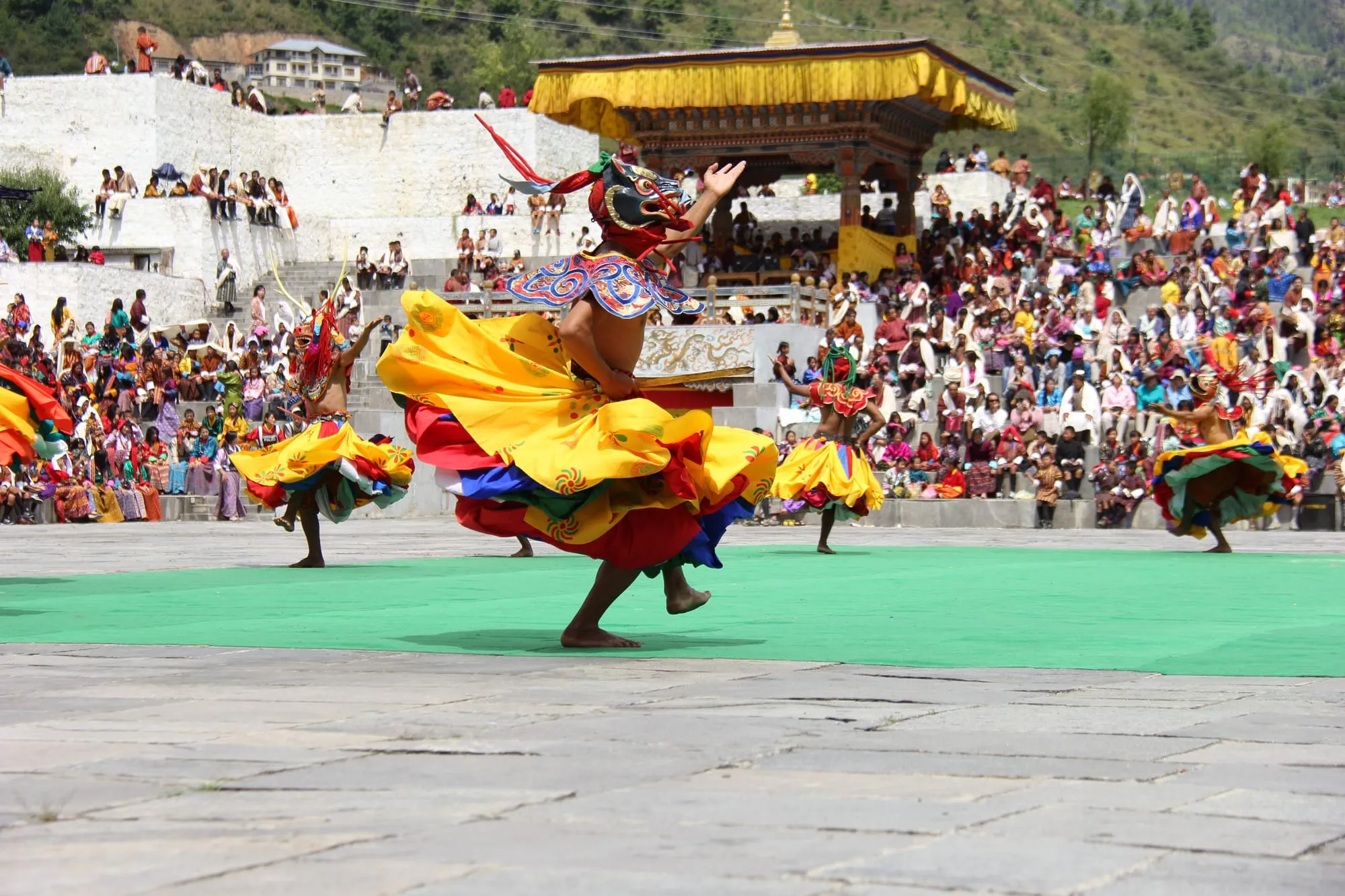
For three days each autumn, the courtyard of Tashichho Dzong becomes the stage for the capital’s great festival: the Thimphu Tshechu, held in honour of Guru Rinpoche and considered one of the most beautiful tshechus in western Bhutan. This is our home festival — we’ve been arranging journeys through Bhutan from Thimphu since 2011, and the tshechu happens a short drive from our office — so this page is the local’s answer to the questions we field about it every year: the published 2027 dates, why they move, what happens across the three days, and how attending actually works.
- 2027 dates: 10 – 12 Oct 2027, Tashichho Dzong, Thimphu. Drubchen on 5 Oct.
- The festival moves from late September in 2026 to October in 2027: the lunar calendar at work. Reconfirm dates before booking flights.
- Our Thimphu Festival tour is a private itinerary built around the festival dates.
What the Thimphu Tshechu is
A tshechu is a religious festival of masked dance held in honour of Guru Rinpoche — Guru Padmasambhava, the saint who brought tantric Buddhism to Bhutan. Thimphu’s was introduced in 1670 and is held from the 9th to the 11th day of the 8th month of the Bhutanese calendar, in the courtyard of Tashichho Dzong — the riverside fortress-monastery that houses the King’s throne room and the central monastic body.
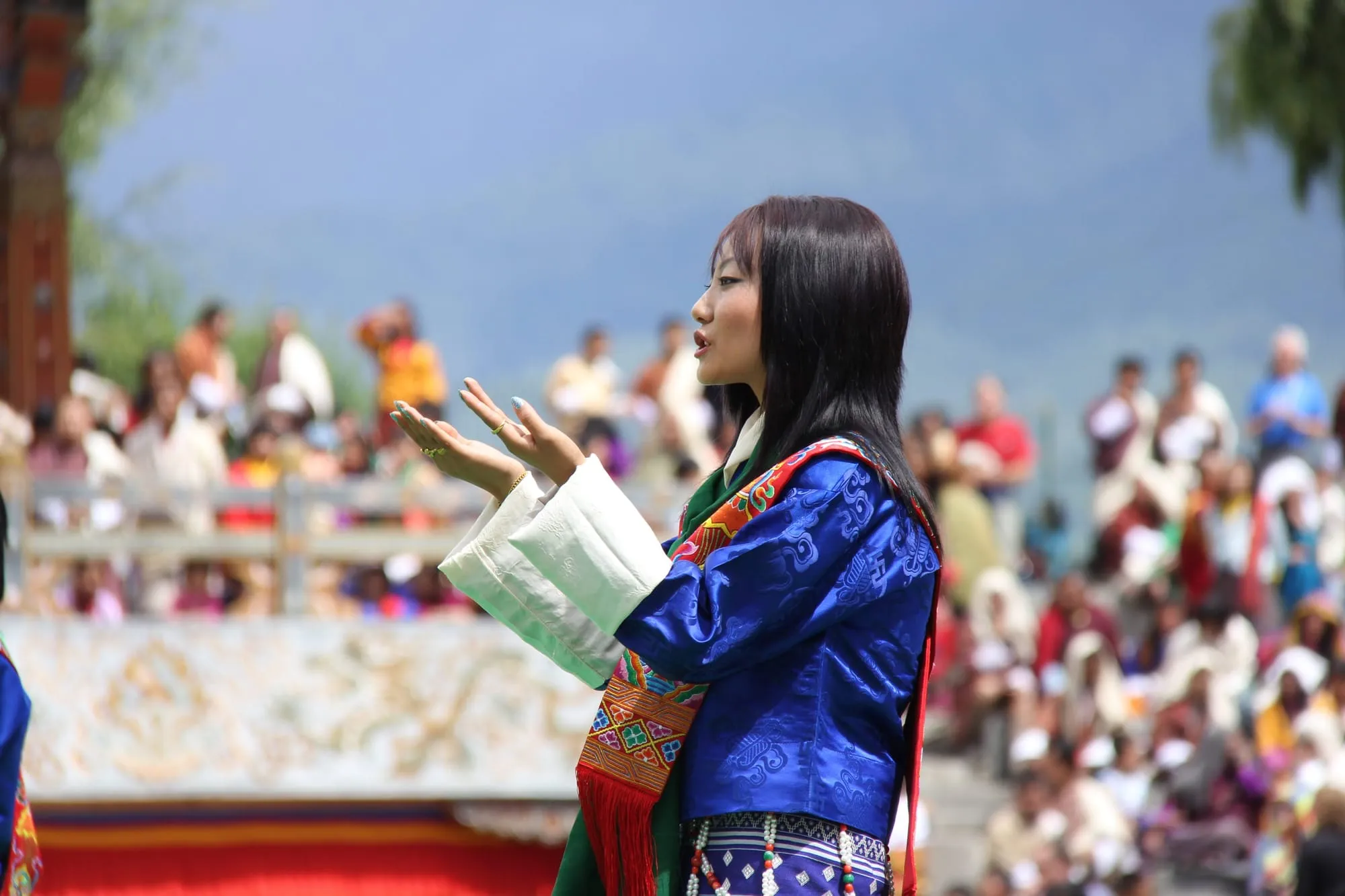
What sets the capital’s tshechu apart is its scale and its crowd. Beyond being a religious festival, this is the time of year when Bhutanese from all walks of life and every generation gather in their finest attire to socialise and celebrate — the courtyard fills with silk gho and kira, grandparents, office workers and children out of school, all of Thimphu at once. For a visitor it’s the most accessible major festival in the country: you’re in the capital, minutes from your hotel, watching the biggest social and spiritual event of the city’s year. And it’s a living act of devotion, performed for the community — visitors are welcome alongside it, not catered to by it, which is exactly its appeal.
Thimphu Tshechu dates: 2027
| Year | Tshechu | Drubchen | Venue |
|---|---|---|---|
| 2027 | 10 – 12 Oct 2027 | 5 Oct | Tashichho Dzong, Thimphu |
Dates come from the tentative festival schedule published by the Association of Bhutanese Tour Operators. The tshechu is fixed to the Bhutanese lunar calendar, not the Gregorian one, so its position in our calendar drifts year to year: late September in 2026, mid-October in 2027. A traveller who assumed “Thimphu Tshechu is always in September” and booked 2027 flights accordingly would miss the festival entirely. So our rule is simple: plan the trip 6–9 months out, and reconfirm the dates with us before you buy flights or anything non-refundable. When the schedule moves, we move the itinerary with it.
The Drubchen that comes first
The tshechu doesn’t arrive unannounced — it is preceded by the Thimphu Drubchen, a rite performed to appease Pelden Lhamo, the Glorious Goddess: one of the three main protecting deities of Bhutan, and the only female Dharma protector common to all four schools of Buddhism. The Drubchen was instituted between 1705 and 1709 and, by legend, was born of a vision in which Pelden Lhamo appeared and performed dances before a meditating master — dances the rite preserves.
For planning purposes the Drubchen falls on 5 Oct 2027, a few days ahead of the tshechu proper. Travellers who can stretch their window to cover both get the quieter, more esoteric ceremony as well as the great public festival — a pairing we’re happy to build an itinerary around. The fuller history of the Drubchen and of tshechus in general is in our festival calendar.
The dances
The mask dances — chams — narrate Guru Rinpoche’s teaching and journey, and the Thimphu programme includes some of the most storied in Bhutan. In the Dance of the Four Stags, monks dressed as stags retell how the Guru subdued the King of the Wind, who caused harm to the world, and rode the king’s own support animal, the stag. The Stag and the Hound, told in two parts, follows the hunter Gonpo Dorji, converted to Buddhism by the great yogi Milarepa. And the Dance of the 21 Black Hats with Drums marks the victory of Buddhism over evil — after the black-hatted dancers have destroyed the non-believers, they beat their drums, the drumbeat standing for a faith that has no physical form to show.
Alongside the chams come plays, folk dances and displays of thangka and thongdrel — the giant silk appliqué banners — and, working the crowd between performances, the atsaras, the red-masked jesters. Some dances deal frankly with death and the afterlife; Bhutanese will tell you that is the point — attending them is a way of acquainting yourself with death. A good guide, translating the iconography as it unfolds, is the difference between watching a spectacle and understanding one.
How to attend
The tshechu is a public religious festival — locals simply walk in, and you’ll attend alongside them with your guide. What attending actually requires is what any Bhutan trip requires — a visa or entry permit, the SDF and a licensed guide, all arranged before you fly as part of your tour. On the morning itself you just arrive, find a vantage point in the courtyard and settle in.
Practical notes from living here: come early, because the capital turns out in force and the best positions go to those already seated when the horns sound; and pace yourself, because a festival day is long and the socialising around the edges of the dance ground — the picnics, the finery, the reunions — is half the experience. Your guide will know when the dances you most want to see are due, and when to slip away for tea or a walk through town. Being in Thimphu also means the festival slots neatly into normal sightseeing — Buddha Dordenma, the weekend market and the rest of the capital’s sights are minutes away.
Festival etiquette
A tshechu is a ceremony first and a spectacle second, and a few habits keep you on the right side of that line:
- Dress as for a dzong visit — long trousers or a long skirt, covered shoulders, nothing sleeveless. The crowd around you will be in its finest gho and kira; err on the smart side.
- Stay off the dance ground. Watch from the spectator areas, and never cut across the space where the chams are performed.
- Photograph with courtesy. The dances are fine to photograph from the crowd; for close-ups of people, ask first — and follow your guide’s word on when cameras should come down.
- Follow the crowd’s lead. When those around you stand or fall quiet, do the same; your guide will cue you.
None of this is onerous — Thimphu’s festival crowd is warm, sociable and quick to make room for a respectful visitor.
Planning a trip around the Thimphu Tshechu
The straightforward way in is our Thimphu Festival tour — an 8-day private itinerary timed to the festival dates, like everything else in our fully private catalogue. It pairs a full day at the tshechu with the glacial Phobjikha valley, Punakha and the Tiger’s Nest hike, so the festival anchors a proper circuit of western Bhutan rather than standing alone.
If you’d rather travel privately, that works just as well: we build the same window around your own dates, pace and hotels — the classic 7-day itinerary adapts to the festival naturally, with the tshechu taking the Thimphu days. The timing is generous too: the festival sits at the doorstep of autumn, the season with the year’s clearest skies — the month-by-month picture is in our best time to visit guide.
Dates for every major festival, both years, are in the festival calendar. When you’re ready, tell us your dates and we’ll reconfirm the tshechu dates against the current sheet and send a real, all-in price from Thimphu. Or head back to the Bhutan Travel Guide for the wider picture.
Plan the trip
Private tours that pair with this guide


Frequently asked questions
When is the Thimphu Tshechu in 2027?
10 – 12 Oct 2027, in the courtyard of Tashichho Dzong in Thimphu, with the Thimphu Drubchen preceding it on 5 Oct. Dates come from the tentative festival schedule published by the Association of Bhutanese Tour Operators. Reconfirm with us before you book flights or anything non-refundable.
Why do the 2027 dates fall in October instead of September?
The festival is fixed to the Bhutanese lunar calendar — it is held from the 9th to the 11th day of the 8th month — so its position in the Gregorian year drifts. That is why we tell guests to treat projected dates as provisional and reconfirm 6–9 months out, before committing to flights.
What is the Thimphu Drubchen?
A rite performed in the days before the tshechu to appease Pelden Lhamo, one of the three main protecting deities of Bhutan and the only female Dharma protector common to all four schools of Buddhism. In 2027 it falls on 5 Oct, and it is worth building into your window if the festival is the point of your trip.
Do I need tickets for the Thimphu Tshechu?
It's a public religious festival — locals simply walk in, and you'll attend alongside them with your guide. What you do need is what any Bhutan trip needs: a visa or entry permit, the SDF and a licensed guide, all arranged as part of your tour before you fly.
Where is the Thimphu Tshechu held?
In the courtyard of Tashichho Dzong, the fortress-monastery a couple of kilometres from Thimphu's main town, which houses the King's throne room and the central monastic body. Being in the capital makes this the easiest major festival to attend — good hotels, restaurants and the city's sights are minutes away.
What dances will I see at the Thimphu Tshechu?
The programme includes the Dance of the Four Stags, which retells how Guru Rinpoche subdued the King of the Wind; the Stag and the Hound, the story of the hunter Gonpo Dorji converted to Buddhism by Milarepa; and the Dance of the 21 Black Hats with Drums, marking the victory of Buddhism over evil.
Is there a tour that includes the Thimphu Tshechu?
Yes — our 8-day Thimphu Festival tour, a private itinerary built around the festival dates, adding the Phobjikha valley, Punakha and the Tiger's Nest hike. Prefer a different shape? We build the same window around your own dates — the classic 7-day itinerary adapts to the festival naturally.
Tailor-made travel
Begin your journey to the Last Shangri-La
Every Little Bhutan itinerary is private and tailor-made. Tell us what draws you to Bhutan — festivals, treks, monasteries, food — and we will design the journey around it.