
Haa Spring Festival
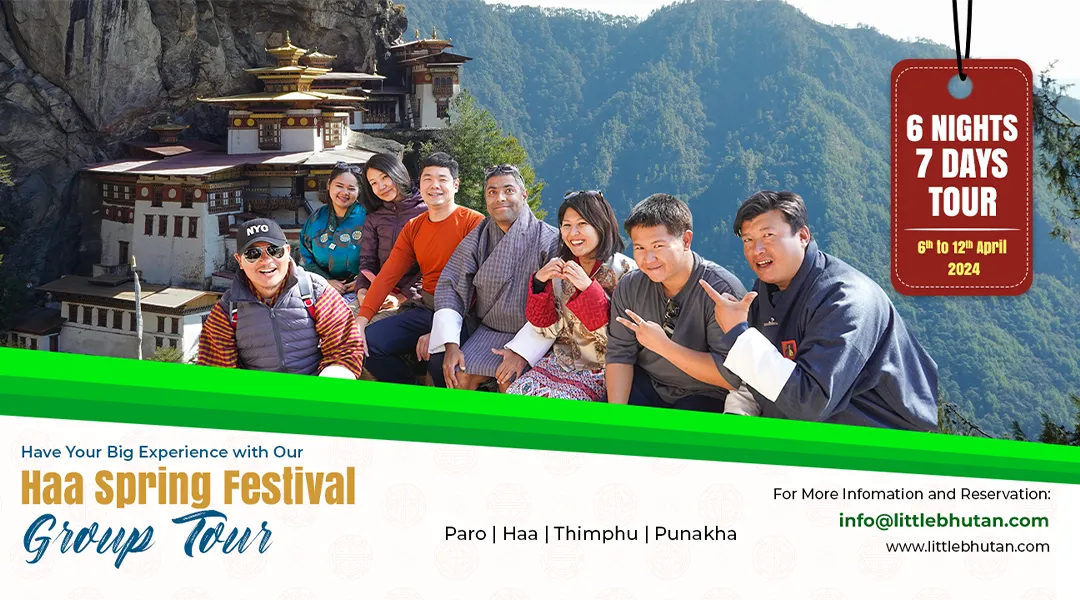
The Haa Spring Festival is three days of highland and nomadic culture on the valley floor at Yangthang, just outside Haa town, held every April, on 25–27 April in 2027. It is a district festival, not a tshechu. Entrance is included in your tour.
It used to be the Haa Summer Festival
This is the thing to know before you book anything, because the internet has not caught up.
The Department of Tourism introduced the festival in the early 2010s — sources give 2010 or 2011 — and for over a decade it ran in July, as the Haa Summer Festival, at Eusu gewog. In April 2024 the district administration moved it to spring, renamed it, and relocated it to Yangthang, an open ground just outside Haa town towards Bji gewog. The reasons given were the spring weather, the peak bloom of the valley’s herbs and flowers, and the monsoon’s habit of making July difficult.
It stayed a three-day event through the change.
Third-party sites still advertise a “Haa Summer Festival” for July, with packages attached. Nothing official announces a revived summer edition, and the national broadcaster’s report of the 2024 change is unambiguous that the summer festival became the spring one. We are not telling anyone they are wrong — but ask us before you build a July trip around a Haa festival.
What it actually is
Not a tshechu. No masked religious dance, no thongdrel, no monk body — it is a cultural and tourism festival run by Haa Dzongkhag, and it is not on the ABTO festival schedule. (Haa’s tshechu is a separate autumn event in the Lhakhang Karpo courtyard, on 19–21 October in 2026.)
What it is, is Haa showing itself off: highland and nomadic tradition, yak and horse riding, exhibitions of the valley’s Nublang cattle and its trout, regional food and locally fermented drink, community competitions — tug of war, a marathon, a pillow fight — and evening entertainment from national artists. The 2026 edition ran under the branding “Haa-Lay Mi Lay”, with Her Majesty Gyalyum Dorji Wangmo Wangchuck as chief guest, and carried a thirty-minute drama on the life of Ap Chundu, the valley’s guardian deity — staged publicly for the first time.
Our own accounts of the festival add fly fishing, cycling and hiking, yak cheese and butter, the indigenous games degor, khuru and soksum, and Haa Nyagoe — Bhutanese wrestling, and the event the crowd is loudest for.
The programme changes each year, which is why that is a description rather than a schedule.
Who it is for
It is a domestic festival first. Opening day draws people from Thimphu and Paro; the international presence is measured in tens rather than hundreds. That is the appeal and it is also the warning — this is not a spectacle staged for visitors, and if you want masked dance and monastic pageantry you want a tshechu instead.
It sits in the right month for the rest of the country, too: April is rhododendron season, the trekking windows open, and the valley is at its best. See when to visit Bhutan for how the month fits together.
Practicalities
An open field on the valley floor at about 2,700 m. Level ground, no climbing — but little seating, no shade, and spring mornings in Haa are cold before they are warm. Dress in layers you can shed.
Photography is unrestricted on the ground; ask before you photograph people close up.
We build a trip around it. The Haa Spring Festival journey pairs the festival with Paro, Thimphu, Punakha and the climb to Tiger’s Nest. Because the dates are published late and move, tell us early if this is the trip you want — see the Bhutan festival calendar for everything else in the year, and things to do in Haa for the valley itself.
Tours that visit Haa


Frequently asked questions
When is the Haa Spring Festival?
Every April, over three days. In 2027 it runs 25–27 April at the festival ground in Yangthang, just outside Haa town. The dates move from year to year, so reconfirm with us before you book flights.
Is the Haa Spring Festival the same as the Haa Summer Festival?
Yes. The Department of Tourism introduced it in the early 2010s as the Haa Summer Festival, held in July at Eusu gewog. In April 2024 the district administration moved it to spring, renamed it the Haa Spring Festival and relocated it to Yangthang, for the weather and the flowers. Some travel sites still advertise July dates under the old name, so ask us before you book around one.
What happens at the Haa Spring Festival?
Highland and nomadic culture rather than religion: cultural performances, yak and horse riding, Haa's own Nublang cattle and local trout on show, regional food, community competitions and evening entertainment. In 2026 it also carried a thirty-minute drama on the life of Ap Chundu, the valley's guardian deity, staged publicly for the first time.
Is the Haa Spring Festival a tshechu?
No. There is no masked religious dance, no thongdrel and no monastic body — it is a district cultural and tourism festival organised by Haa Dzongkhag, and it is on neither of the tentative festival sheets the Association of Bhutanese Tour Operators publishes. Haa's tshechu is a separate event in the autumn.
Is there a tour built around the Haa Spring Festival?
Yes — our Haa Spring Festival journey pairs the festival with Paro, Thimphu and Punakha and the climb to Tiger's Nest. Because the dates move and are published late, tell us early if this is the trip you want.
Tailor-made travel
Begin your journey to the Last Shangri-La
Every Little Bhutan itinerary is private and tailor-made. Tell us what draws you to Bhutan — festivals, treks, monasteries, food — and we will design the journey around it.