
Kurjey Lhakhang
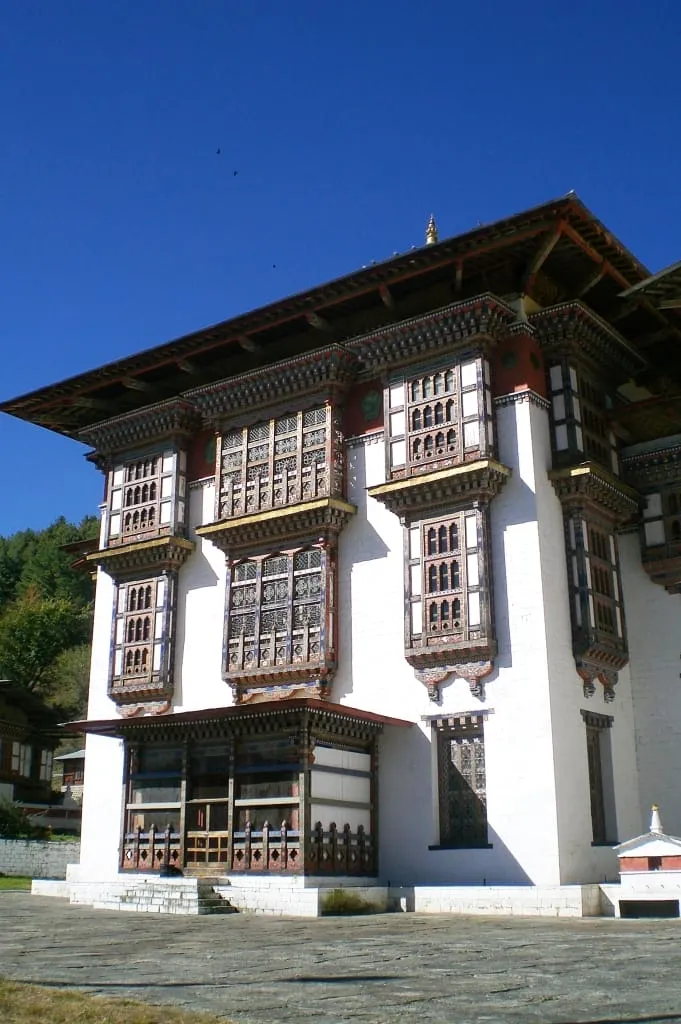
Kurjey Lhakhang is three temples inside one walled compound, built around the cave where Guru Rinpoche meditated and left the imprint of his body in the rock. Kur is body, jey is imprint. It is where Buddhism arrived in Bhutan, and it is the cremation ground of the first three Kings. Allow 45 minutes to an hour. There is no entry fee: Kurjey is one of the sites the Department of Tourism names explicitly as charging nothing.
The three temples, and which is which
This is the thing to get straight before you go in, because the compound looks like one building and is not.
The Guru Lhakhang is the oldest, built in 1652 by Minjur Tempa, Trongsa Penlop. It stands over the meditation cave — you go in through the temple, along a narrow low rock passage, to reach the imprint. That passage and the imprint are inside this building; they are not separate temples, which is a distinction almost every description of Kurjey gets wrong, including ours until this update.
Sampa Lhundrup was dedicated in 1900, built by Ugyen Wangchuck while he was still Trongsa Penlop — seven years before he became Bhutan’s first King. It holds a large Guru Rinpoche.
Ka Goen Phur Sum is the newest, consecrated in 1990, sponsored by the Royal Grandmother, Ashi Kesang Choden Wangchuck. She also gave the 108 chortens set into the wall that runs around the whole compound.
Three temples, three centuries, three sponsors — a monastery built by a governor, a king-to-be and a queen, at roughly 250-year intervals. Walking from the first to the third is walking through the history of the Bhutanese state.
What the visit is actually like
Level ground between the three temples, steps up into each, and a compound big enough that it never feels crowded even in June. The cave passage in the Guru Lhakhang is narrow and low — worth knowing if anyone in your group is unsteady or claustrophobic.
The cypress. A large one stands in the compound, said to have grown from Guru Rinpoche’s walking staff. It is the sort of story every Himalayan monastery has a version of, and this is the version Bhutanese people mean when they tell it.
The royal cremation ground. The first three Kings of Bhutan were cremated here. It is not signposted the way a European monarchy would signpost it and nobody makes a performance of it, which is its own kind of statement.
When to go, and how it fits your day
Morning or early afternoon, on the same run as Jampey Lhakhang — Kurjey is about 2.5 km further up the Choekor valley — and then Tamshing across the river. Those three plus Jakar Dzong are the Bumthang most people mean when they say Bumthang. See things to do in Bumthang for how the other valleys fit around them.
March to May and September to November for the weather. June brings the Kurjey Tshechu, a single day, 14 June in 2027. It is one of the few festivals in Bhutan held in early summer. Dates are lunar and move; the current ones are in the festival calendar.
Shoulders and knees covered, shoes off inside, no photographs in the temples.
A little history
The story starts badly. King Sindhu Raja ruled Bumthang, went to war with a neighbouring king, and lost his son in the fighting. In his grief he destroyed the shrines of the local deities — and one of them, Shelging Karpo, took his life force in return. The king fell mortally ill and no one could help him.
Padmasambhava was summoned from Nepal. He subdued Shelging Karpo, restored the king’s life force, and in return asked for the king’s daughter, Moenmo Tashi Khuedron. The king recovered; Bumthang accepted Buddhism; and in time so did the rest of the country.
That is why Bumthang is called the most sacred district in Bhutan, and why this compound — a cave, a rock, a body print and three temples built over eight hundred years to keep it covered — is where the whole thing is understood to have begun.
Tours that visit Bumthang


Frequently asked questions
What does Kurjey mean?
Body imprint. Kur is body, jey is imprint. Guru Rinpoche is said to have meditated in a cave here and left the print of his body in the rock — the oldest of the three temples was built over that cave in 1652, and the imprint is what the whole site is named for.
How many temples are there at Kurjey?
Three, inside one walled compound. The Guru Lhakhang (1652, built by Minjur Tempa, Trongsa Penlop) stands over the meditation cave. Sampa Lhundrup (dedicated 1900) was built by Ugyen Wangchuck while he was Trongsa Penlop, before he became the first King. Ka Goen Phur Sum was consecrated in 1990, sponsored by the Royal Grandmother — who also gave the 108 chortens in the surrounding wall.
How long do you need at Kurjey Lhakhang?
Forty-five minutes to an hour for all three temples and the walk round the compound. It sits about 2.5 km beyond Jampey Lhakhang and the two are always done together.
What is the story of Guru Rinpoche and the king at Kurjey?
King Sindhu Raja of Bumthang, defeated in war and having lost his son, destroyed the local deities' shrines in his grief. The deity Shelging Karpo took his life force in return and the king fell mortally ill. Padmasambhava — Guru Rinpoche — was summoned from Nepal, subdued the deity, and restored the king. That healing is the founding event of Buddhism in Bhutan, and it happened here.
Is there an entry fee at Kurjey Lhakhang?
No. Kurjey is one of the sites the Department of Tourism names explicitly as charging no monument entry fee.
What is the cypress tree at Kurjey?
A large cypress in the compound, said to have grown from Guru Rinpoche's walking staff after he planted it in the ground. Trees grown from a saint's staff are a recurring motif across the Himalaya; this is Bhutan's best-known one.
Tailor-made travel
Begin your journey to the Last Shangri-La
Every Little Bhutan itinerary is private and tailor-made. Tell us what draws you to Bhutan — festivals, treks, monasteries, food — and we will design the journey around it.